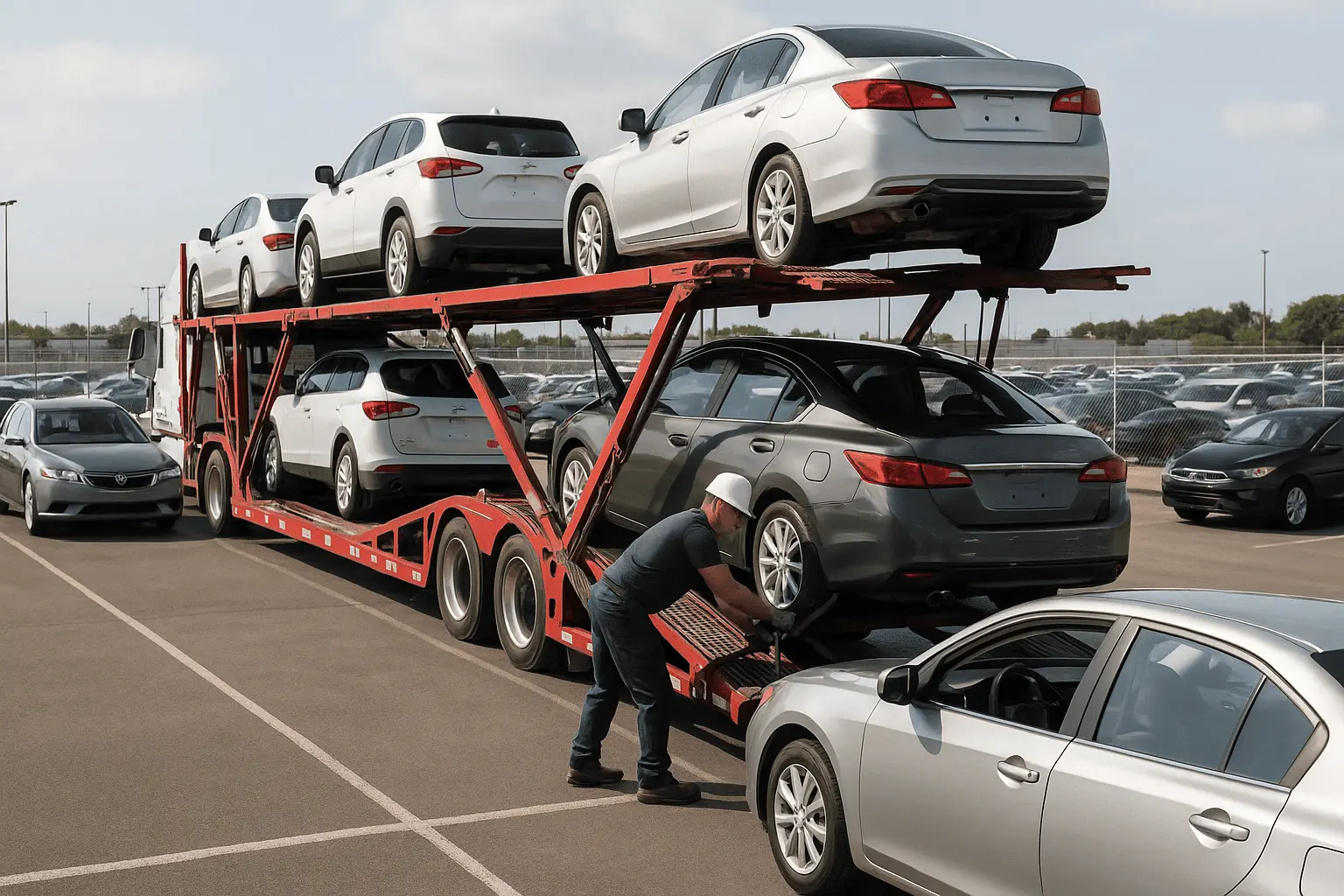


High temperatures do very little to a vehicle being transported, and almost everything people fear assumes a detail that is not true: that the engine is running.
It is not. A car on a trailer produces no heat of its own. Nothing is combusting, nothing is circulating, and no cooling system is being asked to work. There is no overheating risk because there is no heat source.
What heat does affect is the cabin, the tires, and anything with a fresh finish. Those are the three things worth attention.
What Heat Actually Reaches
The engine bay stays cool. An inert engine in moving air is cooler than the same engine idling in traffic.
Airflow is continuous. A trailer at highway speed moves a lot of air across every vehicle on it. An open top deck runs cooler than a parking space.
The cabin is the hot zone. Glass traps solar gain, and a closed car in direct sun gets dramatically hotter inside than the air around it. This is about what you leave inside, not the vehicle.
Tire pressure climbs. Air expands as it warms, so pressures read higher by afternoon than they did at dawn.
Rubber and plastic age, slowly. Sustained heat shortens the life of wiper blades and trim over years, not over a four-day transit.
Enclosed trailers hold heat at a standstill. Moving, they are fine. Parked in sun, they get warmer than an open deck, which is why carriers stage them in shade.
Where Heat Does Matter
Fresh paint, wrap, or ceramic coating. New finishes stay soft for weeks. Sustained heat keeps them pliable and they can take an impression. This is a real reason to choose enclosed transport.
Anything left in the cabin. Aerosols pressurize and vent. Bottled liquids expand and leak. Electronics, sunglasses, medication, and vinyl all degrade or deform.
A marginal battery. Heat evaporates electrolyte and accelerates failure. A battery that was weak in June may not start the car at delivery.
Low coolant. Harmless in transit, immediately relevant when you drive off at the other end into summer traffic.
Overinflated tires. Pressure added to compensate for heat stacks on top of the expansion that happens anyway.
Frequently Asked Questions
Can a car overheat on a trailer?
No. Overheating requires a running engine. A transported vehicle is switched off and sitting in moving air.
Should I lower tire pressure for a summer shipment?
No. Set them cool to the manufacturer’s figure. Do not add air and do not remove it.
Is enclosed transport cooler than open?
While moving, both are fine. Stopped in direct sun, an enclosed trailer is warmer. Carriers manage that with ventilation and shaded staging.
Does extreme desert heat need special equipment?
No. Southwest carriers run those lanes all summer with standard equipment, adjusting driving hours around the hottest part of the afternoon.
Will my interior crack or fade in transit?
Not in a few days. Interior damage from sun is a multi-year process, not a transit risk.
Why Ship With Tempus Logix
Tempus Logix is a licensed and bonded auto transport broker, USDOT #3117533 and MC #86120, and BBB accredited. Every carrier we assign is vetted and its insurance verified before a vehicle is collected, and vehicle owners carry a zero deductible on covered damage.
Summer asks for lead time more than anything else. June through August is the busiest stretch of the year, so we tell you plainly when a date is tight and what booking earlier would buy you, rather than accepting a booking we cannot serve well.
For the full picture of warm-weather transport, see our summer car shipping guide.
Related Guides
More from the summer cluster:
- Summer Car Shipping Guide
- Peak Season Car Shipping
- Summer Vacation Car Transport
- Beach Destination Car Shipping
- Heat Protection During Shipping
Need a vehicle moved? Get a free quote with our auto transport quote calculator or call a transport coordinator at +1 (866) 607-8459.