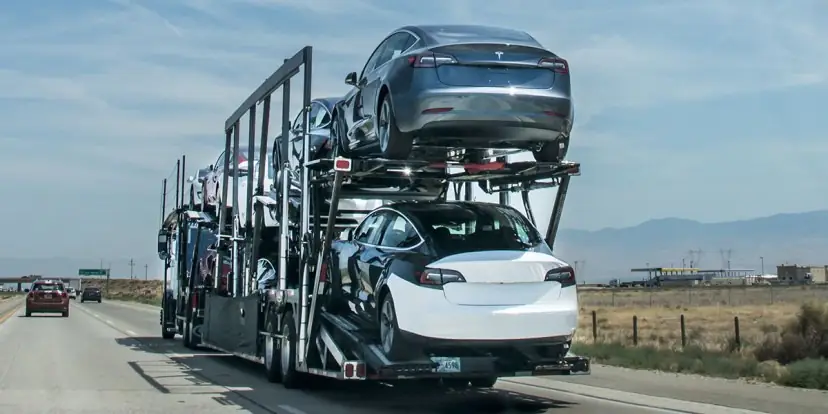


Shipping a non-running car across the country requires specialized logistics and heavy-duty loading equipment. Many auto owners face stressful delays when standard car haulers refuse to load vehicles that cannot drive. Securing professional inoperable vehicle shipping guarantees your non-running vehicle arrives safely at its destination without damage. Tempus Logix provides the reliable equipment and experienced carriers needed to handle these difficult transport projects.
As an FMCSA-compliant transport broker, Tempus Logix holds active authority under USDOT Number #3117533 and MC #86120. Our Better Business Bureau (BBB) accreditation reflects our commitment to honest communication and complete pricing transparency. We work with a network of over 25,000 double-vetted carriers who utilize heavy-duty towing winches and rollback flatbed trailers. Our dedicated coordinators ensure your inoperable car transport is handled by professionals who understand specialized vehicle recovery.
Booking your non operational car shipping online through our secure platform is completely free of charge. We do not require credit card deposits or upfront payments when you reserve your shipment online. You only pay after our transport coordinators confirm your pickup schedule with a verified, winch-equipped driver. Please note that booking your shipment directly over the phone with our staff incurs a standard coordination charge.
This expert guide details everything you must prepare before shipping your non-running car. We explain winch surcharges, salvage auction release protocols, and physical location requirements for safe loading. Our team helps you avoid common industry pitfalls and secure a reliable transport plan. Click to Get a Free Quote online today, or call our team directly at +1 (866) 607-8459.
What is Inoperable Car Transport?
Inoperable vehicle shipping is a specialized transport service. It is designed for cars, trucks, or SUVs that cannot move under their own power. This includes vehicles with mechanical failure, collision damage, or missing keys. Unlike operable vehicles that are driven onto a trailer, inoperable vehicles require winches, rollback flatbeds, or other loading equipment.
Vehicles become non-running for many distinct mechanical reasons. Engine seizures, blown head gaskets, and transmission lockups prevent cars from moving safely. In other cases, severe collision damage bends axles or destroys steering linkages completely. Sometimes, a vehicle is physically perfect but remains stranded because the owner lost the electronic key fob. Each of these scenarios requires a different level of logistical preparation. Tempus Logix analyzes these mechanical details upfront to ensure we assign the correct carrier equipment.
Standard auto shipping relies on drivers physically driving cars up ramp tracks onto double-deck trailers. For non-running vehicles, carriers must utilize specialized winch systems to pull the load manually. Motorized electric and manual winches use high-tension steel cables to drag the car slowly onto the trailer bed. This process requires precise physical control and specialized training from the driver. Without these tools, attempting to load a non-running car can cause severe frame and undercarriage damage.
Most customers choose open auto transport for standard non-running daily drivers. This method is highly cost-effective and readily available on major interstate routes. However, high-value classic car transport options are necessary for exotics and rare restorations that require enclosed auto transport. Enclosed trailers shield delicate bodywork and exposed engines from road debris and harsh winter weather. Our transport coordinators verify the vehicle value and structural state to help you select the safest trailer type. We prioritize damage prevention for every single shipment.
It is critical to distinguish between a standard non-runner and a severely wrecked salvage vehicle. A standard non-runner has a solid chassis but simply refuses to start mechanically. Wrecked salvage cars often have detached wheels, broken axles, or compromised frame structures. These heavily damaged vehicles require advanced recovery tools like heavy-duty forklifts or rollback flatbed trailers. Tempus Logix coordinates with specialized carriers who possess these heavy-duty tools to ensure a successful recovery.
Winching a heavy, non-running vehicle requires significant physical space behind the transport trailer. The carrier truck must align perfectly with your car to pull it straight up the ramps. Narrow residential streets, low-hanging tree branches, and steep driveways present major physical obstacles. Our team evaluates your pickup location to prevent property damage and loading delays. We work with you to establish a safe, flat meeting spot if your driveway is too tight.
Many online shipping brokers offer cheap baseline quotes to attract customers. They frequently hide the specialized loading fees until the truck arrives at your driveway. This bait-and-switch tactic leaves vehicle owners stranded with unexpected, cash-only surcharges. Tempus Logix practices complete cost transparency from day one. We include all specialized winching fees in your initial quote so you never face surprise costs. Our active FMCSA broker credentials guarantee a fully licensed, professional experience.
We manage every step of your non operational car shipping project with professional care. From pre-vetting winch-equipped drivers to verifying carrier cargo insurance, we protect your vehicle. We handle the difficult logistics so you can focus on your relocation or repair. You can reserve your shipment online for free without any upfront payments. Discover your exact rate by using our Get a Free Quote online tool, or speak with our experts at +1 (866) 607-8459.
The Golden Rule of Inoperable Shipping: Can It Roll, Brake, and Steer?
Follow five key steps to ship an inoperable vehicle. First, verify that it meets the Roll, Brake, and Steer (RBS) requirements. Second, confirm that the tires hold air for at least one hour. Third, expose and secure the winching points on the chassis. Fourth, prepare all keys and release documents. Finally, book with a transporter that utilizes winch-equipped haulers.
The roll component of the RBS rule dictates that your vehicle’s wheels must spin freely. Flat tires or seized brake calipers prevent the car from rolling up standard ramps. We require all four tires to retain air for at least one hour during the loading window. If your vehicle has flat tires, you must inflate or temporarily repair them before the driver arrives. Unrollable vehicles cannot be winched onto standard trailers and will require a specialized heavy-duty forklift or crane service at your own expense.
Working brakes are a vital safety requirement for loading and unloading non-running cars. The carrier uses physical winches to pull the vehicle up, but gravity presents a constant hazard. If a cable slips or needs adjustment on the steep ramp, the driver must engage the car’s emergency or hydraulic brakes. Functional brakes prevent the heavy vehicle from rolling backward off the trailer. This protection prevents catastrophic damage to your car, the transporter’s trailer, and the loading crew on-site.
Functioning steering is the third pillar of safe winch loading. The carrier driver must steer the vehicle precisely to align it with the narrow tracks of the transport trailer. If the steering column is locked, winching the car straight becomes completely impossible. For keyless vehicles, you must follow the neutral roll protocol to unlock the transmission and steering. Keeping a working key in the ignition is the most reliable way to ensure the steering column remains unlocked and steerable.
Before the transport truck arrives, you must locate and expose secure winching points on your vehicle’s chassis. Standard plastic bumper covers can crack easily under the immense physical tension of steel cables. Look for the vehicle’s factory tow hook, which is often located in the trunk tool kit. If your car lacks a factory hook, clear any obstructions around the front frame rails or lower control arms. Exposing these structural frame points ensures a secure connection for the winch cable.
Failing to meet these basic RBS requirements can prevent the carrier from completing your inoperable car transport. Our transport coordinators work closely with you to verify your vehicle’s physical condition beforehand. This active preparation guarantees a smooth, stress-free loading day.
Cost Comparison: Shipping a Running vs. Inoperable Vehicle
Shipping an inoperable vehicle generally costs $150 to $300 more. This rate is compared to a running car of the same model and distance. This surcharge covers the specialized winch equipment, rollback flatbed loading, and the additional labor required of the carrier.
The pricing difference reflects the complex physics and physical labor involved in moving a non-running car. Drivers spend significantly more time aligning, loading, and securing inoperable vehicles safely. Standard shipping quotes assume the vehicle can move under its own power. Adding a winch surcharge protects carriers from losing valuable drive time. The following table outlines the differences in loading requirements and associated surcharges for each vehicle condition.
| Vehicle Condition | Average Surcharge | Loading Equipment | Labor Required |
|---|---|---|---|
| Operable (Runs/Drives) | $0 (Base Rate) | Standard ramps | Low (Driven on/off) |
| Dead Battery Only | $80 Flat Fee | Jump-start power pack | Medium (Jump-started and driven) |
| Inoperable (RBS compliant) | $150 to $300 | Electric/manual winch | High (Cabled and winched) |
| Unrollable/Non-RBS | Contact coordinator | Rollback flatbed / Crane | Extreme (Specialized recovery) |
Dead Battery Solutions: Jump-Start Fees vs. Winch Surcharges
Yes, you can ship a car with a dead battery. Yes, you can ship a car with a dead battery. Suppose a dead battery is the only issue. If the driver can jump-start the car to drive it onto the trailer, they charge an $80 assistance fee. This saves you from the more expensive $150 to $300 winch loading surcharge.
Carriers carry professional, heavy-duty jump-start battery packs specifically to resolve dead battery issues on-site. If the vehicle starting system is functional, a quick jump-start allows the driver to operate the vehicle normally. This solution saves you money by avoiding the larger winch loading surcharge entirely. However, if the vehicle fails to run after a jump-start attempt, the carrier must deploy physical winching tools. In this scenario, the standard winch fee replaces the smaller jump-start charge.
Tempus Logix provides complete cost transparency for every inoperable car transport order during the quoting process. Many dishonest brokers quote standard rates for non-running vehicles, only to demand cash-only winching fees at pickup. This deceptive practice causes immediate delays and leaves customers with unexpected expenses. We lock in your winch fee or jump-start charge before assigning a carrier to ensure complete financial safety. We help you choose the correct service tier to keep your auto transport affordable.
Our booking system allows you to detail your vehicle’s condition accurately from the start. This proactive communication ensures the dispatched driver arrives with the proper winch equipment and battery packs. You can estimate your transport costs by using our online Get a Free Quote tool. Our dedicated specialists are also available at +1 (866) 607-8459 to answer your questions.
Insurance Coverage and Liability for Non-Running Vehicles
- How to Prepare a Non-Running Car for Shipping | Tempus Logix
- Shipping Cars with Mechanical Issues: Professional Broken Car Transport
- Non-Running Vehicle Shipping Guide: Professional Immobile Car Transport
Yes, cargo and broker insurance policies cover inoperable vehicles during transport, provided the damage does not result from pre-existing structural issues. Always partner with a licensed FMCSA broker like Tempus Logix (USDOT #3117533, MC #86120). We verify each carrier’s active cargo insurance policy before assignment.
Our double-vetting process ensures your vehicle has complete liability protection during transit. We verify that every dispatched carrier maintains active commercial auto liability and high-limit cargo insurance policies. This rigorous screening prevents legal vulnerabilities and ensures coverage remains active throughout the journey. Unbonded brokers frequently skip this step to save time, leaving shippers exposed to massive financial losses if an accident occurs. Tempus Logix manages inoperable vehicle shipping with a $75,000 surety bond to provide absolute financial security for our clients.
The Bill of Lading (BOL) serves as the primary legal receipt for your vehicle’s physical condition. During pickup, the driver performs a detailed visual inspection and notes any pre-existing cosmetic or structural damage. For inoperable cars, identifying previous body damage is crucial, especially for collision salvage vehicles. Both you and the carrier must sign the BOL at pickup and delivery to validate the report. This signed document acts as your primary evidence if you need to file a transit damage claim.
Standard cargo insurance policies do not cover loose parts, personal items, or mechanical components that fail during transit. You must secure any hanging bumpers, detached trim, or loose salvage parts inside the vehicle before loading. We recommend removing all personal belongings and keeping the vehicle locked during transit to ensure total safety. Taking these proactive steps protects your vehicle and helps maintain compliance with carrier cargo rules. Our dedicated team is always ready to guide you.
Our transport coordinators assist you with all insurance questions and document preparation. Use our Get a Free Quote tool or call +1 (866) 607-8459 to schedule your secure transport.
Salvage Auction Shipping: Picking Up from Copart and IAAI
To ship a non-running salvage car from auctions like Copart or IAAI, pay all buyer fees in full, obtain the lot or stick number and release gate PIN, and provide these credentials to a winch-equipped transport carrier who can pick up the vehicle within the yard’s free storage window.
Salvage yards charge expensive storage fees if buyers delay picking up their purchased vehicles. You typically have only three to five days to complete your pickup before daily fees begin accruing. Tempus Logix specializes in rapid auction yard coordination to help you avoid these extra costs. We manage the lot numbers and gate PIN releases seamlessly with our driver network. For dealership pickups, you must provide the official release number. We also require the last six digits of the vehicle identification number (VIN) for a secure pickup.
Auction yards contain thousands of wrecked vehicles, making organized loading absolutely critical. Dispatched drivers must check in at the auction office and present all verified release credentials before loading the vehicle. The carrier uses heavy-duty winches to pull the non-running salvage vehicle onto the trailer safely. We ensure that our assigned drivers carry proper release clearance documents to prevent any gate delays. Our team handles all the back-end communication so you never have to worry about storage fee penalties. You can schedule your auction pickup online with our Get a Free Quote tool or call +1 (866) 607-8459.
Avoiding the $150 Dry Run Fee: Ensuring Driveway Accessibility
A dry run fee of $150 is charged if a carrier arrives for pickup but cannot load the inoperable vehicle because the location is inaccessible to a large transport truck, winching points are blocked, or the vehicle does not meet the agreed-upon roll, brake, and steer condition.
Multi-car transport haulers can measure up to 80 feet in length when fully loaded. These massive trucks require significant space to turn, maneuver, and operate high-tension winch cables. They cannot safely navigate tight residential cul-de-sacs, narrow dead-end streets, or neighborhoods with low-hanging power lines and trees. Attempting to maneuver a large carrier in these restricted spaces poses serious property damage hazards. You must evaluate your pickup location beforehand to ensure there is adequate physical clearance for the carrier.
If your residential street is inaccessible, you must coordinate a safe, alternative meeting point with the driver. Large retail shopping centers, commercial parking lots, or highway rest stops offer excellent physical space for winch operations. Moving the non-running vehicle to this open location ensures the carrier can operate their equipment without blocking traffic or risking property damage. This proactive approach saves you time and eliminates the risk of incurring a dry run fee due to localized access problems.
Make sure your vehicle is completely ready for loading before the carrier arrives at the scheduled meeting point. Check that the tires hold air, the steering is unlocked, and winching points are exposed. Having the vehicle prepared and positioned correctly guarantees a fast, safe, and efficient loading process. Our coordinators help you evaluate residential streets using satellite mapping to identify any potential truck access issues. This careful planning ensures a smooth transport experience from start to finish. You can coordinate your inoperable car transport and driveway accessibility details directly with our team. Use our online Get a Free Quote tool or call +1 (866) 607-8459 to get started today.
Frequently Asked Questions
What are the requirements for shipping an inoperable vehicle?
Your non-running vehicle must meet the basic Roll, Brake, and Steer (RBS) requirements to allow standard winching. If your vehicle lacks these capabilities, you must arrange specialized crane or forklift services. Standard carriers require a rolling vehicle to complete the transport process.
What if my battery is dead or the engine won’t start?
We provide professional jump-start assistance for a standard fee of $80. This helps start your vehicle to load it. If the car remains completely inoperable, a standard winch fee of $150 to $300 will apply. This surcharge covers the specialized winch equipment and additional labor.
My car is inoperable. Can the truck come directly to my driveway?
We must confirm residential accessibility for an 80-foot semi-truck before scheduling driveway pickup. Please inform our coordinators if your street has narrow lanes or steep inclines. If your driveway is inaccessible, we will help you arrange a safe, nearby meeting point.
My car has flat tires. Can you still ship it?
Yes, we can ship it if the tires retain air for at least one hour during loading. Standard winch loading requires rolling wheels to pull the vehicle up the trailer ramps. If your tires cannot hold air, you must repair them before pickup.
I lost the keys to the vehicle. Can you still pick it up?
We typically cannot load a vehicle without keys due to steering locks and safety regulations. If the doors are unlocked and the vehicle rolls in neutral, we can proceed. You can also securely hide the keys or leave them with a representative.
What is a ‘dry run’ fee? When is it applied?
A dry run fee of $150 applies if the carrier arrives but cannot complete the pickup. This fee is charged if the vehicle is not ready or fails to meet the agreed RBS conditions. Preparing your vehicle and verifying location access prevents this surcharge.
I am shipping a car bought from an auction or dealership. What info do you need?
We require the lot number and pickup gate PIN for Copart auctions. For IAAI auctions, you must provide the buyer number and the gate PIN. For dealership pickups, we need the official release number and the last six digits of the VIN.
Related Topics
Navigating specialized vehicle logistics requires a clear understanding of all your transport options. Reviewing our comprehensive resource guides helps you make the absolute best decisions for your high-value shipment. Start by exploring our primary Inoperable Vehicle Transport pillar page. This main hub provides a broad overview of non-running vehicle regulations, vehicle preparation checklists, and standard shipping procedures nationwide.
If you are shipping a classic or high-value non-runner, check out our Enclosed Auto Transport guide. This detailed resource explains how enclosed trailers shield delicate bodywork and exposed engines from road debris and weather. For standard non-running vehicles, read our Open Auto Transport article to understand our most cost-effective shipping method. You can also learn about direct driveway pickup and delivery by exploring our Door to Door Car Shipping resource. These guides help you select the ideal trailer type and prepare your vehicle for a seamless transit experience.