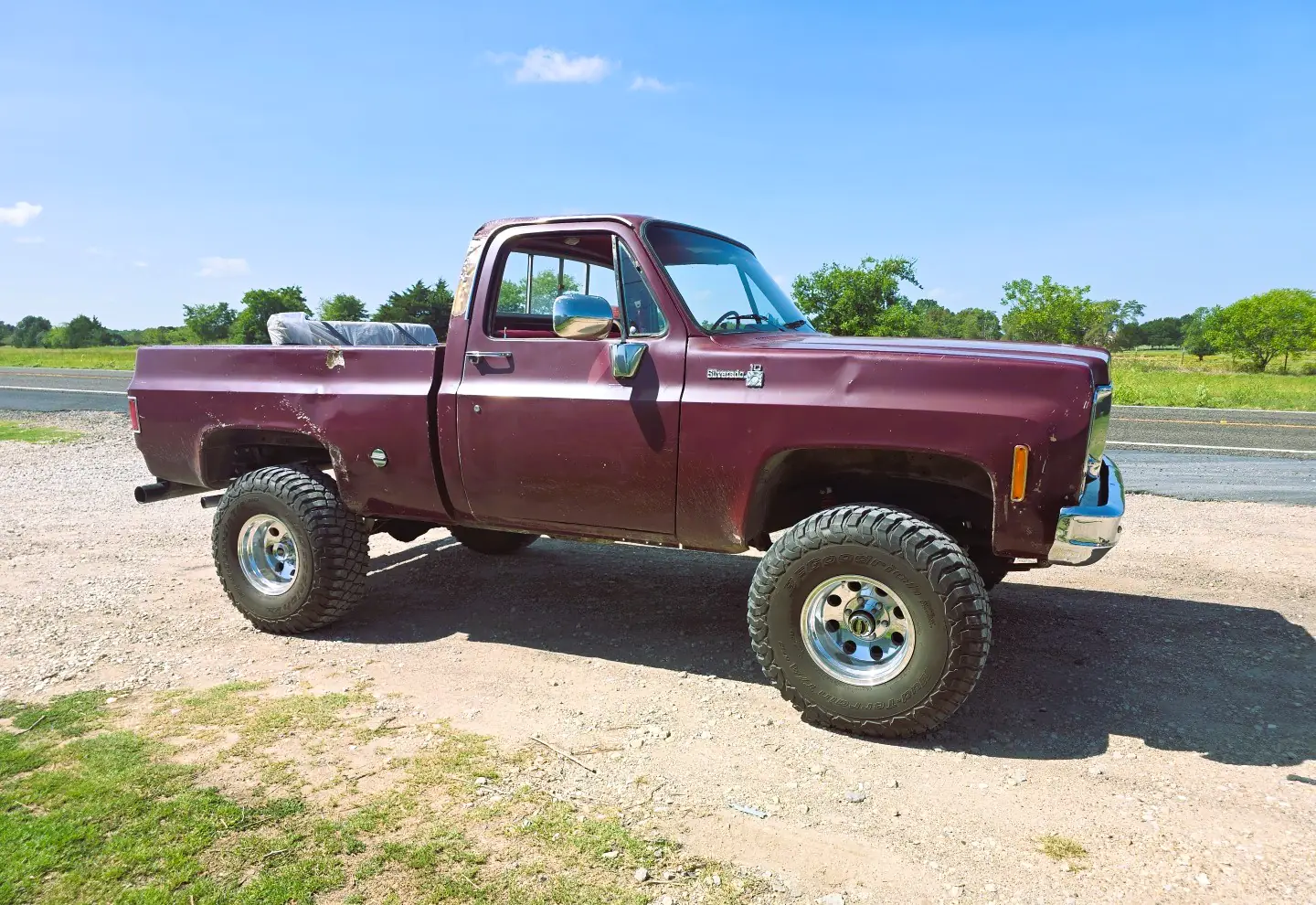
Shipping a 1978 Chevrolet K10 from Wills Point, TX to Stayton, OR
A recent transport job that we completed was transporting the 1978 Chevy K10 truck from Wills Point, TX to Stayton, OR, and the distance was 2,067 miles at a rate of $1,750.00, which equals $0.85 per mile on an open trailer.
The K10 truck in question was operable when we picked it up. That is a rather loaded term, especially for a forty-seven-year-old four-wheel drive truck.

The route

The 2,067 mile route begins in Wills Point and ends in Stayton and includes travel over the plains, the Rockies, and the high desert into the Willamette Valley.
Wills Point is located east of Dallas in Van Zandt County. Travelers drive west on I-20 into the metro area, and then drive north on I-35 through Oklahoma City and Wichita to Salina, Kansas.
From Salina, I-70 travels west across the plains to Denver, where I-25 handles the trip north to Cheyenne, Wyoming. The journey takes I-80 west into the Wasatch range and Salt Lake City.
The last stretch of the trip begins on I-84 and drives northwest through Boise, Idaho, and into Oregon at Ontario. From there the route continues into Pendleton, follows the Columbia Gorge, and ends in Salem, Oregon at Stayton.

Can the driver actually drive it

And yet this is the question that never gets asked and creates all sorts of headaches when picking up vehicles.
Not all carriers’ drivers know how to handle a manual. This is an increasingly rare ability and a truck with a manual transmission limits the number of drivers who are able to load it. Mention it when booking the vehicle and this will be sorted out beforehand. Find out about it at the loading and you have yourself a failure.
The year 1978 truck may have several other issues. Power steering missing, power brakes missing, a column shift lever, a non-synchronized granny low first gear, manual choke, and a key & ignition that need some persuasion to work. All of them are individually solvable. Together, they create a vehicle that doesn’t respond well to instincts of the modern era.
Write down the instructions for the driver about the truck. About its cold starts, whether the choke is required or throttle needs to be pumped before it, what gear it should be started in, and anything else that the driver won’t be comfortable with after trying it. Ten lines of information avoid a call from the driver standing at your driveway.
The four-wheel drive requires its own term. It’s always left in two-wheel drive with unlocked hubs unless there is a reason to do otherwise. The driver who comes across transfer case in an unusual position will simply stop rather than take chances.
Operable status is determined by the relationship between the vehicle and the driver. We consider a truck to be operable if it can be started, driven, steered, and stopped. But all of those conditions are only applicable if the assigned driver can operate the truck’s controls, that is why the additional information is so important in the case of a vehicle this age.
All of that doesn’t cost anything. All it costs is one extra paragraph at the time of booking. The problem is when a driver comes for a vehicle without knowing that he needs to know how to use manual transmission.

What $0.85 per mile reflects

There are two factors that explain this statistic.
Firstly, it is distance. The fixed costs associated with pickup, loading, securing, and delivery are higher at 2,067 miles as compared to at shorter distances, which mean the same costs will be charged per mile more than twice as much.
Secondly, open transport plays an important role here. Open trailer carries many vehicles at once and makes many trips compared to enclosed transport.
Vehicle size is not very important factor. Square body K10 is a big truck and it sits high on a four-wheel drive chassis, what limits the places where it can be moved on the two-level platform.
Corridor is functional rather than optimal. Interstate highways 35 and 80 are principal, however Interstate 84 is a quieter road when entering Oregon. Also Texas to Pacific Northwest lane is not one of the busiest in America.
Open transport

The open choice made by the client is a valid decision because of the working-condition square body. It is a common configuration for trucks from that time.
Trade remains the normal one. The enclosed option provides protection from any road obstacles and weather throughout the transportation process and has additional costs. Open is the appropriate choice for an outdoor-built truck, and we offer options without selecting them.
The truck from 1978 does not have any engineered tie-down points. Therefore, in order to secure the cargo, soft straps are utilized, because of the reasons provided in our previous report. Chain points are inapplicable for a truck of such age due to frame and mount corrosion.
The truck was started twice — once at loading and once at unloading.
Transport summary
- Origin: Wills Point, TX 75169
- Destination: Stayton, OR 97383
- Distance: 2,067 miles
- Service cost: $1,750.00
- Cost per mile: $0.85
- Vehicle: 1978 Chevrolet K10
- Condition: Operable
- Trailer type: Open
- Route: Wills Point, TX → I-20 west to Dallas → I-35 north through Oklahoma City and Wichita → Salina, KS → I-70 west to Denver, CO → I-25 north to Cheyenne, WY → I-80 west to Salt Lake City, UT → I-84 northwest through Boise, ID → Pendleton, OR → Columbia Gorge → Portland → I-5 south to Salem → Stayton, OR

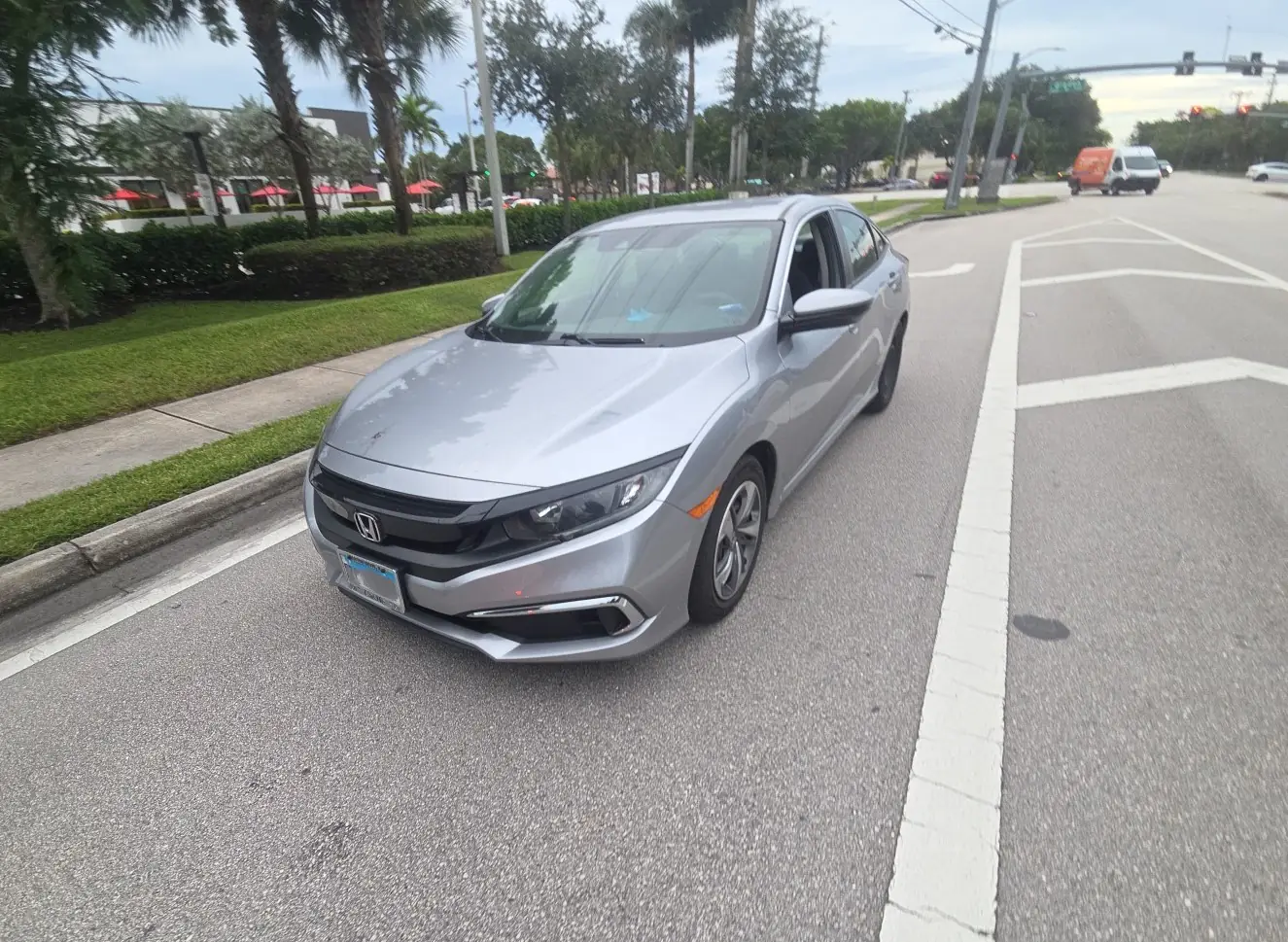
Shipping a 2027 Honda Civic from Arlington Heights, IL to Boca Raton, FL
Recently, we completed the transportation of a Honda Civic 2027 model from Arlington Heights, IL to Boca Raton, FL. The distance covered was 1,364 miles on an open trailer, and the total charge was $1,194.00. The average cost per mile was $0.88.
The car was running well when we picked it up. We have transported Civics before, and when you compare the two trips, you’ll see something that doesn’t make sense at first glance.

The route

This 1,364-mile route stretches from Arlington Heights to Boca Raton and represents the traditional Midwest to South Florida route.
Arlington Heights is located northwestern to Chicago. Drivers merge to I-294 and then head to I-57 south passing through Illinois, including Kankakee, Effingham, and Marion.
Then I-24 takes you southeast to Paducah, Kentucky, and then further south to Nashville and Chattanooga, Tennessee.
Then I-75 takes the drivers down south passing through Atlanta, Macon, and Valdosta to Florida, near Lake City, with the Florida Turnpike leading to Boca Raton in Palm Beach County.

When enclosed comes in under open
Here are the two Civics together.
$1,179.00 for a 2016 Civic, 1,395 miles enclosed; or $0.85 per mile.
$1,194.00 for a 2027 Civic, 1,364 miles open; or $0.88 per mile.
Close to equal distance and equal model line; and the enclosed price is cheaper in both comparisons. It should not be that way considering the enclosed premium on every move. Why is it happening?
There is a difference in lanes. The first move was Utah to Texas, a constant route with no seasonal effects. The second one was Chicago to South Florida, the most demanding lane in the country.
Seasonal effect is taking place as well. As we discussed when moving a motorcycle from Minnesota, northern states begin evacuating to Florida in the fall. Southbound capacity on this lane becomes constrained in the same week every year and the price reflects it.
Trailer type is significant but not decisive. Enclosed is almost always going to be more expensive than open on the same lane and the same week. Comparing prices on different lanes at different weeks may reveal completely opposite pricing pattern, exactly what happens in our case.
That’s what we have been saying all along. Price quote reflects lane,

See also: Shipping a 2016 Honda Civic from American Fork, UT to Katy, TX
What $0.88 per mile reflects

Three factors.
Distance. This is an average distance of 1,364 miles, which means that the high fixed cost of picking up, loading, securing, and delivering will have an impact on the per-mile cost.
The season. A southbound trip to Florida in the fall is the most busy time for this route, and a good lane balance results in higher prices.
Open transport goes in the opposite direction. Open trailers transport more vehicles and operate much more frequently than closed trailers, and that’s why we see this number in spite of the seasonality effect.
The vehicle is neutral. The Honda Civic is a compact sedan in one spot, without any special characteristics for a deck.

Open transport

The Civic was transported on an open trailer, and this is how almost all vehicles are moved within this country.
It is a current-model year compact sedan with factory clearcoat paint. An enclosure is reserved for cars in situations when a rock chip constitutes a financial loss, and a new Civic en route to the driveway isn’t such a situation.

One of the things that should be noted by those who read the comparison above and arrive at wrong conclusions. The 2016-year owner had his reasons for going with an enclosure, and it happened to be cheaper. This doesn’t mean that you should expect enclosed to beat open transport on your lane.
Securement was made with soft straps over the tires and not chains over the suspension, which is our standard approach to securing any vehicle.

Transport summary
- Origin: Arlington Heights, IL 60005
- Destination: Boca Raton, FL 33428
- Distance: 1,364 miles
- Service cost: $1,194.00
- Cost per mile: $0.88
- Vehicle: 2027 Honda Civic
- Condition: Operable
- Trailer type: Open
- Route: Arlington Heights, IL → I-294 → I-57 south through Kankakee and Effingham to Marion → I-24 southeast through Paducah, KY → Nashville and Chattanooga, TN → I-75 south through Atlanta, Macon and Valdosta, GA → Lake City, FL → Florida Turnpike south → Boca Raton, FL
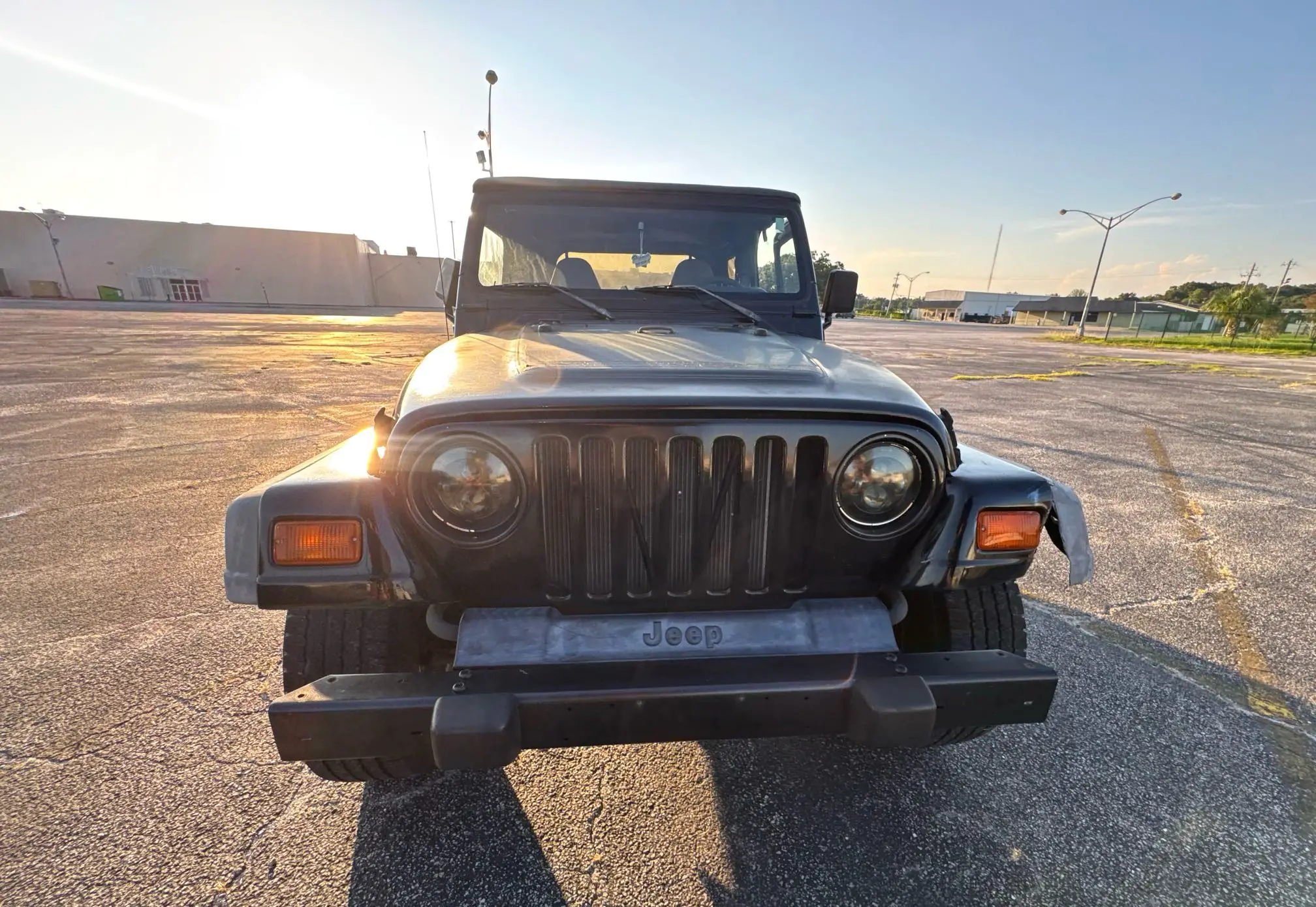
Shipping a 1998 Jeep Wrangler from Pensacola, FL to San Diego, CA
Just recently, we completed the delivery of a 1998 Jeep Wrangler from Pensacola, FL to San Diego, CA. This delivery traveled a distance of 1,998 miles and cost us $1,575.00, which amounts to $0.79 per mile.
The Wrangler was operational when picked up. Every other vehicle that we have shipped always gets the same statement about soft straps on the tires and no chains on the suspension. It is appropriate to clarify this issue on a twenty-seven-year-old Jeep.

The route

This drive from Pensacola to San Diego, which spans 1,998 miles, goes through the Gulf South and the desert Southwest along one major interstate.
Pensacola lies at the coast of the Florida panhandle. After leaving Pensacola, the driver gets right on to the I-10 and follows it all the way from Pensacola to Orange, which is in Texas.
From Orange, I-10 serves the majority of the drive all the way to Phoenix, including Houston, San Antonio, Fort Stockton, and El Paso, after passing through Las Cruces in New Mexico.
After reaching Phoenix on I-10, the driver leaves I-10 and takes I-8 south to San Diego via Yuma and the Imperial Valley. San Diego lies at the western end, and 92109 lies at the coast of the city at Pacific Beach.

How a vehicle is actually held down

There are two methods of securing a vehicle on a deck, and the choice between them makes a difference which many customers do not appreciate fully.
Wheel straps are attached to the wheels of the car. Soft straps are placed around the wheel, and the attachment point is on the deck, thus pinning the car at the contact point between the wheel and the road surface. Suspension will be able to work in the intended way, and nothing will touch any painted surfaces.
Chains are attached to the chassis. Hooks are fixed to the frame rails, control arms, axles or tow points, and the whole suspension is pressed and remains compressed until the end of the journey. It works; it is how many devices are working now.
However, there is one thing about the chains which makes them less suitable for securing the car. Bushings, control arms and all other points of attachment were meant to bear the weight of the car in motion rather than be pulled down toward the deck for thousands of miles.
In the case of an older vehicle, the issue becomes even more pronounced. Corroded frames and suspensions, and a Jeep that has lived its life on the Gulf coast for twenty-seven years should have been afforded every chance to do so. Chain point that looks good but isn’t can be a big surprise, so wheel straps take a pass on the matter by not ever touching the frame.
In the case of a modified vehicle, it’s even worse than that. Aftermarket suspensions, lift kits and armor change the place where the driver would typically grab his chains. Wranglers are some of the most modified vehicles on the road, hence another good reason why wheel straps should be the right method of choice.
Lastly, inquire about the method employed by the carrier. It’s a reasonable question, it’s got a quick answer, and there’s something to learn from it anyway.

What $0.79 per mile reflects

There are two reasons behind this cost.
Firstly, distance. The cost per mile to pickup, load, secure, and deliver at 1,998 miles is a great many costs that need to be allocated. But for short distances, the same cost will come up at more than twice the price per mile.
Secondly, there is open transport. Open trailers have more capacity to carry vehicles and operate much more frequently than enclosed trailers.
The route is ideal. The Interstate 10 in southern states is one of the busiest freights corridors of the US, and also the southern coast and Southern California supply a great deal of vehicle movements.
Vehicle design will be of very little consideration for us, as it was on a 2017 Wrangler. It has a tall profile for its wheelbase and restricts it from being transported in two levels.

Open transport

The Wrangler travelled on an open trailer since it is a vehicle made to handle any weather conditions.
However, the top and doors configuration were not determined at booking time for the reasons outlined above for the 2017 car. The soft top has to be properly latched and the doors have to be loaded within the vehicle.

The ground clearance was not a problem since the Wrangler is quite high and therefore ramp angle was irrelevant.

Transport summary
- Origin: Pensacola, FL 32501
- Destination: San Diego, CA 92109
- Distance: 1,998 miles
- Service cost: $1,575.00
- Cost per mile: $0.79
- Vehicle: 1998 Jeep Wrangler
- Condition: Operable
- Trailer type: Open
- Securement: Soft straps over the tires
- Route: Pensacola, FL → I-10 west through Mobile, AL → New Orleans and Baton Rouge, LA → Houston and San Antonio, TX → Fort Stockton and El Paso → Las Cruces, NM → Tucson and Phoenix, AZ → I-8 west through Yuma → San Diego, CA
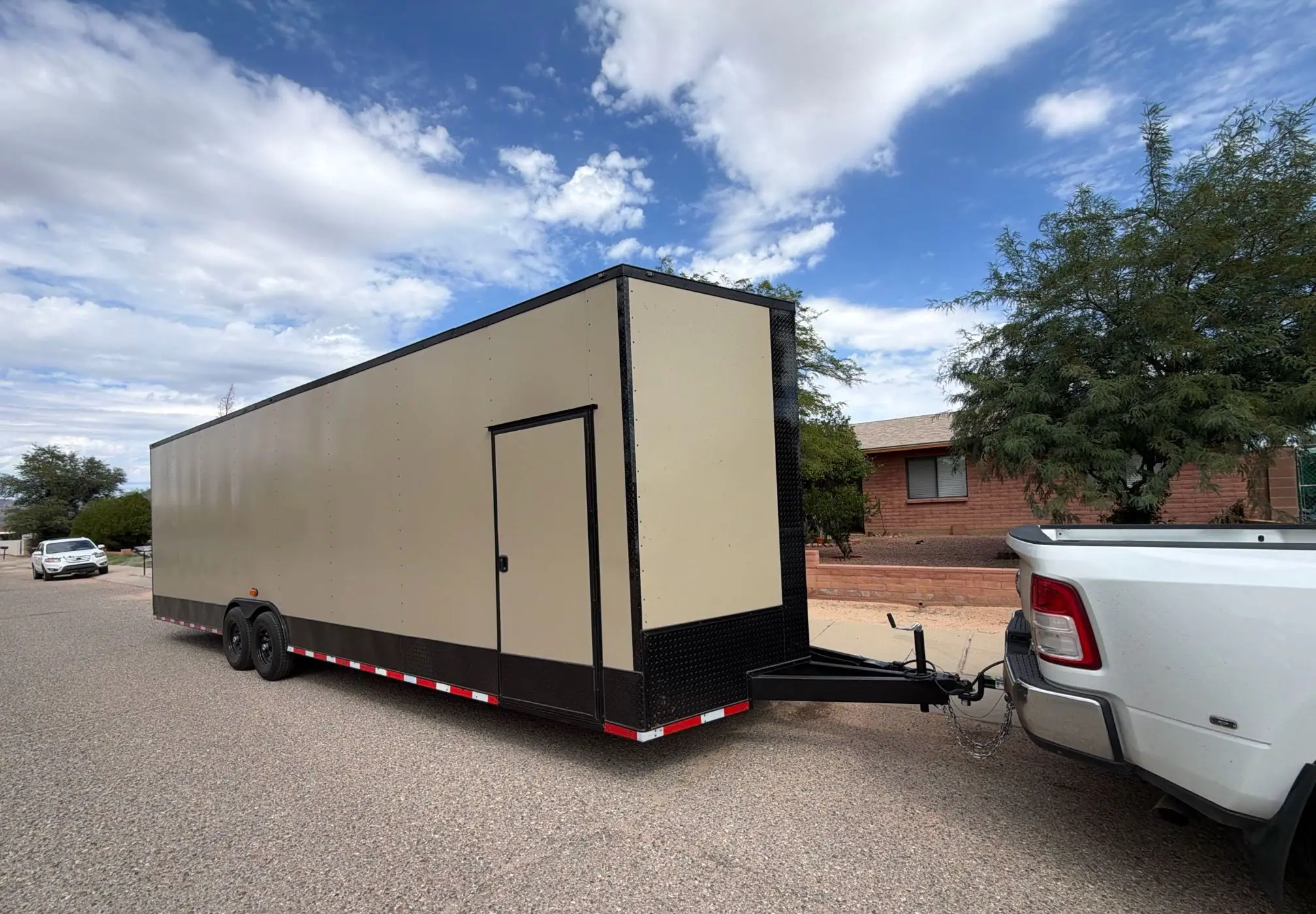
Shipping a 2026 WOW Cargo 32ft V-Nose Enclosed Trailer from Fitzgerald, GA to Tucson, AZ
We finished the towing of a 2026 WOW Cargo 32ft V-nose enclosed cargo trailer from Fitzgerald, Georgia to Tucson, Arizona recently. It involved 1,815 miles at a total cost of $3,050.00, making it a charge of $1.68 per mile.
The previous tow was a used travel trailer, and this is a towaway. This is actually our second towaway of the month after the travel trailer. In that one, we were towing the client’s own RV, whereas this time we are towing a brand-new unit from the factory.

The route

The 1,815-mile tow from Fitzgerald to Tucson runs across the Gulf South and the desert Southwest.
Fitzgerald sits in Ben Hill County in south-central Georgia, in an area with a long history of trailer manufacturing. The driver works west to Tifton and picks up I-75 south toward Lake City, Florida.
At Lake City the route turns west on I-10 and stays on it for almost the entire trip. It runs through Tallahassee and along the Gulf coast past Mobile and New Orleans, entering Texas at Orange.
The long Texas stretch continues through Houston and San Antonio and Fort Stockton and El Paso, then crosses New Mexico past Las Cruces. Tucson sits just over the Arizona line, and the 85757 area is on the southwest side of the city.

Towing a brand-new unit

A brand new trailer coming out of the factory doesn’t face the same wear issues associated with a used trailer.
It might lack license plates. An unregistered unit doesn’t have anything to operate on and thus usually moves under the transportation authority of the carrier. This is perfectly normal; however, one needs to clarify it during booking.
The documentation in this case will be an MCO instead of the title. A new trailer comes along with the manufacturer’s certificate of origin, which then has to be converted into the title by the buyer at their DMV office. The same as any other towaway, the MCO goes along with the parties, not with the trailer itself.
“New” is not synonymous with “untouched.” Lug torque, bearing grease, lights, and breakaway all get checked before the rig is allowed to leave the shop. A new trailer coming out of the factory does not equate to a ready-to-drive trailer, and the driver who fails to make those checks, thinking the rig is, is wrong.

Thirty-two feet of box will generate some wind drag. The V-nose helps, but a big, high box is going to generate wind drag no matter what. Crosswinds in west Texas and southern New Mexico are a reality, and they will impede rather than endanger the drive.
So go ahead and double check the specs with the trailer builder. The length, width and overall height. If it is a new rig, there are written records of the measurements, no need to cite an estimate.

What $1.68 per mile reflects

There are two factors behind this number.
The towaway remains a one-unit job. As we learned from the travel trailer, the towaway driver is driving your trailer alone. He has no deck to carry along with him and no additional customers to help contribute to the haul – that is why towaway is higher than car haul rates.
The distance drove down the rate. The very travel trailer that hauled for $1.92 per mile had a distance of 1,082 miles. However, the one in this scenario had 1,815 miles distance for $1.68 per mile.
The corridor factor also plays its role here. The Interstate 10 that stretches across the southern strip of the United States is one of the most active freight corridors in the country.

What the trailer is exposed to

The towaway can have no open or closed option since the unit is open for the entire journey, being driven instead of loaded, and thus exposed to weather elements and road debris.
The information should be communicated clearly to the buyer about the new trailer. This trailer will come with road film and bug strikes on the front as a result of traveling the 1,815 miles on highways, and these are considered normal conditions and not damage. In the condition report given at the time of delivery, the important issues discussed will be dents, scrapes, and any structural damage.
Doors, ramp, and vent closures are included in pre-trip inspection. Coupler, chains, and breakaway cable check-ups are done during hitch-up.

Transport summary
- Origin: Fitzgerald, GA 31750
- Destination: Tucson, AZ 85757
- Distance: 1,815 miles
- Service cost: $3,050.00
- Cost per mile: $1.68
- Unit: 2026 WOW Cargo 32ft V-nose enclosed cargo trailer
- Service type: Towaway, on its own wheels
- Route: Fitzgerald, GA → west to Tifton → I-75 south to Lake City, FL → I-10 west through Tallahassee, Mobile and New Orleans → Houston and San Antonio, TX → Fort Stockton and El Paso → Las Cruces, NM → Tucson, AZ
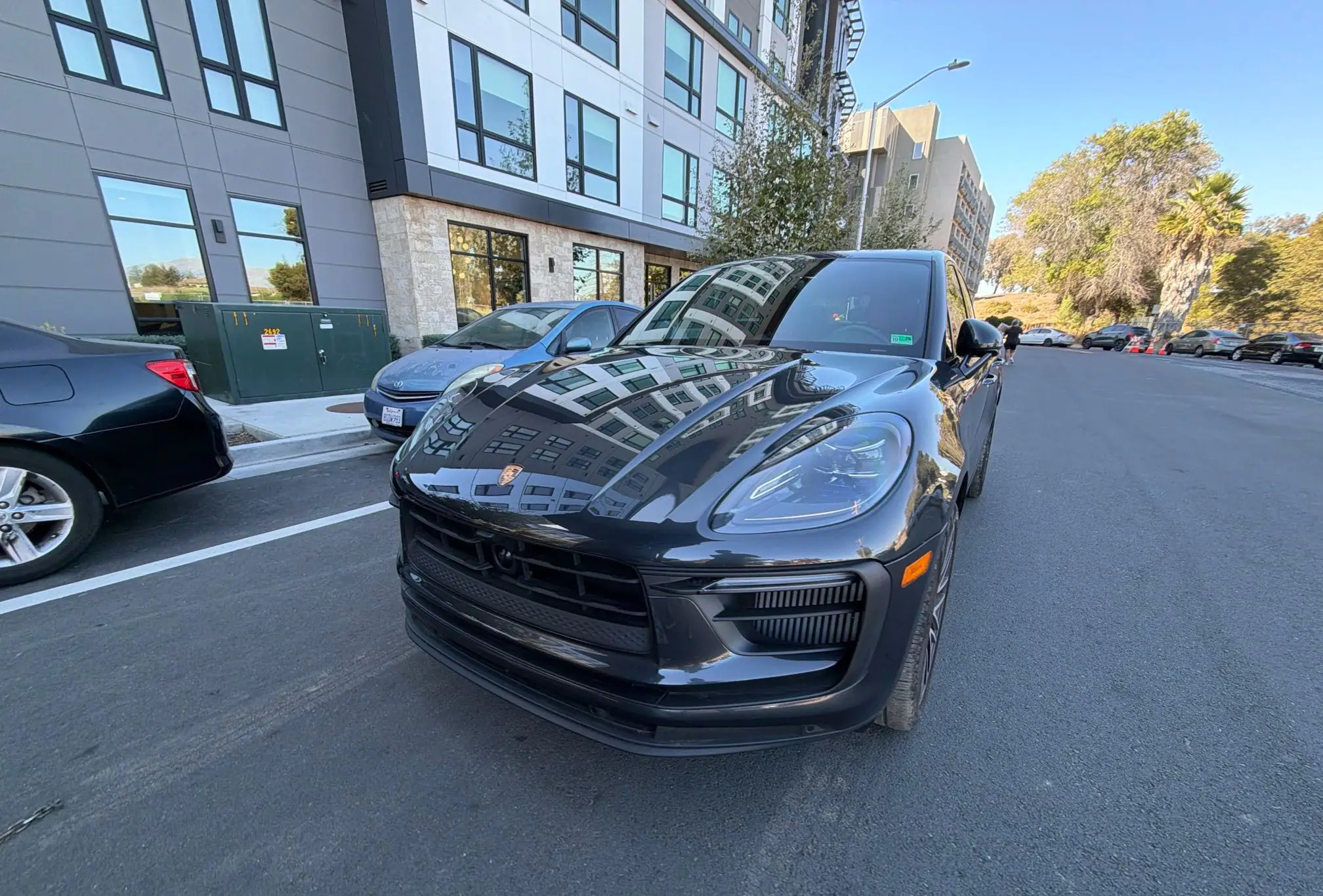
Shipping a 2025 Porsche Macan from Falls Church, VA to Santa Clara, CA
The transport of a 2025 Porsche Macan from Falls Church, Virginia, to Santa Clara, California, ended just a few days ago. The trip covered 2,841 miles in an enclosed carrier, costing $2,776.00, or $0.98 a mile.
The Macan could be driven at the time of pickup. This per-mile cost is the lowest we have posted for an enclosed car, and it is under a dollar, which is shocking. It is important to understand how distance affects the cost of an enclosed car, and how it doesn’t.

The route

This 2,841-mile route goes from Falls Church to Santa Clara, stretching across the United States from Washington DC to Silicon Valley.
The starting point for this route, Falls Church, is found inside the Beltway, west of Washington. From here drivers will travel west on I-66 and move onto I-81 heading north to Harrisburg, PA.
In Pennsylvania the route continues west on the Pennsylvania Turnpike through Pittsburgh and onto I-80 through Ohio and Indiana and Illinois and Iowa, past Des Moines and Omaha in Nebraska.
This route continues further west on I-80 through Cheyenne, Wyoming, over the Wasatch Range to Salt Lake City, Utah, and across Nevada through Elko and Reno. I-80 travels up the Donner Pass into California and into Sacramento.
Finally, the drive moves southwest to the Bay Area, with the ending point, Santa Clara, at the southern end of San Francisco Bay and thus on I-880.

What distance does to the enclosed premium

Enclosed always seems to double the rate in customer minds. The margin gets closer for longer hauls. This haul demonstrates just how close.
The markup does not scale with the route but is largely set. Enclosed costs more because there are fewer trucks on the haul and fewer drivers running the equipment. That’s overhead associated with the route, and it doesn’t scale with the miles.
As the haul gets longer, that overhead gets less. We reported a 518 mile enclosed haul at 3.71 cents a mile. The same service over 2,841 miles cost 98 cents a mile. Nothing has changed on the trailer front. Just the math.
That makes enclosed in long distances something of a regular player. For 98 cents a mile, this belongs right in with many open mid-range rates we have published. In terms of per mile, the coast-to-coast enclosed rate isn’t an exception.
Nevertheless, it is still the real figure, since $2,776.00 represents a more substantial amount than the price of an identical vehicle on an open trailer along the same route. The discrepancy decreased on a per mile basis. Yet, it never went away, and those considering the purchase need to do the math.
If the plan is to go with the enclosed shipping, then it is all about distance. The coverage spans over 2,841 miles instead of only a couple of hundreds, while the cost of per mile insurance coverage stands at its lowest level.

What $0.98 per mile reflects

Two factors competing, distance being the winner here.
The distance is a key driver. Loading and unloading costs the carrier the same in any case, and security and coordination and delivery too, and after covering 2,841 miles sharing will be small even for an enclosed vehicle.
An enclosed vehicle retains its premium. Small number of vehicles and operators make this higher than an open transport along the same route.
The corridor is helpful here. I-80 is the main transcontinental corridor northbound, and both Seattle and Bay Area are major markets with traffic in both directions.
Vehicle is simple. A Macan is a compact sport utility vehicle at standard ground clearance, so there was no need for a liftgate or any equipment premium.

Enclosed transport

The trailer sides enclosed the entire load path, which in a route including Wyoming and the Nevada desert is where an open deck would reveal the disparity.
Loading was easy. The vehicle was running and driven onto the deck by itself, and there was no clearance problem as there often is with a low sports car.

Securement involved soft straps over the tires rather than chains around the suspension system, with no contact made with the wheel faces. Porsche rims are costly to be refurbished, and curb damage may go unnoticed at delivery time, thus it pays to take pictures of them yourself before the truck gets there.

Transport summary
- Origin: Falls Church, VA 22046
- Destination: Santa Clara, CA 95054
- Distance: 2,841 miles
- Service cost: $2,776.00
- Cost per mile: $0.98
- Vehicle: 2025 Porsche Macan
- Condition: Operable
- Trailer type: Enclosed
- Route: Falls Church, VA → I-66 west → I-81 north to Harrisburg, PA → Pennsylvania Turnpike west through Pittsburgh → I-80 west across Ohio, Indiana and Illinois → Des Moines, IA → Omaha, NE → Cheyenne, WY → Salt Lake City, UT → Elko and Reno, NV → over Donner Pass → Sacramento, CA → I-880 south → Santa Clara, CA
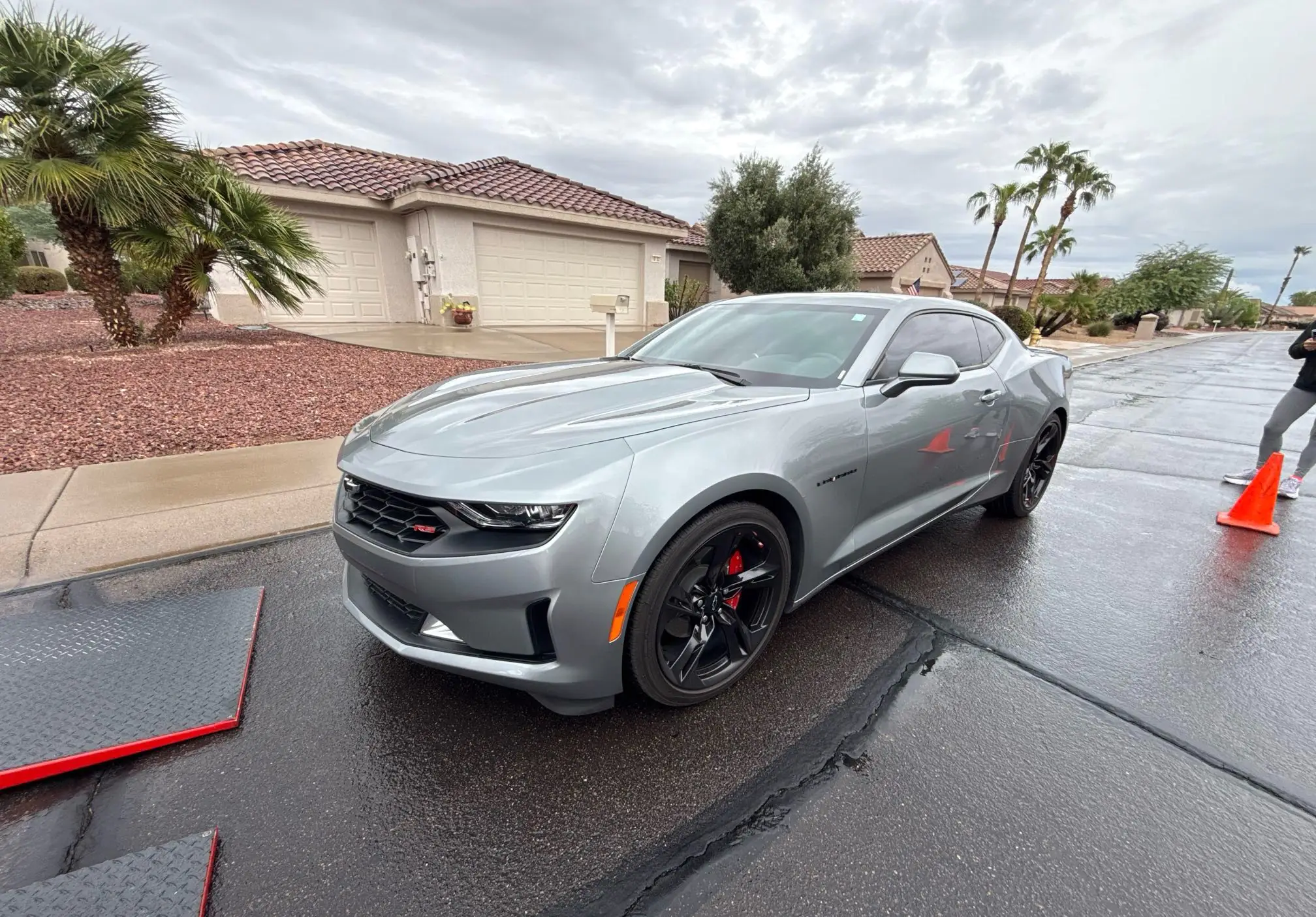
Shipping a 2023 Chevrolet Camaro 2LT RS from Eugene, OR to Surprise, AZ
The move of the 2023 Chevrolet Camaro 2LT RS, moving the car from Eugene, Oregon to Surprise, Arizona, is completed recently. It moved over a distance of 1,129 miles inside an enclosed trailer at a price of $1,493.00, which is $1.32 per mile.
The car was operational at pick-up. Under our usual assessment of open or enclosed, a car produced in the last two years, a coupe, would easily be shipped open. But this car was shipped enclosed because of its status as a discontinued model by Chevrolet.

The route

The 1,129 mile drive between Eugene and Surprise stretches across the entire coast of the western United States and then east across the Sonoran Desert.
Eugene is located in the Willamette Valley, an origin location that we have used before. From Eugene drivers take I-5 south past Roseburg and Medford, crossing Siskiyou Pass into California.
I-5 follows its course through Redding and Sacramento then south through the Central Valley, passing through Stockton, Fresno, and ending in Bakersfield.
From Bakersfield, the journey heads east on CA-58 through Tehachapi Pass, continuing to Barstow where it joins I-15 on the way to the Inland Empire. From there, I-10 leads the way east through Palm Springs and Blythe into Arizona.
Surprise is located just northwest of Phoenix, and the journey concludes with a trip along US-60.

When a mainstream car stops being mainstream

Chevrolet concluded production of the sixth generation of Camaros in 2024 model year. The corporation said it was possible that the name would be revived in one way or another, but the car in question belongs to a batch that is already discontinued.
The owners begin to act differently towards the car, and it needs to be stated clearly what it implies.
Discontinuation of production marks the end of supply. Whatever quantity has been produced is the final number. This applies to every discontinued car model, and is the only thing that is not subject to forecasting.
Owners begin to take care of their cars much sooner. People who would simply shake off a stone chip from their car start taking things more seriously after the model gets its last year.
We are not predicting any values; many discontinued cars will never appreciate, and we don’t need to predict that one will. But what we can say is that the decision to protect it was rational and that it was up to the owner.
Enclosed is available to anyone. As we have noted before in regard to the Civic as well as the new Range Rover Evoque, enclosed is a service available for purchase rather than a level for exotics. We neither sell it nor argue when someone wants it.
And what we can say straightforwardly. For a two-year old car with a modern clear coat, the open option would have been quite adequate on this route under those conditions. The customer has made a conscious choice, which is the right approach.

What $1.32 per mile reflects

Two key forces drive this number, and they work against one another.
Enclosed service drives it higher. Enclosed trailers transport fewer vehicles per haul and represent a smaller portion of the trailer fleet, and they command a premium on each enclosed shipment.
Distance works to lower it. At 1,129 miles, the fixed costs of pick-up, load, secure, and delivery have enough mileage to be covered. We quoted a 518-mile enclosed job at $3.71 for precisely this reason.
The route is simple enough. I-5 and I-10 are both primary trucking routes, and Phoenix metro area is a good market.
Ground clearance was not a consideration like it would be with a Corvette. The Camaro had ground clearance below that of a normal coupe, but within the capabilities of the normal ramp so no liftgate premium was required.

Enclosed transport

The sides of the trailer coped with the desert dust that was characteristic of the I-10 section of the route, because this is where the open platform would have helped out the most.
Securement was done using soft straps over the tires and not chains over the suspension to avoid the wheel faces. This is significant for the vehicle equipped with low-profile tires on big wheels, as such a vehicle can easily get curb rash.

Transport summary
- Origin: Eugene, OR 97401
- Destination: Surprise, AZ 85374
- Distance: 1,129 miles
- Service cost: $1,493.00
- Cost per mile: $1.32
- Vehicle: 2023 Chevrolet Camaro 2LT RS
- Condition: Operable
- Trailer type: Enclosed
- Route: Eugene, OR → I-5 south through Roseburg and Medford → over the Siskiyou Pass → Redding and Sacramento, CA → Central Valley to Bakersfield → CA-58 east over Tehachapi Pass to Barstow → I-15 south → I-10 east through Palm Springs and Blythe → Phoenix, AZ → US-60 northwest → Surprise, AZ
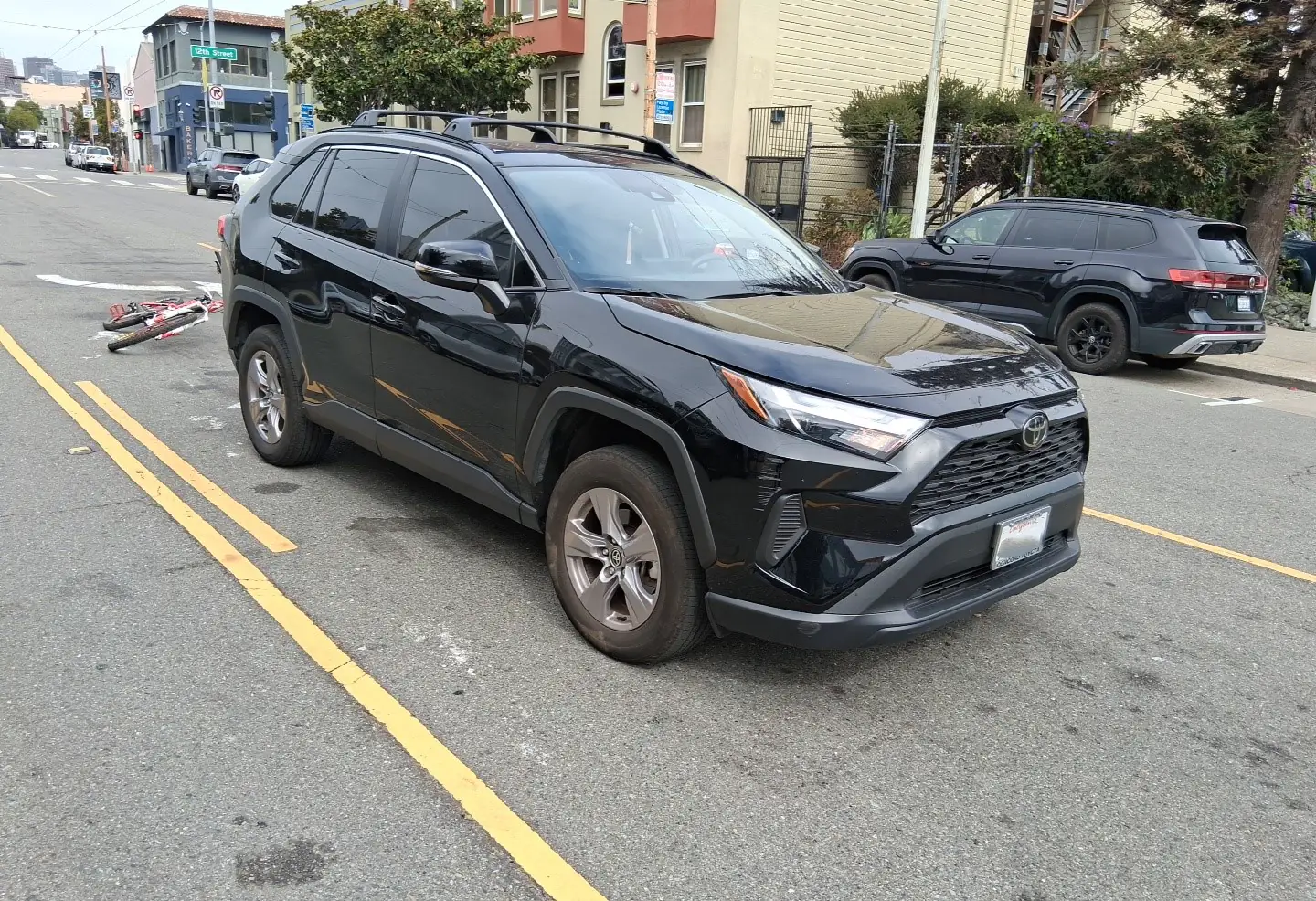
Shipping a 2025 Toyota RAV4 from San Francisco, CA to Portsmouth, VA
Not long ago we completed the delivery of a Toyota RAV4, 2025, from San Francisco, CA, to Portsmouth, VA. The transport route was 2,974 miles on a flatbed and cost us $1,550.00, which means $0.52 per mile.
It must be noted that the car in question was operational when picked up. Recently, we published the price of a 1950 Oldsmobile for $0.58 per mile, stating that it’s the lowest price that can be obtained for this type of service. The current delivery falls under this mark and there’s a specific reason for it.

The route

The 2,974-mile drive is made between San Francisco and Portsmouth, which runs through the entire country, from the Pacific coast to the Chesapeake.
Drivers start their journey in San Francisco from the east, passing over the Bay Bridge and getting on I-80 to Sacramento via the Sierra Nevada through Donner Pass into Nevada.
I-80 will be used for the major part of the trip. I-80 passes Nevada through Reno and Elko, then through Salt Lake City, Utah, Wyoming through Rock Springs and Cheyenne, Nebraska and Iowa from Omaha and Des Moines to Chicago.
Then, the journey continues eastward along I-80 through Indiana and Ohio, joining the Pennsylvania Turnpike to Harrisburg. The route continues to the south from there using I-83 to Baltimore and then I-95 to Richmond, Virginia.
I-64 completes the eastward trip to Williamsburg and Newport News and then Hampton Roads. Portsmouth is located across the Elizabeth River from Norfolk.

The easiest possible load

Such a rate isn’t a discount but rather an outcome of a delivery that doesn’t place any special requests to anyone at any time.
Nearly three thousand miles. The pickup, loading, securing, coordinating, and delivering services take almost equal effort on any delivery and are distributed between 2,974 miles, reducing their portion down to minimum possible.
Open transportation. There are more vehicles used per delivery and much more trucks moving, and the difference grows even more in such a distance.
One single position, and it is also relatively small. The RAV4 crossover is relatively small at only 181 inches in length. It is smaller than the previous owner of the lowest rate 1950 full-sized sedan.
There is nothing that requires maintenance on the truck. It rolls up and it rolls down; it sits level to ride height; it has clear-coat paint rather than fifty-year-old paint. No liftgate, no winch, no one-time handling at each end.
Two real markets. The Bay Area and Hampton Roads are two places that provide constant vehicle activity, and I-80 is the main northern transcontinental road. No detours were taken.
That is the actual lesson. The floor is not a target. It is the result of the market acting with everything working in favor of that outcome, and asking won’t move the quote towards it on a load where they don’t.

The range now reads $0.52 to $3.71

We have come up with numbers covering a range that is more than seven times on the same exact service.
Here at the bottom is this shipment. Longest distance, open trailer, a newer small vehicle, two loaded stops, none requiring any special equipment.
And here at the top is this 518 mile run of an enclosed Corvette to West Texas at $3.71. Shortest distance, enclosed, lift gate required, distant destination.
Everything in between. That’s why we say the per mile number is meaningless without comparing it to another similar job, and why the total matters.

Open transport

The RAV4 was transported on a flatbed trailer, which is how the great majority of cars in this country are transported.
This is a current production compact SUV with a factory clear coat. There is enclosed transport for cars that a rock chip will actually mean something to financially, but for 2,974 miles the cost of enclosed would have been significant for a vehicle that doesn’t need it. That is what we said.
Ground clearance was never an issue. The securing of the car utilized soft straps around the tires and not chains around the suspension like we do on all vehicles.

Transport summary
- Origin: San Francisco, CA 94114
- Destination: Portsmouth, VA 23704
- Distance: 2,974 miles
- Service cost: $1,550.00
- Cost per mile: $0.52
- Vehicle: 2025 Toyota RAV4
- Condition: Operable
- Trailer type: Open
- Route: San Francisco, CA → I-80 east over the Bay Bridge → Sacramento → over Donner Pass → Reno and Elko, NV → Salt Lake City, UT → Cheyenne, WY → Omaha, NE → Des Moines, IA → Chicago, IL → I-80 east across Indiana and Ohio → Pennsylvania Turnpike → Harrisburg, PA → I-83 south to Baltimore, MD → I-95 south to Richmond, VA → I-64 east through Williamsburg and Newport News → Portsmouth, VA
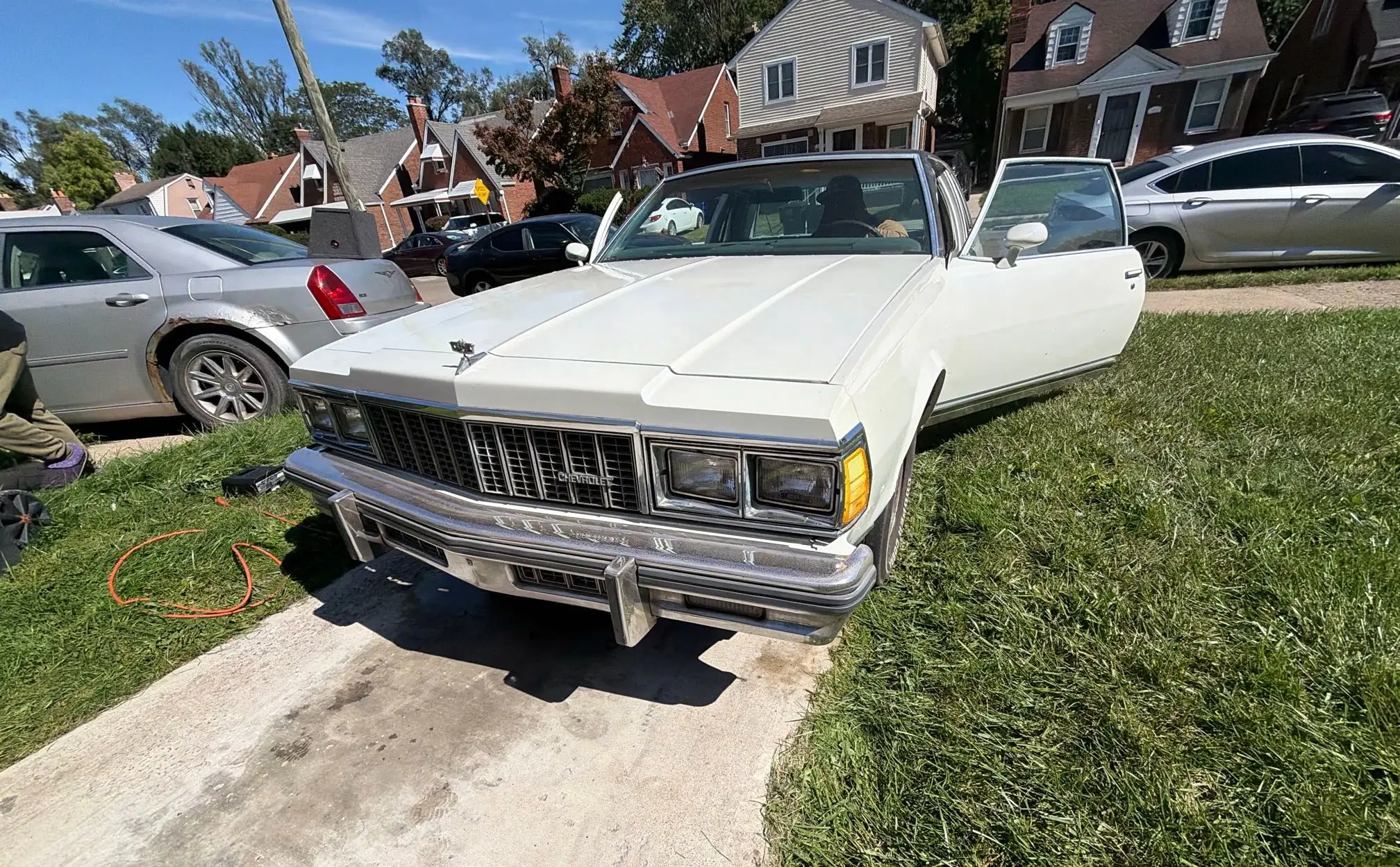
Shipping a 1979 Chevrolet Caprice from Detroit, MI to Elmhurst, IL
Recently, we concluded transporting a 1979 Chevrolet Caprice from Detroit, MI to Elmhurst, IL. This shipment entailed 291 miles via an open trailer and cost $550.00, equivalent to $1.89 per mile.
This vehicle was drivable when it was picked up. This is the shortest distance that we have published, with 291 miles being a five-hour drive. The most immediate question raised is why someone would pay for a drivable car to be transported such a distance. For a forty-six year old car, this is a simple issue.

The route

The drive between Detroit and Elmhurst covers 291 miles in one interstate traveling along the south end of Lake Michigan.
The 48235 code is located in northwest Detroit. Motorists enter the interstate and travel southwest from Detroit via I-94 and head across southern Michigan cities of Ann Arbor and Jackson, as well as Battle Creek and Kalamazoo.
The highway enters Indiana near Michigan City and heads through Gary in Indiana along the south end of the lake; here the industrial zone causes the longest delays on the route.
The route continues north along I-294 and reaches the western suburb of Chicago. Elmhurst is located in DuPage County, some 15 miles from downtown Chicago.

Why ship a car you could drive in five hours

We have laid out a straightforward rationale for choosing to drive the car yourself on a modern car on a long journey. On an old car on a short trip, the rationale is reversed.
Driving nicely in the neighborhood does not equate to driving 291 miles on the highway. An old car that fires up nicely and drives locally is asked to do something entirely different when it has to drive highway speeds for five straight hours. This is seen in the cooling systems, fuel delivery systems, and electrical charging systems.
The most likely thing to wear out is the tires, and their age determines this. Tires on an old car that only drives a couple of hundred miles annually might seem brand new but might be well overdue for replacement. Look at the date stamps on the tires rather than the tread.
The brakes on an old car are not like brakes on modern cars. Drum brakes, no assist system on the majority of old cars, and no anti-lock system.
Breakdowns cost more than the trip itself. Having the vehicle towed halfway, spending a night at an unknown location, and getting repairs by someone nearby are way cheaper than $550.00. This is the real comparison instead of the per-mile charge.
The fact that the mileage increases makes the difference with a car that is collected. Increasing 291 miles on a good condition car is no small thing, and especially with an old car, the mileage is what the future buyer is purchasing.
However, the per-mile charge looks really bad and is not relevant at all. With 291 miles on the vehicle, the fixed costs for the service fall on only a few miles, hence the charge of $1.89 is understandable. The important charge is $550.00.

What $1.89 per mile reflects

There is just one overriding factor.
Distance is that factor. This run is our shortest ever at 291 miles. The costs involved in pickup and loading are about the same regardless of whether you have a distance of 291 miles or 2,600. They are similar costs for securement and coordination and delivery. In this case, there is very little distance on which to spread out those costs.
The route is not the problem either. Interstate 94 is one of the most traveled trucking lanes in the Midwestern region. It features two important markets, namely Chicago and Detroit, located at both ends of the route.
Then again, the truck is not the problem either. It is long but takes up only one position during loading.

Open transport on a classic

Open is the sensible choice for this job given the distance – 291 miles – and good weather conditions. Enclosed shields a car from the dangers of the road and the elements throughout its entire journey and costs extra, but there is only 5 hours on the interstate to be exposed.
Winter changes that equation. As mentioned on a popular route through Minnesota, they salt like crazy, and salt finds its way underneath a car on an open trailer in a way rain cannot.
The 1979 vintage model has no engineering for tie down points, so the securing process was done with soft straps across the tires instead of chains looking for proper attachment points on the chassis. The vintage car was started once upon pick-up and once upon delivery, and left untouched in between.

Transport summary
- Origin: Detroit, MI 48235
- Destination: Elmhurst, IL 60126
- Distance: 291 miles
- Service cost: $550.00
- Cost per mile: $1.89
- Vehicle: 1979 Chevrolet Caprice
- Condition: Operable
- Trailer type: Open
- Route: Detroit, MI → I-94 west through Ann Arbor, Jackson, Battle Creek and Kalamazoo → Michigan City, IN → around the south end of Lake Michigan through Gary → I-294 north → Elmhurst, IL
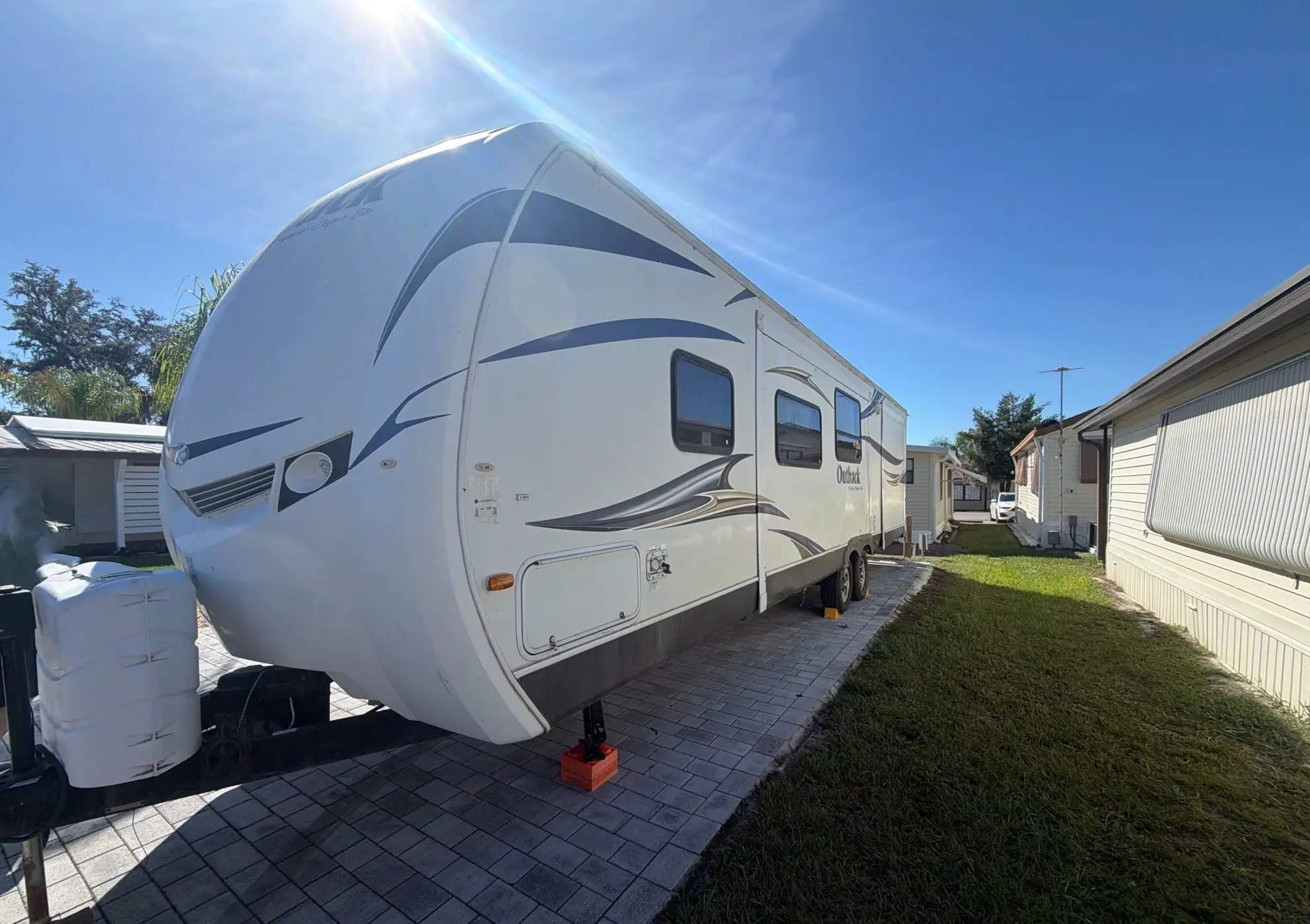
Shipping a 2015 Travel Trailer from Hollister, MO to Zephyrhills, FL
Recently, we completed the delivery of a 2015 travel trailer that was being shipped from Hollister, MO to Zephyrhills, FL. The travel trailer is 35 feet in length, 8 feet in width, 12 feet in height, and weighs approximately 9,000 pounds. The trip was 1,082 miles long and costs $2,075.00, equating to $1.92 per mile.
Towing an RV is not a car shipment. This type of shipment is not loaded on to a car carrier and is not among eight cars on a deck. Almost nothing we have mentioned concerning open and enclosed trailers will apply here.

The route

Towing 1,082 miles from Hollister to Zephyrhills will start in the Ozarks and continue through the Deep South before ending in central Florida.
Hollister is located south of Branson in the Missouri Ozarks. The drive will head south on US-65 via Harrison, Arkansas, and through Conway and Little Rock.
Then the trip will switch to I-40 heading east to Memphis, switching to I-22 south to Birmingham, Alabama. From there, I-65 goes south to Montgomery and US-231 takes the tow down to Dothan.
Then the tow crosses the state line onto I-10 east across the Florida Panhandle, switching to I-75 south through Ocala. Zephyrhills is located northeast of Tampa in Pasco County.
This first part deserves some comment. US-65 through the Ozarks is a two-lane road with grades and curves, which makes towing 35 feet and 9,000 pounds through it tougher than the miles of interstates ahead.

Towaway is a different service

This point of separation begins with the very first phone call made, since the following process will depend on it.
The trailer has its own wheels. A driver arrives with a proper tow vehicle and drives it there. There is no load being placed anywhere on anything.
This means that we deal with a one unit move. A car carrier has to distribute its costs among seven or ten cars. A tow-away driver only moves your trailer and nothing more. This fact alone accounts for almost all differences between this price and the car price per mile.
Your trailer must be roadworthy. This is where the owner makes a mistake. Your unit will be moving on the highway for 1,082 miles, so it will need proper tires, wheel bearings, brakes, lights, breakaway system and current registration.
The problem lies with tires. The tire life of the trailer usually ends much sooner than its wear does. The trailer that has stayed parked for one or two seasons may seem to be in good shape, but may have tires that cannot withstand towing. Better check the dates than treads.
The dimensions limit the options. Since this trailer is 8 foot wide and 12 foot high, there is no need to apply for any permits or hire an escort. Otherwise, the answer will become more complicated than giving the quote.
The weight determines the appropriate tow vehicle. With the weight of 9,000 pounds this trailer requires an appropriately rated truck and a tow hitch. Not every pickup can pull the trailer like this.
So provide exact figures at booking time. Provide length, width, height, and weight, either from the plates or documents, but not from memory. The quote based on false dimensions is no quote.

What $1.92 per mile reflects

Two factors are responsible for this price, and the first factor is the complete picture.
It is a solo journey. A single driver, a single tow vehicle, a single unit, for the 1,082 miles journey. There is no deck to share and no other customer sharing this particular journey. Contrast it with the price of $0.58 per mile for a car being shared on an open deck coast to coast. It’s not about distance but the math of one unit versus nine units.
The size cuts the number of possible drivers. A 9,000 pound trailer requires a capable tow vehicle and a driver who can handle the 35 feet behind him/her. Fewer drivers translate into fewer bids.
The distance calculation follows convention. This being a mid-sized journey of 1,082 miles, pickup and delivery costs are significant per mile.

What the trailer is exposed to

No such thing as open or enclosed either. This is outside the whole time since the trailer is being towed, and so it’s to be expected that the weather and road debris will be just part of the task.
Which means there are a few things worth checking before the driver comes. Roof vent covers closed and latched. Awnings tucked up and tied down. Loose stuff on the inside put away, since the trailer will be rolling along at highway speed without anybody looking into it. Propane turned off and tanks sealed.
Hitch and coupler will be checked at pickup time by the driver, along with safety chains and breakaway cable, and it is included in the condition report like anything else.

Transport summary
- Distance: 1,082 miles
- Service cost: $2,075.00
- Cost per mile: $1.92
- Vehicle: 2015 travel trailer
- Length: 35 feet
- Width: 8 feet
- Height: 12 feet
- Weight: approximately 9,000 pounds
- Origin: Hollister, MO 65672
- Destination: Zephyrhills, FL 33541
- Service type: Towaway, on its own wheels
- Route: Hollister, MO → US-65 south through Harrison, AR → Conway and Little Rock → I-40 east to Memphis, TN → I-22 southeast to Birmingham, AL → I-65 south to Montgomery → US-231 south to Dothan → I-10 east across the Florida panhandle → I-75 south through Ocala → Zephyrhills, FL
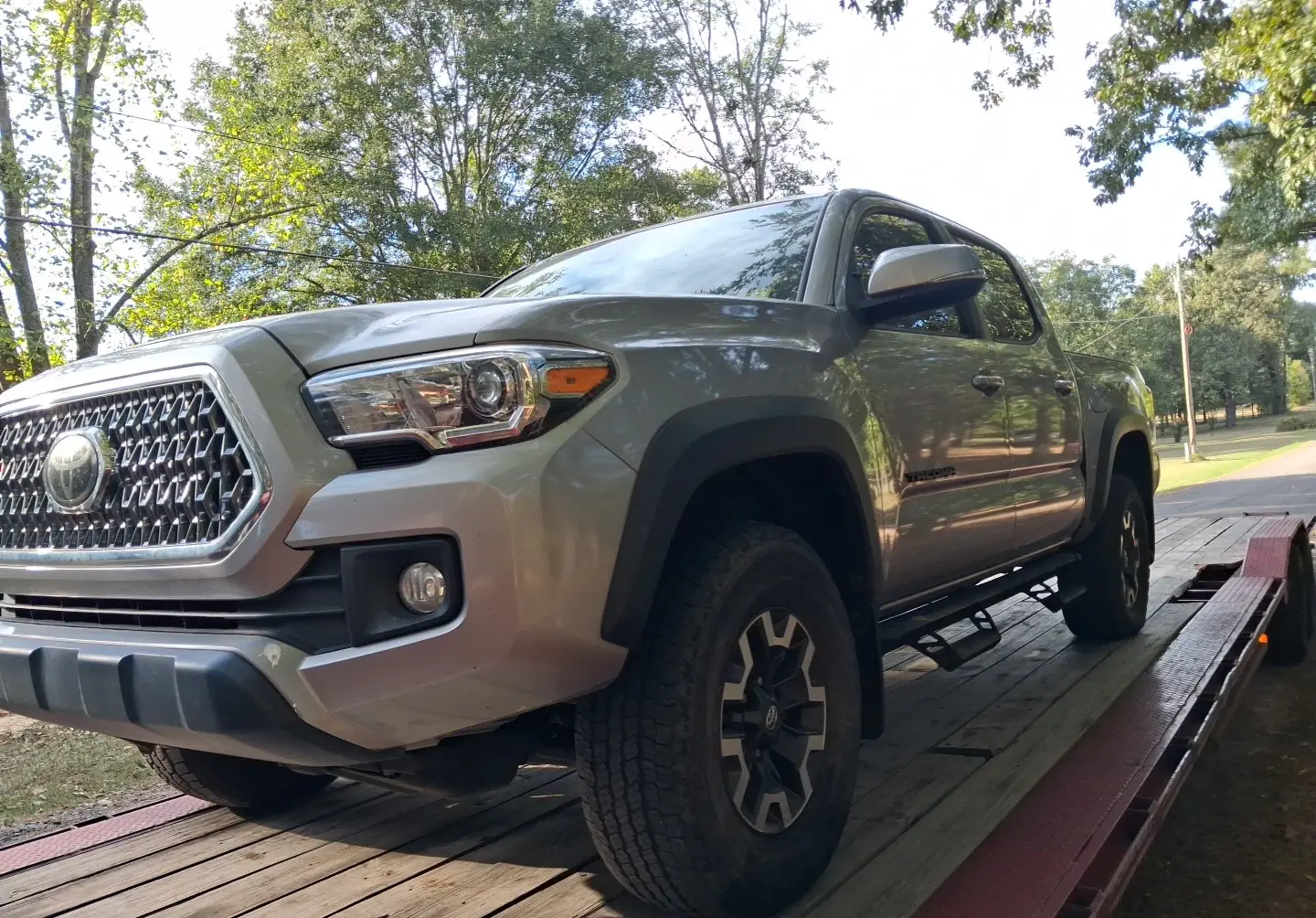
Shipping a 2019 Toyota Tacoma from Cabot, AR to Plano, TX
We have completed the transportation of 2019 Toyota Tacoma from Cabot, AR to Plano, TX. It involved 342 miles and was done on an open trailer for the price of $675.00. In other words, it was priced at $1.97 per mile.
Toyota Tacoma had the possibility of being driven during the pickup. Recently we have listed Hyundai Tucson transported for 340 miles less two miles than in this case. Also, it was open and operable. It cost $550.00. This is a good example of how much can differ in prices for similar trips.

The route

From Cabot to Plano, which is 342 miles of driving southwest, is a direct path through Arkansas to North Texas.
Cabot is on US-67 in the northeast area of Little Rock. The route follows the path into Little Rock metro and gets on I-30 southwest all the way through Benton and Arkadelphia.
I-30 stretches from south central Arkansas all the way through to the state line, where it enters Texarkana, Mount Pleasant, Greenville, and Dallas metro.
Plano is located north of Dallas in Collin County, our recent destination that we hauled to on a much longer haul.

What varies on a short haul

In long haul transportation, distance dominates all other variables. In short distance travel, distance does not dominate, making other variables evident.
In both cases, fixed costs are very important. Fixed costs are relatively unaffected by distance, whether it be 342 miles or 2,600. Loading, securement, coordination, and delivery cost the carrier about the same amount either way. In this case, the costs make up the majority of the cost, which explains why both shipments fell into roughly the same price range and why both seem expensive per mile.
Vehicle size becomes the first distinction between the two. The Tacoma is a midsize pickup truck. This means that it is larger and heavier than a small SUV such as the Tucson, meaning it uses more space in the trailer and takes up more of the trailer’s weight capacity.
Corridor density is the next factor. Tucson hauled the Pennsylvania Turnpike and I-78 into the New York metro, where traffic density reaches maximum levels possible. Little Rock to Dallas is a solid lane; however, it is not the same because there are fewer trucks competing for the lane.
Both shipments are common cases. No liftgate and winch required, no remote delivery and no enclosed premium; this is the difference between the two common open bookings and the difference is the result of vehicle and corridor differences.
This is an important message. If you see a high price for a short-haul shipment compared to some other quote, the reason is likely to be one of the factors listed above, and not the mistake in the quote. You should compare the prices for the short-haul shipments overall and take the same vehicle class into consideration when comparing the lanes.

What $1.97 per mile reflects
Distance is clearly the controlling element. Being a short haul of only 342 miles, the overhead costs associated with the job come down to a small number of miles and the cost per mile becomes relatively high. The amount of $675.00 is the bottom line for our customer.
Size of vehicle makes a slight difference. A medium sized pick up requires more deck space than a standard car but does not approach the size of a one ton service truck.
Lane quality is satisfactory. Interstate 30, from Little Rock to Dallas, is a real lane with markets at both ends and carrier availability is not an issue.
Open transport

The Tacoma was carried on an open trailer, which is clearly the correct choice for a midsize pickup.
It’s a stock truck with a stock paint job. An enclosed trailer would be warranted when getting hit by a rock could be an expensive affair for the vehicle, but that’s not the case with the Tacoma headed to its new home.
However, there is one point of interest about pickups in general, as discussed with the GMC Sierra earlier. Anything such as a lift kit, larger tires, roof racks, and payload will have to be reported at the time of booking, as it affects the height and weight the carrier anticipates from your truck. The Tacoma shipped easily without any issues.
Securement was done using soft straps on the wheels and not metal chains on the suspension system.

Transport summary
- Origin: Cabot, AR 72023
- Destination: Plano, TX 75074
- Distance: 342 miles
- Service cost: $675.00
- Cost per mile: $1.97
- Vehicle: 2019 Toyota Tacoma
- Condition: Operable
- Trailer type: Open
- Route: Cabot, AR → US-67 into Little Rock → I-30 southwest through Benton and Arkadelphia → Texarkana → Mount Pleasant and Greenville, TX → Dallas metro → Plano, TX
