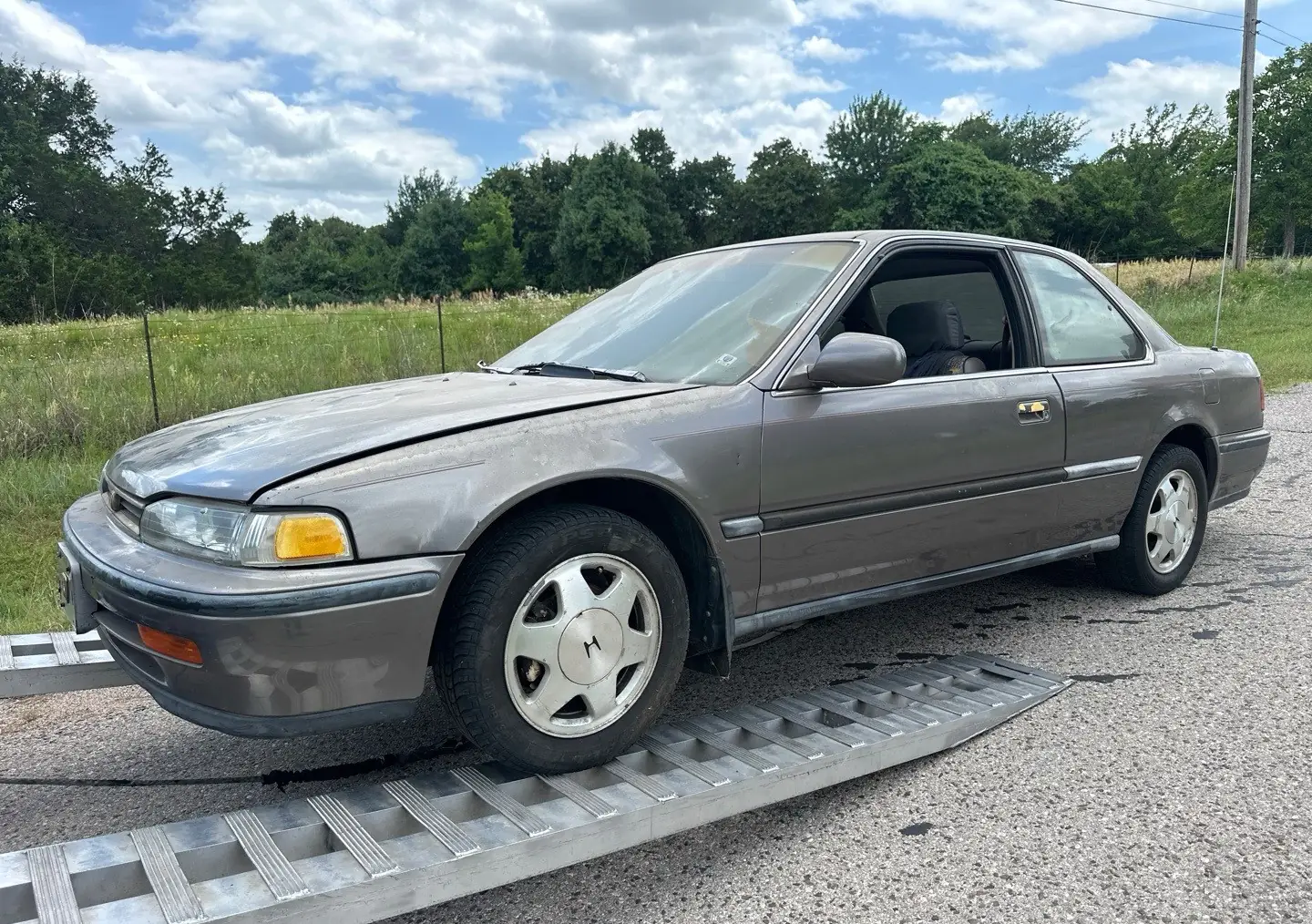
Shipping a 1993 Honda Accord from Norman, OK to Pembroke Pines, FL
Not all cars in need of relocation will be able to enter the trailer themselves. A recent transport service for a car, which took place between Norman, Oklahoma, and Pembroke Pines, Florida, involved relocating a 1993 Honda Accord. This was an old car, which could not be started, having been left to lie idle in the driveway. The distance covered was 1,489 miles, with the total cost amounting to $1,200. If you have an old daily car or inherited one which cannot start, then this may interest you.
Why an Inoperable Car Changes the Whole Plan
A running vehicle is easy. The driver aligns the trailer and the ramps, then the owner or the carrier drives it up. An inoperable car does not give that alternative, and thus the carrier has to use other means to load about 2,800 pounds of steel onto the truck.
This car could not be started, could not turn using its own power, and could not brake by itself. And that fact determined all further actions from choosing the carrier through to loading gear to use. Carriers calculate such services in higher rates since they involve more effort and take more time than a regular shipment of a vehicle that works fine. Standard rates for shipping inoperable cars are higher by a couple of hundreds of dollars than an operable similar shipment, and that is exactly how much this particular shipment cost.
When you book the shipment, you must inform whether your car is operable or not. And a vehicle marked as “operating” but in reality being dead is often rejected from the loading point, and sometimes even the price is revised.
The Winch Did the Heavy Lifting
However, since the vehicle was dead, it was winched onto the flatbed trailer by the carrier. Winching a non-functioning car is usually the norm, and most towing companies have winches as part of their equipment.
This is a mechanical system installed in the trailer used to haul the car using a wire cable or steel strap that is connected to the car’s chassis. Using the winch, the operator can pull the car steadily onto the trailer until it is fully on the ramp. In most cases, carriers use the electric winch which can lift 8,000 to 12,000 pounds and will handle the Accord easily. However, there are hydraulic winches designed for heavy loads, but were not required in this case.
This process is simple but requires some skill from the operator who has to ensure that the vehicle stays aligned on the ramp while keeping an eye on the cable. He has to do it slowly enough to ensure that everything goes smoothly. An electric winch pulls its load at about 10 feet to 25 feet per minute.
There are several key factors when using a winch to load the car. One needs proper mounting points, but if the body of the car was rusty or in poor condition, that could become a problem. Also, having at least some air in the tires made the job easier; flat tires are much more difficult to drag than inflated ones. The wheels needed to be unlocked for proper alignment up the ramp.
In the case of the Accord, none of those issues arose.
Open Transport

Open transport was selected, and it was the correct decision for a used economy sedan from 1993. Open transport carries the bulk of vehicles shipped in America because it is cheaper and operates more often than enclosed transport.
Open transport will place the vehicle on an uncovered multi-car trailer similar to those used for transporting new vehicles from manufacturers. The vehicle will remain exposed to sunlight, rain, and other elements along the shipping route. In the case of a luxury or rare vehicle, such shipping is unacceptable; thus, enclosed transport is recommended. However, in the case of a 30-year-old Honda already exposed to many years of driving, this kind of shipping provides very little added value.
Open transport also has an advantage due to its greater frequency because there are many open transport vehicles while the number of enclosed transport vehicles is limited. This means the wait until finding an available trailer may be lengthy. In this case, however, the route of transportation is busy with cargo traffic, making it easier to find a trailer for shipping.
The Route

The pickup point was in Norman, Oklahoma, while the delivery point was in Pembroke Pines, Florida. It is a distance of 1,489 miles in the route southeast from Texas, passing by the Gulf states and ending in South Florida. It involves popular transportation lanes throughout its length.
It is important not just for pricing but also for timeliness. A commonly used transportation route will have constant flow of carriers, allowing the transport of the cargo to be done within a short period of time as opposed to an unusual or rarely used route.
In this case, pickup from a Norman residence and delivery in a densely populated Pembroke Pines area was quite easy, because this is something carriers do often in these areas. Transporting from rural areas that are located far from the main roads will be more expensive and take more time.
Transport Summary
- Origin: Norman, OK, 73026
- Destination: Pembroke Pines, FL
- Vehicle: 1993 Honda Accord
- Trailer type: Open
- Condition: Inoperable
- The route: I-35 south out of Norman – I-45 down toward Houston-I-10 east across the Gulf states-I-75 south through Florida-I-95 / Florida’s Turnpike into Pembroke Pines
- Distance: 1489 mile
- Price: $1200

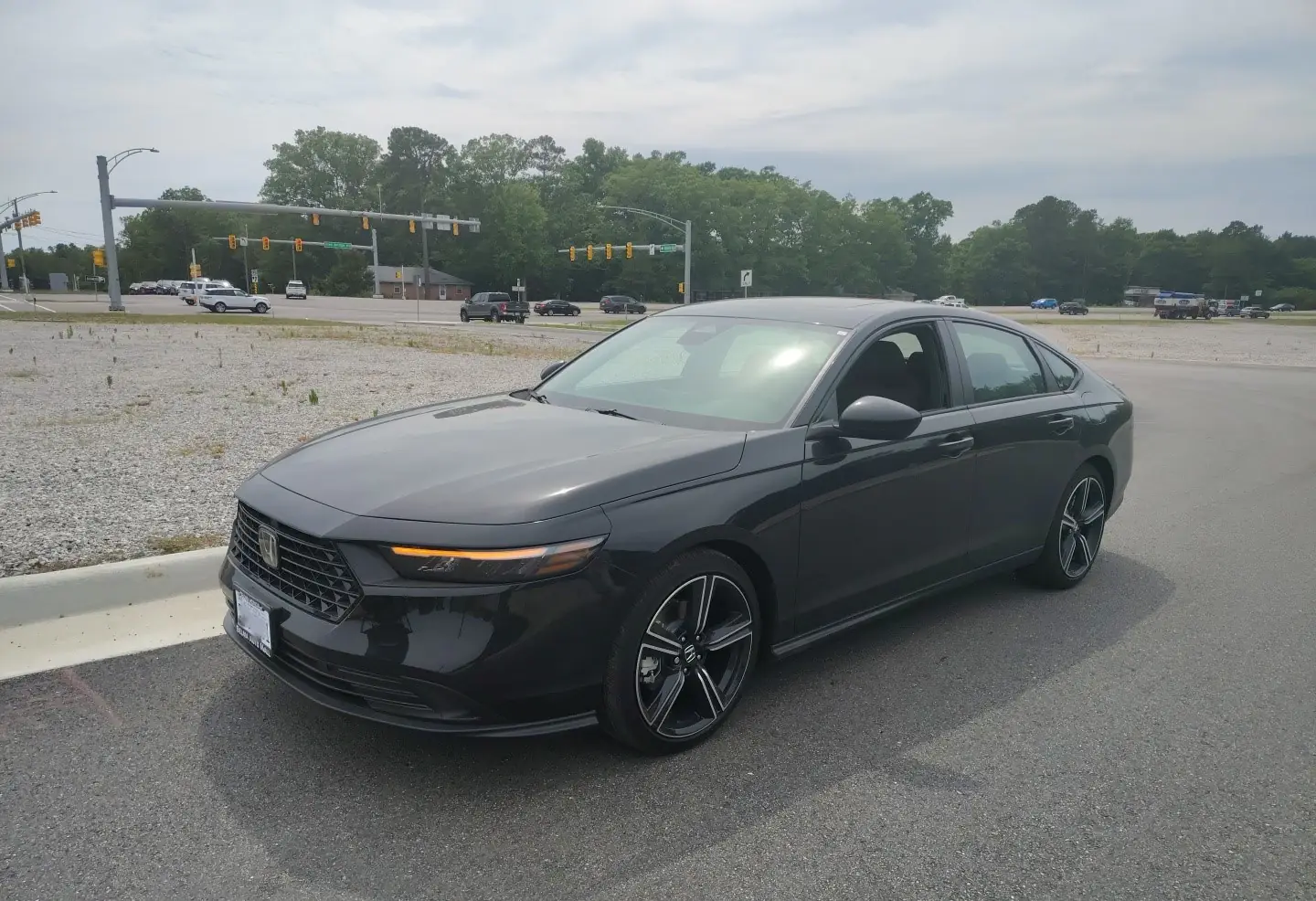
Shipping a 2026 Honda Accord Hybrid from Fresno, CA to Chesterfield, VA
The process of transporting your car from one side of the country to another involves many uncertainties. How much does it cost? How long is it going to take? Can you ship a new hybrid sedan using open transport? For those who wish to transport their 2026 Honda Accord Hybrid from Fresno, CA to Chesterfield, VA, here’s everything you need to know.
The Route

Fresno, (93723), to Chesterfield, (23832), is roughly 2,728 miles. That certainly qualifies this as a cross-country shipment that normally takes between seven to ten days.
It crosses major interstate highways, putting you at an advantage. Vehicles are usually moved along this particular path by many transport companies, meaning there is enough freight capacity in comparison to moving cargo to/from remote locations. The more the carriers, the lower the cost and quicker the pickups.
Open Transport

The mode of shipment known as open transport accounts for about 90% of all the vehicles shipped in the USA. For the 2026 Honda Accord Hybrid, open transport is the most suitable choice.
Open carriers are multi-level trailers that can transport from seven to ten cars at one time. These are the same types of trailers that bring cars from the manufacturers’ facilities to car dealers. With a standard ground clearance and no special requirements for dimensions, the loading process does not require much effort and time.
The most common concern about open transport is that vehicles will get wet. Open carriers expose vehicles to bad weather conditions while transporting, however, there have been few cases when cars received damages related to bad weather. The first advice is always to ensure that all the windows and a sunroof, if present, are closed before the shipment. Having a pre-shipping car wash helps identify all the marks on the vehicle and avoid disputes in case they occur later.
However, in the case of a vintage vehicle or an exotic car that may require additional protection or a car with extremely low clearance, it is better to use enclosed transport.
The 4-Day Delivery Window
When we talk about 4 days for delivery of this truck load, this means the amount of time it will take after the vehicle starts moving. In case of a distance of 2728 miles, 4 days may seem quite tough yet doable if things go well.
By federal law, driving can be done for a maximum of 11 hours while observing a minimum of 10 hours for rest period. When all the factors are considered, the average time for a coast-to-coast trip comes out to be around 5 to 7 days. The industry standard for such a transit is 7 to 10 days.
Four days can easily become possible if the company takes up the task in an almost straight path without any other stops along the way. It’s better to get some more information from your transport coordination manager on whether or not four days is a guarantee or a target estimate and how will it affect delivery if the former turns out to be true.
Transport Summary
- Origin: Fresno, CA, 93723
- Destination: Chesterfield, VA, 23832
- Vehicle: 2026 Honda Accord Hybrid
- Trailer type: Open
- Total price: $1606
- Distance: 2728 miles ($0.58 per mile)
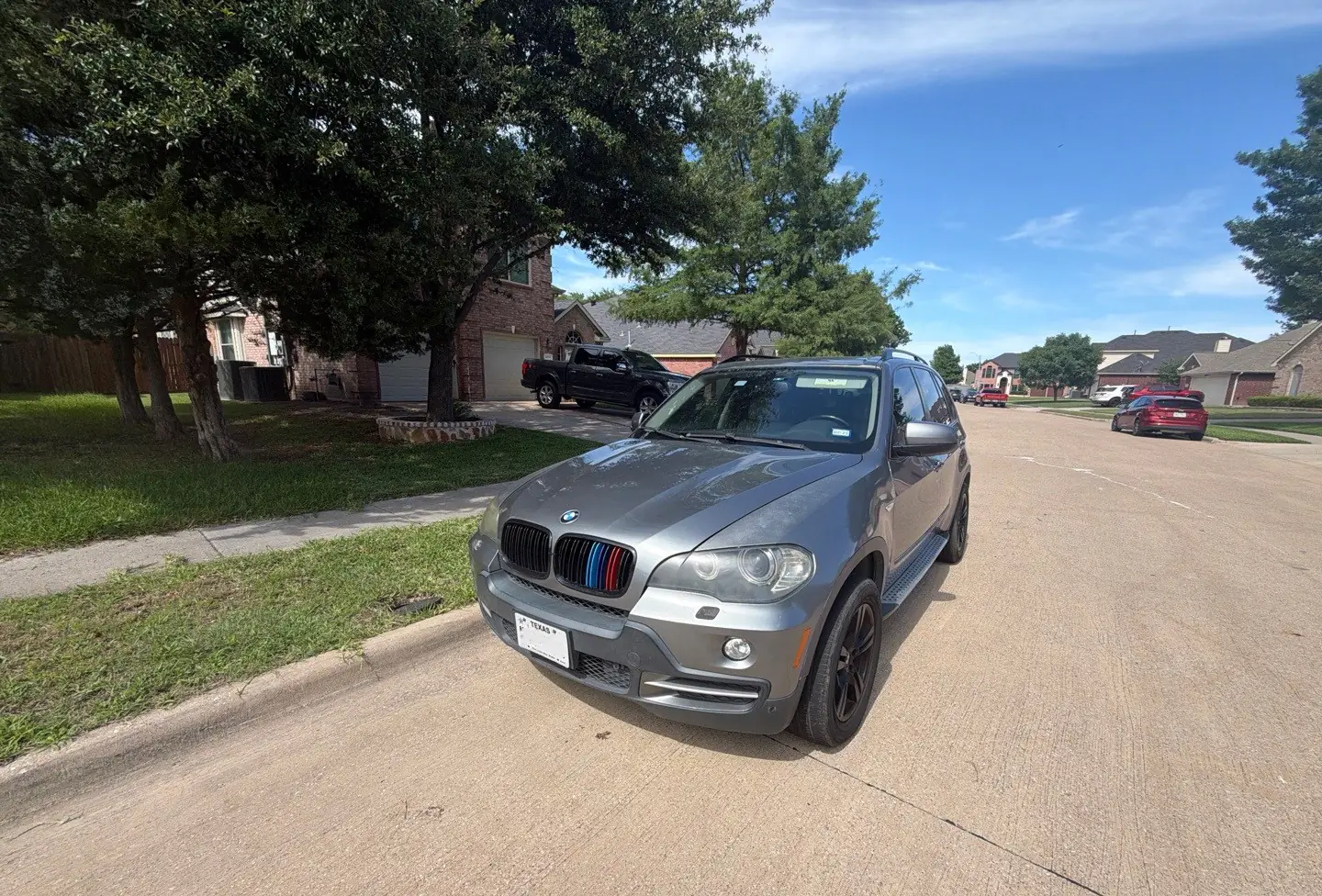
Shipping a 2009 BMW X5 from Grand Prairie, TX to Norfolk, VA
2009 BMW X5 from a business delivery point in Grand Prairie, Texas (75052) to a personal address in Norfolk, Virginia (23505), which includes 1,383 miles of distance via an open carrier. In addition, the total price for this shipment is $1,100. If you are thinking about such shipping, then you will have a good estimate of all the details.
The Route

This is due to the location of Grand Prairie in one of the most heavily trafficked parts of the country, that is, the Dallas-Fort Worth metro area. Therefore, there should be no problem getting a carrier that is traveling east towards DFW, because trucks traveling east out of this city operate often. Generally, the journey from Grand Prairie to Norfolk involves taking I-20 East into Louisiana, then Mississippi. From there, the driver makes his way into the Carolinas and continues north into Virginia through I-95.
The trip measures about 1,383 miles; therefore, it’s categorized as a long-distance transportation route. According to industry averages for transportation in the long distance range, delivery will take around 4 to 7 days from the pickup date. Federal law limits driving time to 11 hours each day, so that is how many days it will take for the driver to complete the trip. The other two to three days allow time for loading, planning, and delivery.
The Norfolk destination is conveniently connected to the rest of Virginia. Frequent bus services from carriers that run the I-95 highway will not have much difficulty reaching Norfolk without making substantial route alterations. This means costs will be manageable.
Pickup: Business Address in Grand Prairie

With the confirmation of your carrier, the contact details of the driver will be sent straight to you. They will make contact prior to your appointment time to get a hold of the pickup details. With the fact that it is an office address, entry should not pose any difficulties for carriers since parking areas and driveways are spacious enough for the hauling process to go smoothly.
The driver will do a walkaround inspection of your BMW X5 before loading takes place in order to assess any existing damage like scratches, dents, or paint chips. Both parties will sign the Bill of Lading which serves as proof of the vehicle’s condition upon pick-up. Take note of getting pictures taken of your BMW before the driver arrives since this is your defense just in case you have any concerns at the point of delivery.
Ensure that there will not be more than one quarter tank of gas in the X5. Also, clear the cabin of all personal belongings, turn off alarm systems and make sure the battery works fine.
Delivery: Private Residence in Norfolk

The delivery of your vehicle to a private residence in Norfolk is handled the same way as pick up regarding paperwork. Your driver will call to schedule a delivery time. Sometimes, large truck haulers cannot make their way through a narrow street in a residential area, especially if it features low-hanging trees and tight corners, so there may be occasions where you would need to arrange with the driver to meet him in an open spot near your location.
Upon the arrival of your carrier, you will be able to inspect your vehicle along with the driver. You should check your vehicle’s condition against what it was at pick up according to the information from the Bill of Lading. You can sign off on the delivery once everything is fine. In case there is a payment balance remaining, it should be paid now. If any new damages are detected during inspection, report them in writing to the Bill of Lading.
Why Open Transport Makes Sense for This Shipment

The Open Carrier service represents the most commonly used way to deliver vehicles across the USA; it takes up almost 90% of all car deliveries in the country. 2009 BMW X5 is a quality, everyday SUV with normal ground clearance, thus there will be no problems loading this car to an open hauler because of the fact that such problems may occur only with sports cars or lowered ones.
The open hauler is a two level carrier with capacity for up to 9 cars. There are wheel straps and tie-down chains securing this SUV at four points of the car’s chassis, so this vehicle won’t move during the whole journey. Another popular misunderstanding is related to the belief that open transportation can be risky; however, such carriers use the same securing systems as factory carriers.
Open transport is much more affordable than enclosed transport. Enclosed carriers cost between 30 to 65% more as a result of being less common on the roads and carrying fewer vehicles on each trip. In case of a BMW X5 from 2009 with market value, paying such a price difference is not worth it. As a result, a fee of $1,100, that amounts to around $0.80 per mile, is perfectly reasonable for open carrier transport over a long distance.
Enclosed transport would be preferable in case of classic cars or exotic cars that may face damage and incur high expenses as a consequence. However, for a used BMW X5 transported on a high-volume route of Texas to Virginia, an open carrier is a more realistic option.
Transport Summary
- Origin: Grand Prairie, TX, 75052
- Destination: Norfolk, VA, 23505
- Trailer type : Open
- Distance: 1383 mile
- Price: $1100 ($0.80 per mile)
- The route: Grand Prairie, TX → I-20 E → I-85 E → I-95 N → I-64 E → Norfolk, VA
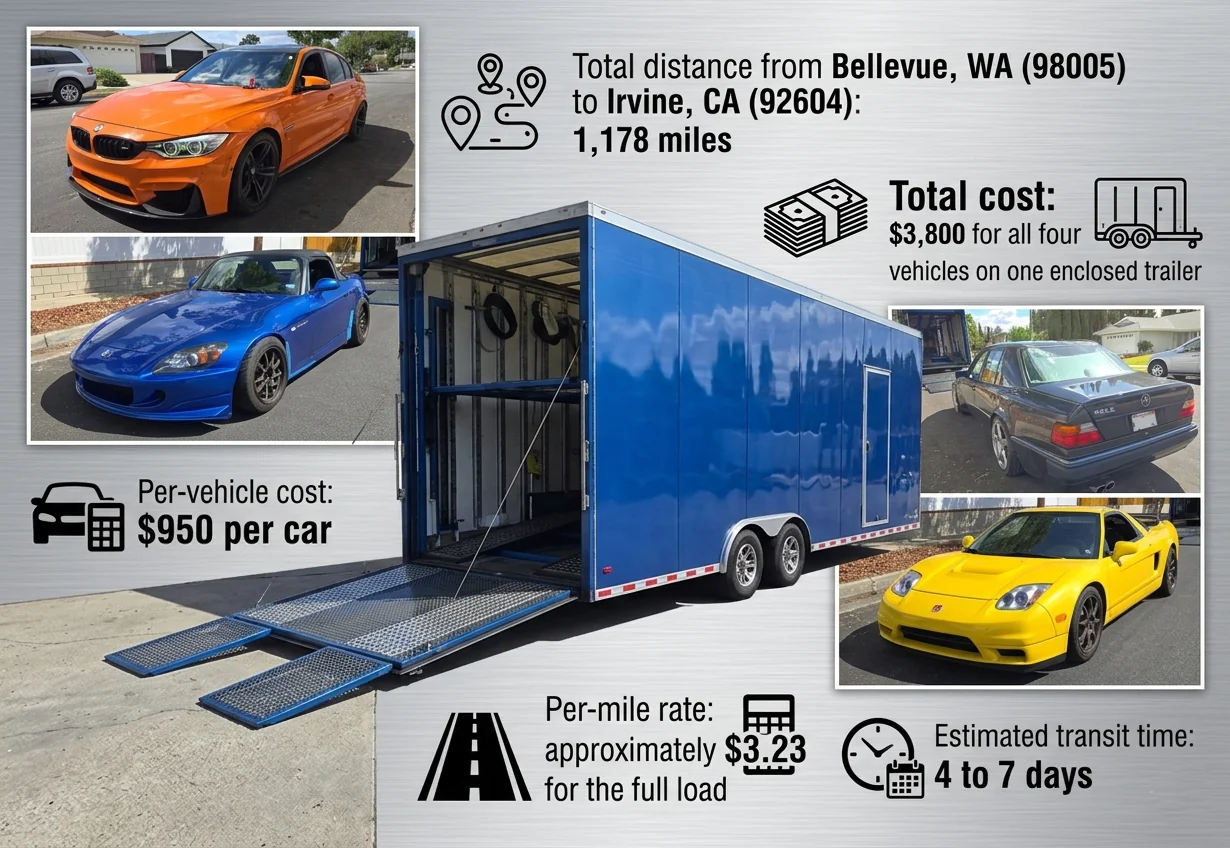
Four Collector Cars, One Enclosed Trailer from Washington to California
Transporting four vehicles simultaneously is no easy feat. Imagine doing so with a 1992 Mercedes-Benz E-Class, 2006 Honda S2000, 2015 BMW M3, and a 1997 Acura NSX? Well, the transport needs to be done perfectly. Open carriers do great when it comes to transporting normal vehicles. However, these aren’t normal vehicles; these are four high-performance cars loaded on one enclosed carrier and traveling 1,178 miles from Bellevue, WA to Irvine, CA for $3,800.
The Route

WA-CA is known to be one of the busiest routes when it comes to transporting vehicles by road. The carriers travel along this route consistently because there is always high demand from both directions. This ensures higher availability of loads with shorter wait times compared to other routes.
In this particular case, starting in Bellevue, the route to Irvine goes southward along the I-5 freeway via Portland, Sacramento, Central Valley and then into Southern California. At a total distance of 1,178 miles, it can be classified as a long-haul transport. Long haul transport involves distances of up to 1,000 to 1,500 miles. For an enclosed multi-car carrier, the typical transit time would be around 4 to 7 days due to 11 hour driving limits per day.
The Vehicles: Why Each One Belongs on an Enclosed Trailer
There’s a reason why each vehicle in this shipment needs to be shipped in a covered trailer.
It’s not just due to any sort of luxury.
1992 Mercedes-Benz E-Class

The Mercedes W124 generation E-Class is considered one of the most over-engineered cars ever produced. The build quality for this car was done at a standard that is very hard to find today. If the E-Class of 1992 still retains its quality, it will make for a collectible car, which means more value. Being exposed to road trash and sun will damage its paint and rubber parts that are getting pretty old.
2006 Honda S2000

The S2000 had a run of exactly ten years before being discontinued. Honda ceased production of the car back in 2009, which means any one of these cars that survived will become increasingly difficult to find. The AP2 version that came out between 2004 and 2009 is especially valuable due to changes in its suspension setup and VTEC system tuning. Clean S2000 models are valuable investments; shipping an S2000 open risks exposure to environmental wear and tear that lowers collectible value.
2015 BMW M3 (F80)

The F80 M3 is also the end of the line for the naturally-aspirated generation of M3s as a regular product. This model comes with a twin-turbo 3.0 liter inline six engine as the V8 engine was no longer in production. This, coupled with high-quality workmanship and the popularity of the car amongst enthusiasts, has ensured that the F80 remains valued among M3 buyers. Another issue to consider is that the lowered ground clearance of the M3 makes its entry onto normal loading ramps difficult.
1997 Acura NSX

Of the cars here, this is perhaps the one that by itself supports the enclosed choice. The NSX was built in small quantities during its manufacturing life from 1990 to 2005. The aluminum monocoque construction and mid-engine design combined with a hand built engine by Honda in their Tochigi plant made it unique in its class in the United States. Unrestored cars of this value fetch more than $100,000 on the market. To place a car of that much value onto an open trailer while enclosed transport is possible is foolish.
What Makes This a Well-Structured Multi-Car Enclosed Shipment
There are a number of factors that help make this shipment very efficient.
Firstly, the route is busy enough to have a reasonable expectation that an enclosed trailer going southward from the Pacific Northwest to Southern California could be found without undue delay. Four vehicles fit well into the capacity of a multi-car enclosed trailer which can typically hold up to 5-7 vehicles. Booking for 4 spaces on an existing partly booked truck is a common practice and a cheaper option.
All four vehicles operate normally and are standard sized; special loading facilities such as a rollback tilt bed and/or Go-Jak dollies will not be required. Even though the M3 and S2000 have relatively low clearances, none of these is low enough to get anywhere near the 3.5 inch threshold that would necessitate exotic loading procedures.
Soft tie down straps that loop through wheel wells are typical in enclosed trailers while other tie down systems use chains to connect to the vehicle frame and/or axle. For valuable vehicles like the NSX and M3, this is important.
Transport Summary
- Total distance from Bellevue, WA (98005) to Irvine, CA (92604): 1,178 miles
- Total cost: $3,800 for all four vehicles on one enclosed trailer
- Per-mile rate: approximately $3.23 for the full load
- Estimated transit time: 4 to 7 days
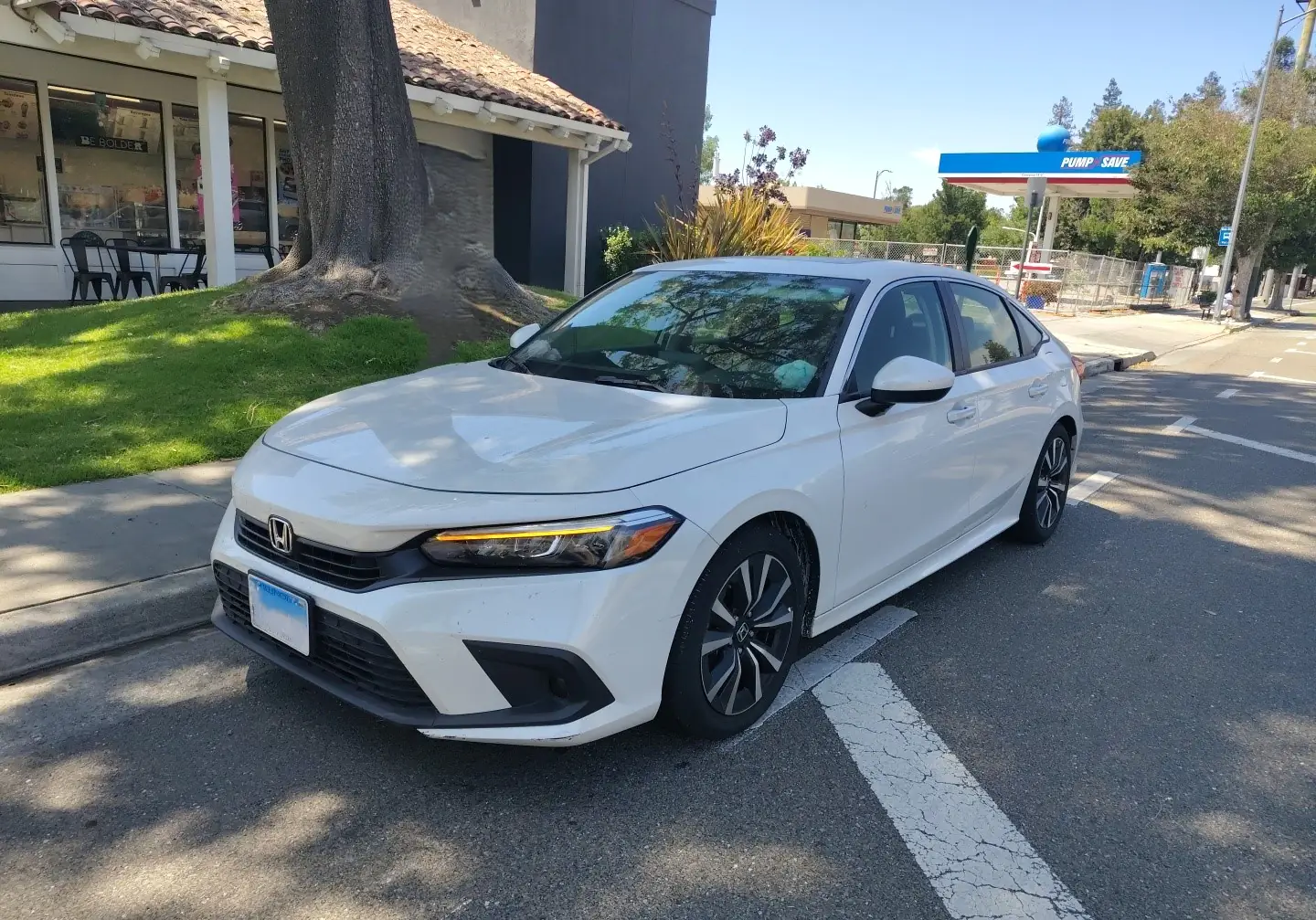
Shipping a 2022 Honda Civic from San Jose, CA to Lansdale, PA
Cross-country car shipping involves some of the longest distances that are difficult to cover. In this case, this transportation was from a 2022 Honda Civic sedan from San Jose, California, all the way to Lansdale, Pennsylvania. This is a total distance of 2,911 miles and a total price of $1,400 using an open trailer. Below is the information regarding the path used and the process involved in open trailer car shipping.
What 2,911 Miles Actually Means on a Cross-Country Shipment

The route from San Jose to Lansdale runs almost up to the maximum permissible limit within domestic automobile transportation. Thus, the point of departure is in Santa Clara County of South Bay Area while the destination point is located in the state of Pennsylvania, approximately 25 miles to the north-west from Philadelphia. On its route the carrier should pass through as many as ten states and several mountain ranges.
The time required for such cross-country automobile transportation should amount to seven to ten transit days on an open carrier. Under Hours of Service requirements for truck drivers, they have up to eleven hours of operation per day during which they can move approximately 400-500 miles. Accordingly, a 2911 mile route may be covered in six-seven working days plus pickup/delivery.
High freight density on this route is one of the factors that should contribute positively to the transportation process. First of all, the shipper will not have difficulty in planning his schedule and secondly, he is likely to enjoy favorable prices due to absence of any additional fees for staging.
How the Route Played Out
From San Jose, the plane took the interstate of I-80, passing through the San Francisco bay area. In Oakland, it crossed over the Bay Bridge before heading east. The interstate of I-80 is the primary east-west interstate in this route and makes up most of its length.
In California, Interstate 80 runs over the Sierra Nevada mountains from Donner Pass into the Nevada high desert. Interstate 80 runs east through Reno and out to Salt Lake City, Utah. From Salt Lake City, I-80 travels northeast through Wyoming via Cheyenne into Nebraska, where it crosses the Missouri river in Omaha.
I-80 passes through Iowa and Illinois and goes through the flattest freight roadways in the nation. Auto carriers travel through this segment continuously because they are carrying their cargo either east or west; therefore, this is a good segment for multiple cars.
From the Illinois and Indiana state line to Ohio, the route heads further eastward following I-80 to reach Pennsylvania. The truck carrier then made a left-hand turn and followed I-76 after reaching the Ohio and Pennsylvania state lines. This interstate highway is called the Pennsylvania Turnpike and heads east through the Pennsylvania cities of Pittsburgh, across the Appalachians, Harrisburg, and Philadelphia.
In total, the route traveled through ten states. It passed through California, Nevada, and Utah first. Then, it continued through Wyoming and Nebraska, followed by Iowa and Illinois, Indiana, and Ohio until finally reaching Pennsylvania.
What the Honda Civic Was Loaded Onto

The open carrier accounts for almost 90% of all transportation for automobiles in the United States. This is how vehicles are normally transported, and the Honda Civic is just the kind of car that was meant for this process.
The open vehicle transporter is a double-deck truck, which can carry from seven to ten cars in one shipment based on their sizes. The top deck is loaded first as the tailgate lowers due to hydraulic lift and becomes a ramp. Vehicles drive onto the deck, and they are fastened in four places using straps and tied down to the chassis of the automobile.
Because there is no wall nor any roof on open trailers, the transportation process exposes the vehicles to weather elements and road debris. However, for the case of 2022 Honda Civic, this is not normally a cause for concern since it is a very well-protected production vehicle that will not require special attention in order to survive in regular highway conditions. In the same way that a classic and expensive car might be exposed to unnecessary weather exposure while using open transportation, such concerns will never apply to a standard car like the Civic.
Open trailer transportation provides some obvious benefits for the case of a Civic. First, because of a larger number of possible carriers, the scheduling process is faster. Second, because of a bigger number of cars shipped together, the costs per shipment decrease. Moreover, the standard size of the Civic allows placing the Civic within the load together with several other vehicles.
Transport Summary
- Vehicle: 2022 Honda Civic Sedan
- Origin: San Jose, CA 95123
- Destination: Lansdale, PA 19446
- Distance: 2,911 miles
- Trailer type: Open carrier
- Total cost: $1,400 ($0.48 per mile)
- Primary route: I-80 east across country, I-76 (Pennsylvania Turnpike) east to destination
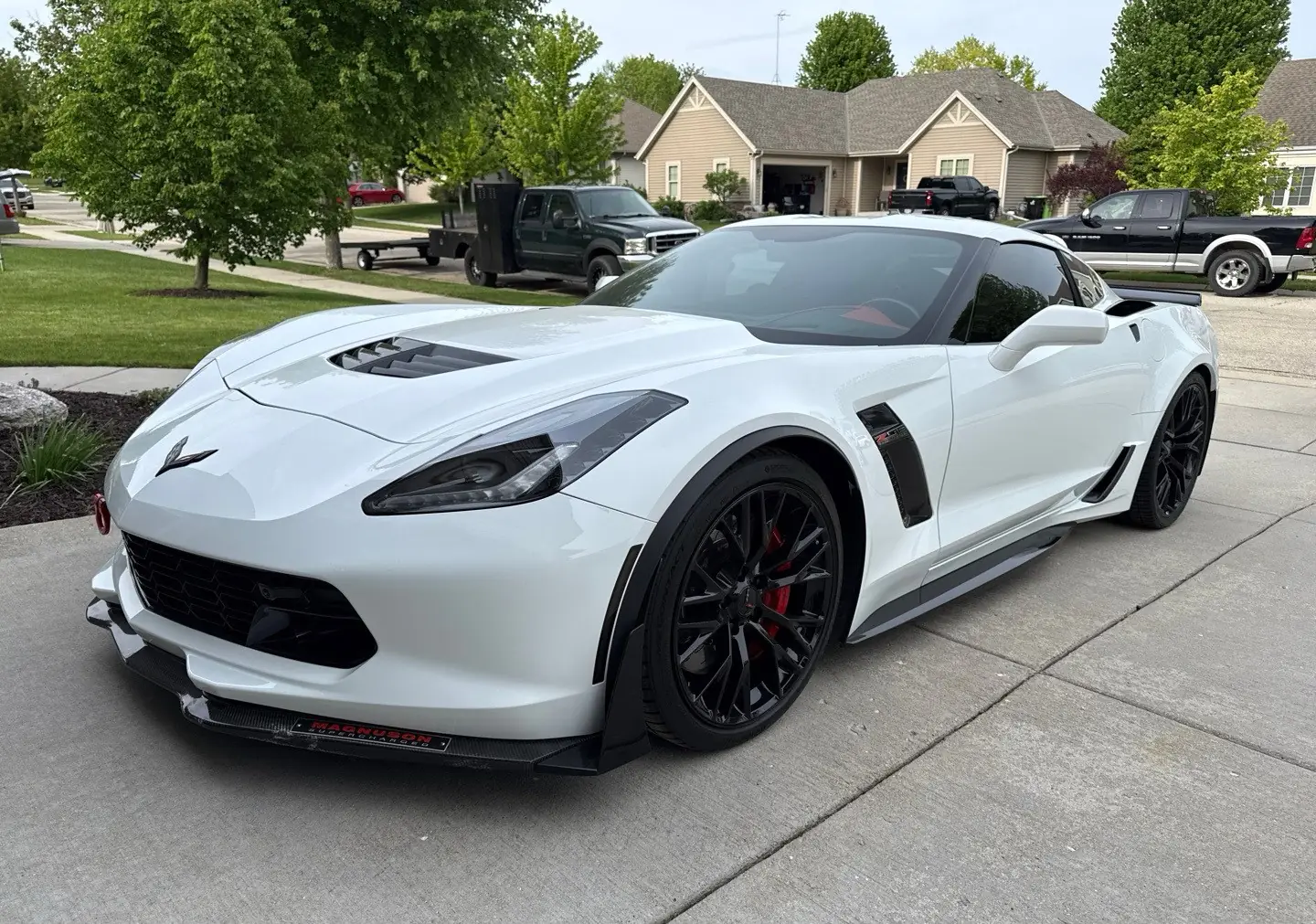
Shipping a 2019 Corvette from Hartford, WI to Tempe, AZ
A Chevrolet Corvette manufactured in 2019 isn’t shipped the same way as a family car. Route and trailer type are important factors that affect pricing. In this case, the shipment traveled a distance of 1,738 miles from Hartford, Wisconsin to Tempe, Arizona by way of a hard-sided enclosed trailer and cost $2,600. Here are some details about this particular shipment.
The Route

The shipper loaded the Corvette at Hartford, Wisconsin. This town is located northwest of Milwaukee. The path then moved from there south on I-41 until reaching Milwaukee before moving west on I-94 through Wisconsin.
The path then led through Madison and continued along I-90 southwesterly to Rockford, Illinois before turning to I-80. The western part of the path through Iowa and Nebraska is considered one of the most traveled paths for auto carriers. The reason for this is the constant amount of carriers traveling back and forth in this corridor.
After Denver, the interstate took us southwest via I-76. It then took the turn to I-25 going south to Colorado Springs and Pueblo. I-25 took us further down south into New Mexico where we passed by Albuquerque before getting onto I-40 to the west. We finally went through Flagstaff, Arizona, via I-40. It took us further south via I-17 to Phoenix to Tempe.
This is a total of five interstates and 1,738 miles. The lane that we have taken in our journey starts at Wisconsin and ends at Arizona, meaning that most of it is covered in busy freight routes. This is advantageous when booking enclosures because there are many carriers on the lane.
Why the Corvette Required a Hard-Sided Enclosed Trailer
The 2019 Corvette C7 has a ground clearance of about 4.3 inches. This means that it is considered one of those cars that have a low ground clearance. Open ramps will easily scrape its undercarriage while loading. Standard open transport ramps usually have an angle of 14 to 18 degrees in approach. Since this car has clearance of less than 4.5 inches, it faces significant scraping risk when approaching the ramp.
The hard-sided enclosed trailer did not only provide protection during the loading process. Since it had walls made out of metal and aluminum, the Corvette would be completely shielded from any road debris and the weather conditions during the 1,738 mile journey. It even provided UV protection. An open transport trailer, for example, would expose the Corvette to the rocks, dirt, and changing temperatures in the region.
The hard-sided trailers differ from the soft-sided enclosed trailers because soft-sided trailers utilize vinyl curtains on the side. While soft-sided trailers provide more protection than the open trailers, they do not provide the same level of complete protection as a hard-walled trailer because soft-sided trailers do not completely protect the car from the weather. In terms of transporting a Corvette, the hard-sided trailer is what people generally recommend. A small paint chip or other damage to a sports car is going to be more expensive than the cost to transport the car using either method.
Another factor about enclosed sports cars is that many times those who transport sports cars are experienced in loading up smaller cars because of their lower clearance. These trailers often use race ramps or approach ramps which make the incline just 6 to 10 degrees when loading the trailer. The enclosed trailers often only transport two to seven vehicles at a time.
Sports Car vs. Standard Sedan: Why the Corvette Costs More to Ship

Transporting the Corvette in an enclosed trailer at a price of $2,600 translates to about $1.50 per mile, whereas transportation of a standard-sized sedan in an open trailer would cost between $1,000 and $1,400 for the same distance of 1,738 miles. There are a number of reasons why this difference occurs other than the value of the car.
There are a lower number of cars that can be transported in an enclosed trailer than in an open carrier. The maximum number of cars in an open car trailer would be seven to ten, while in an enclosed trailer, this number would be from two to seven cars. It takes more time to transport fewer cars in one journey, hence increased costs.
Sports cars add handling complexity on top of that. Low-clearance loading takes longer and requires experienced drivers who know how to work with approach ramps and soft tie-downs. A standard sedan can be loaded quickly with standard ramps. The Corvette required more care and more time at both pickup and delivery.
Insurance requirements factor in too. Enclosed transport is standard for vehicles with significant market value, and carriers that cover sports cars and performance vehicles carry higher policy limits. That cost is reflected in the quote.
Open transport for a standard sedan runs 45 to 65 percent cheaper than enclosed transport for the same route. For a vehicle like the Corvette, that price gap is the cost of keeping a sports car in the same condition it left Wisconsin in. The alternative is rolling the dice on 1,738 miles of open exposure through some of the most debris-heavy stretches of highway in the country.
Transport Summary
- Vehicle: 2019 Chevrolet Corvette
- Origin: Hartford, WI 53027
- Destination: Tempe, AZ 85288
- Distance: 1,738 miles
- Trailer type: Hard-sided enclosed
- Total cost: $2,600
- Cost per mile: $1.50
- Primary interstates: I-41, I-94, I-90, I-80, I-76, I-25, I-40, I-17
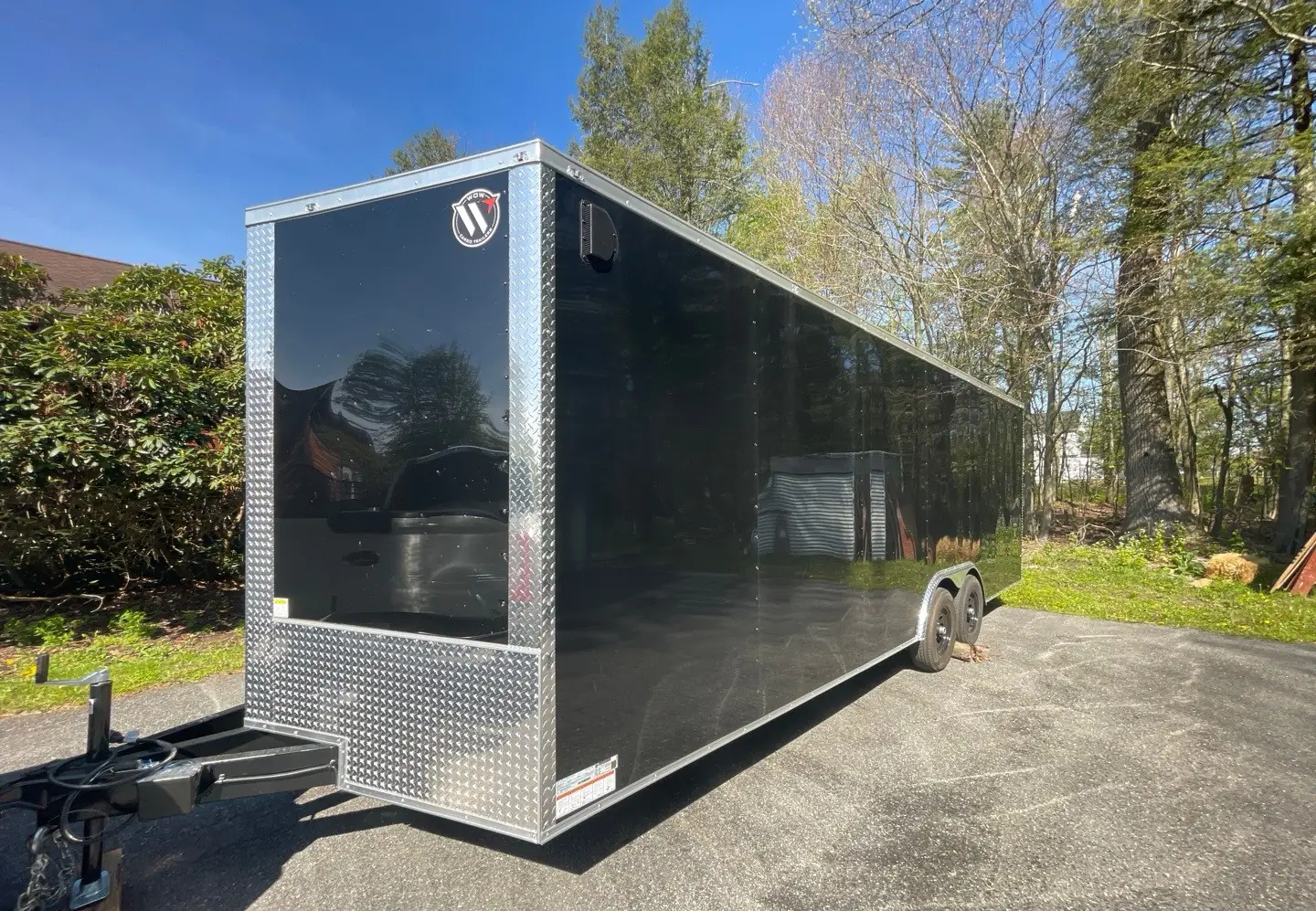
A Max Cargo Trailer from Georgia to the Pennsylvania
Shipping a standard-sized cargo trailer from one company to another is not the same as hauling a sedan car. The process entails having different equipment as well as planning routes properly. Dimension is something that comes into play as soon as you make your first inquiry about shipping your freight. This particular freight will be transported for a total of 874 miles from Cochran, GA (31014) to Blakeslee, PA (18610).
What the 2026 Max Cargo Trailer Brings to the Equation

The Max Cargo Trailer 2026 is a bumper pull trailer designed for business. It is 8.5 feet wide by 24 feet long and has a total gross weight of 3,200 pounds.
The width is the first item on the checklist. According to DOT regulations, the allowable width of a trailer is 102 inches when hauling freight on interstate highways, which equates to 8.5 feet. This trailer is built right up to the limit of this regulation. The driver does not need to obtain any additional permits for this trailer’s width. However, he has to be sure about the bridge width at all locations along his journey.
Given that its weight is just 3,200 pounds, there is no risk of going past the maximum threshold in relation to stresses that lead to problems with respect to axles of the towing vehicle.
Using the bumper pull trailer makes life easier. For the use of the gooseneck trailer, there will be the need to employ a particular mounting on the truck bed ball hitch, while the bumper pull trailer is common.
This makes work easier for the carriers in terms of selecting the appropriate tow vehicle.
The Route

The first location is Cochran which can be found within the county of Bleckley in Georgia, some fifty miles southeast of Macon city in the central part of the state. Blakeslee is in northeastern Pennsylvania and is near the mountains called the Poconos.
These two locations represent opposite ends in geographic terms and the distance between them is quite significant. The most convenient and effective approach here involves going north from Cochran onto Interstate 16 West and then joining up to Interstate 75 North towards Macon, Atlanta and finally Charlotte in North Carolina. At that point the truck will have to travel further north to either Interstate 77 or I-81 and head through Virginia and into Maryland where it should proceed northeast and end up at Blakeslee via I-80 or US-209.
Five states will come under consideration during the journey – Georgia, North Carolina, Virginia, Maryland and Pennsylvania. Each state has its specific compliance regulations and thus, the carrier has to take care of those issues prior to starting out. The 874 miles total represents a pretty decent trip for one truck driver although it would involve expenses related to fueling the vehicle and still remain within HOS restrictions.
Why Tow-Away Is the Right Method for This Trailer

The 2026 Max cargo trailer is a bumper pull trailer and thus is hauled and not loaded unto the vehicle. Tow-away hauling essentially means that the truck driver uses his truck with proper hitch equipment to hook on to the trailer and pull it to its final destination.
This is a common approach when it comes to the transport of non-motorized trailers that are roadworthy and safe to be used. The driver carries out an inspection on the trailer prior to departure and ensures the lighting and brake system is functional. Pictures of the trailer’s condition and all necessary details are taken and added to the Bill of Lading document which travels with the trailer to its final destination.
The trailer being towed results to reduced transit time when compared to haulers since the only vehicle in transit is the cargo trailer itself, without the hassle of loading or unloading other trailers. Furthermore, business to business hauling is often times more efficient than others.
Transport Summary
- Pickup: Cochran, GA, 31014
- Drop off: Blakeslee, PA, 18610
- Vehicle: 2026 Max Cargo Trailer
- Distance: 874 mile
- Price: $1500 ($1.72 per mile)
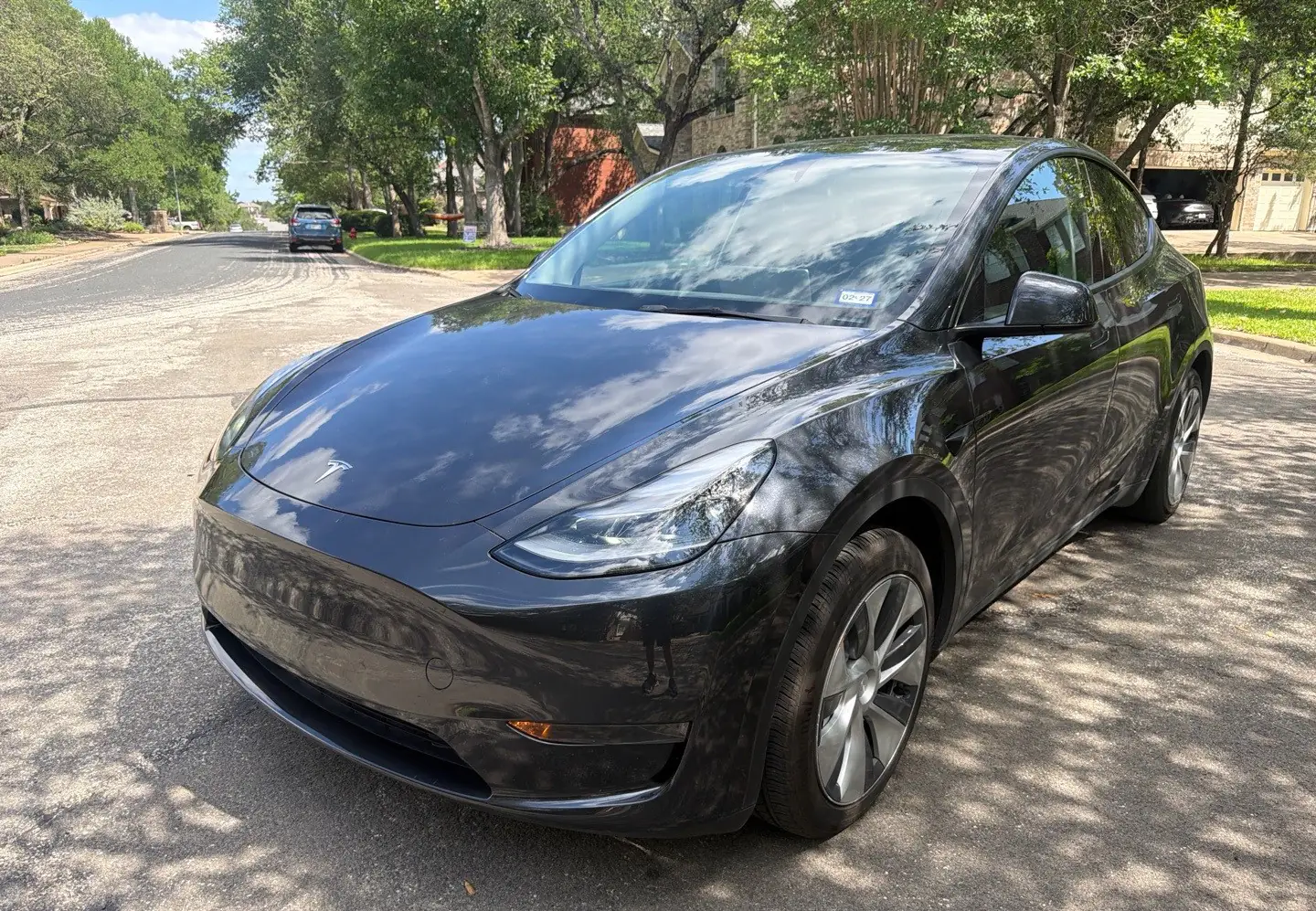
Shipping a Tesla Model Y from Austin, TX to San Francisco, CA
Preparing to transport your new 2024 Tesla Model Y from Austin, TX? Here’s a route that sees a lot of action! One of the best interstate shipping routes in America, the Texas to California corridor means your shipment should have a lot of carrier options and competitive pricing. Shipping an electric vehicle requires some special considerations.
The route

A distance by road from Austin to San Francisco is 1,760 miles. According to the federal Hours of Service rules, drivers cannot exceed 11 hours of driving within a single day. Consequently, carriers can only move for 400-500 miles each day. Your delivery is likely to take five to seven days.
Transit time is different from driving time. Car transporters normally collect between 7 and 10 vehicles on each trip, so additional days may be spent on scheduling both pickups and deliveries. As a rule, the last car collected will be delivered last because the last collected vehicle can arrive at the destination point faster.
When requesting a quote from the transporter, specify how much time the company will need to deliver your vehicle. A reliable transport company will provide you with an estimate of transit time but not guarantee any specific delivery date.
EV-Specific Preparation for the Tesla Model Y

For the 2024 Tesla Model Y, which is an all-electric vehicle, there are a few pre-pickup preparations that do not have to be done for a conventional automobile. The first is battery charge. Your battery charge should be somewhere from 45% to 65% before pickup. This will ensure that you have enough energy to load/unload the vehicle while driving less than a mile.
The key reason why the battery charge must be within this range is overheating. Lithium-ion batteries can get overheated when left at a high charge percentage of over 80% for several days in hot weather environments such as Texas and Nevada.
Here’s a checklist for preparing your Model Y prior to pick up:
- Ensure your battery is charged to 45%-65% prior to picking up your car
- Turn off the Sentry Mode as this will drain your battery during transportation
- Unplug any accessories using either USB or 12V ports
- Make sure you disable your auto toll system
- Get an additional set of keys and be prepared to hand it to the driver
- Wash your vehicle and take pictures of all parts of the vehicle including tires and windows before the car is picked up
- Empty out all of your belongings from the vehicle
It is important to note that the vehicle inspection at pickup will protect you in case of anything that might occur during shipment. Both the driver and yourself sign a Bill of Lading to certify the condition of the vehicle before its transportation.
Open vs. Enclosed

For a 2024 Tesla Model Y in standard condition, open transport is a practical and affordable choice. The route from Austin to San Francisco runs through major shipping corridors, so carriers are easy to find and loading is straightforward.
Enclosed transport makes more sense if your Model Y has a custom wrap, upgraded wheels or any exterior modifications that push its value beyond the standard retail price. It’s also worth considering if you prefer a fully sealed environment for the battery system during a multi-day warm-weather haul.
Hard-sided enclosed trailers provide better protection than soft-sided ones since the walls are solid rather than canvas. If you go the enclosed route, ask your carrier specifically whether they use hard-sided or soft-sided trailers.
Transport Summary
- Pickup: Austin, TX, 78759
- Delivery: San Francisco, CA, 94131
- Vehicle: 2024 Tesla Model Y
- Distance: 1760 miles
- Price: $1000 ($0.57 per-mile)
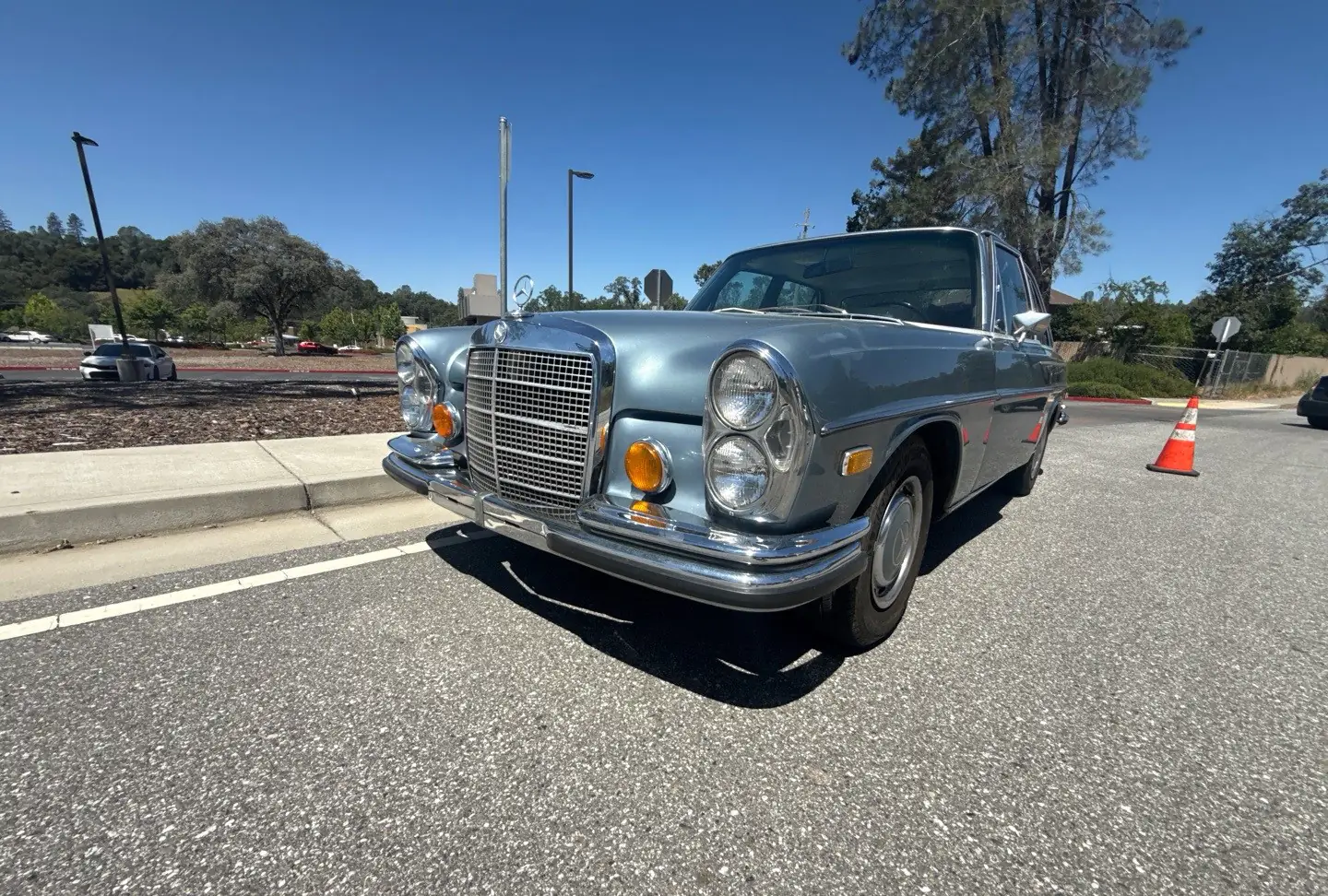
Shipping a 1972 Mercedes-Benz 280SE from Auburn, CA to West Orange, NJ
The 1972 Mercedes-Benz 280SE is more than just an old vehicle. This is a W108 series car, which is quite likely to outlive many other vehicles produced in the same year. To deliver a Mercedes-Benz 280SE from Auburn in California to West Orange, New Jersey, it would be necessary to move the vehicle across the country, covering approximately 2,800 miles. But before proceeding, a number of issues should be clarified: how much will this shipment cost, which trailer would be appropriate for such a vintage car, and which shipping route is to be selected.
What it costs to ship a vintage car with an open trailer

Open transportation is one of the most prevalent shipping methods used for automobiles in the US.
Carriers use multi-car transporters on all the major interstate highways, so there will rarely be any problem finding someone who can carry your automobile. Pricing is also more affordable than enclosed transportation. Shipping across the country, which averages about 2,800 miles, will usually cost $1,200-$1,600 for an average sedan using open transportation. As the 280SE is a full-size sedan, you would probably get quoted prices in the mid-range.
Some factors influence the actual quote that the carrier provides. Season is one important thing to keep in mind, as the months ranging from late spring till early summer see higher demand for carriers. Fuel prices also have an impact on the pricing of carriers, meaning quotes from different weeks may vary considerably. Auburn is located in the Sierra Nevada foothills. While it is not isolated, carriers still have to move somewhat off the I-80 interstate road network.
Open vs. enclosed car shipping for a vintage car

That is the dilemma faced by most classic car owners and there is no definite answer as each case is different. In terms of criteria, the Mercedes-Benz 280SE produced in 1972 qualifies as a collectible car. The car is over fifty years old and features chrome trim around its exterior. Repair costs for chipped paint from debris will be higher compared to repair costs for modern sedans. For instance, the price range could start at two hundred dollars and go up beyond one thousand dollars depending on whether it needs body shop service.
An open carrier cannot protect a vehicle from the road. This means one will encounter dust particles from the road and even rainwater during the trip. On the route that spans 2,800 miles and travels through areas of Nevada that have dry conditions, as well as Pennsylvania with possible dampness, these risks become evident. Nonetheless, there is usually nothing wrong with the majority of cars because carriers know the proper loading techniques.
The enclosed trucks only comprise about ten percent of all trucks that can be used for shipment, making them more expensive than other trucks and more difficult to obtain. In case the 280SE has an original paint job, which means that it is also in show-quality condition, then spending more money on enclosed truck transport is justified. Similarly, if the 280SE has undergone restoration, then spending extra money on enclosed trucks would be worthwhile.
The route

Auburn lies around 35 miles northeast of Sacramento and close to Interstate 80. This will be great because Interstate 80 is a major east-west transportation corridor used by many carriers transporting cars from Northern California to the East Coast. It does not take much time to find a hauler when you have picked up your car at a location on the Interstate 80 route.
The hauler will travel east via I-80 along the Sierra Nevada range, pass through Reno, Nevada; then go through Salt Lake City and across south central Wyoming and Nebraska. Following Chicago, it turns southwest through Indiana and Ohio, then into Pennsylvania, and finishes off in northern New Jersey. West Orange is located in Essex County, only a couple of miles from Newark, which many carriers using the East Coast route must traverse.
The total transit time would be between seven to ten days. This is because the transporter will be loading several other vehicles during this journey since most transporters transport between seven to ten cars at a time. This will mean that your Mercedes-Benz 280 SE could either be the first or the last vehicle being transported, based on the order of the transporter’s route. If your vehicle is the first one to be loaded, then it will take longer to arrive at its destination.
Transport Summary
- Pickup: Auburn, CA, 95602
- Drop off: West Orange, NJ, 07052
- Price: $1550 ($0.55 per mile)
- Distance: around 2800 mile
- Trailer type : Open
- Vehicle: 1972 Mercedes-Benz 280se
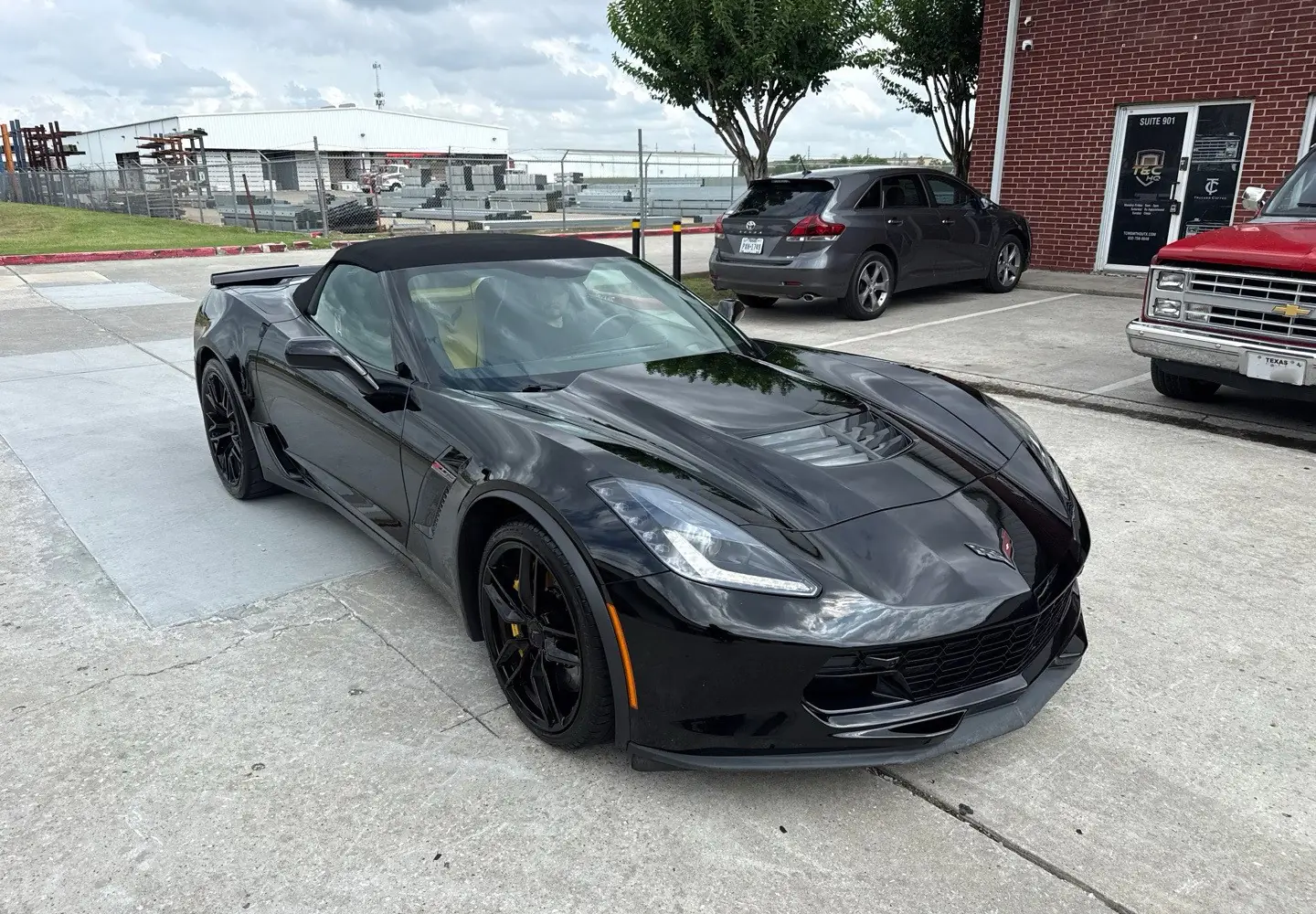
Shipping a Chevy Corvette from Houston, TX to Rio Rancho, NM
Moving a Corvette is not like moving an ordinary sedan; it is much lower on the road, and it will cost much more money to repair in case there are any problems during transport. You will also need to find someone to help you who knows what he is doing.
Tempus Logix successfully delivered a 2016 Chevrolet Corvette from Houston, TX (77041) to Rio Rancho, NM (87144) by enclosed transport. The total price was $1,623 for 853 miles.
What It Costs to Ship a Sport Car with an Enclosed Trailer

The total cost of $1,623 breaks down to about $1.90 per mile. The prices of industry rates for enclosed transport in 2025 range from $1.30 to $2.10 per mile; thus, this freight was in the middle price range. However, that is fair considering the definition of enclosed transport.
The 2016 model of the Corvette C7 car has a clearance of 4.4 inches. This means that the clearance falls within the low category because clearance below 4.5 inches requires a particular kind of loading system. In standard cars, there are fixed ramps which can scratch the air dam of rocker panels.
Now let’s consider the issue of value. A 2016 Corvette in good condition is valued at $30,000 to $45,000. Even a tiny rock chip from an open trailer results in a repair that more than compensates for any money saved in opting for a cheaper method of transport. Enclosed trailer service removes this possibility since the car is kept in a protective environment during transport.
Here are some hard figures to show the difference. While it would cost somewhere around $700 to $950 to ship the car via open trailer, the enclosed service would come to $1,623. This means an additional payment of between $650 to $700. In return, your car is transported in a safe environment, using tie downs and a driver knowledgeable about high performance cars.
Open vs. Enclosed Car Shipping

The use of open transport accounts for the movement of almost 90% of all vehicles transported in the country. The typical open transport carries between seven to ten cars in its two decks, and this keeps costs down and makes them readily available. Cars, trucks, and sport utility vehicles travel in open transport without any difficulty at all.
With the use of enclosed transport, there is a very significant difference in that the vehicle is entirely surrounded by the trailer. Metal panels surround the vehicle while a metal roof and rear door completely close off any outside elements. Ultraviolet rays do not penetrate the enclosed transport. Five to seven cars can be transported with some even carrying only two cars.
It is important to know the differences between the soft and hard-sided enclosed trailers before hiring them. The soft-sided trailer has canvas sides and a hard top, providing only partial protection and creating no hermetic sealing inside the trailer. A hard-sided trailer has a full enclosure on all sides. In case of the Corvette, a hard-sided trailer is your only option because it will protect your vehicle from all the elements.
Additionally, extra care must be taken at the time of loading. The Corvette has low ground clearance; thus, the transport must have a low-angle hydraulically controlled ramp or a tilt-bed rollback. If you do not have a proper ramp for loading, then you risk damaging the undercarriage of your car when trying to load it. Such damage can happen instantly, and its repair will cancel out any savings you had made.
Why Shipping Out of Houston Works in Your Favor

Houston is considered one of the busiest auto transport routes across the United States. There will always be plenty of carriers moving through since the city is big itself and also due to its port activities and its place along Interstate 10. Carrier availability and quickness are guaranteed because they are not coming from miles away, and prices are stable for the same reasons.
For your specific route, your cars will be transported from Houston along I-10 West through San Antonio, then switching to I-25 North to near Las Cruces, NM. Such a route is used by carriers all year round, so you have high chances of finding a suitable enclosed carrier for this lane. Your destination is not located in the middle of nowhere, and there is no need to create another shipment only to deliver your cargo there.
The city of Rio Rancho is inside Albuquerque Metropolitan Statistical Area and is quite easy to access, even for trucks. No additional expenses and hassles will occur because of difficult access to your destination point, so everything will go smoothly and the final quote will not contain any extra fees.
Transport Summary
- Pickup: Houston, TX, 77041
- Delivery: Rio Rancho, NM, 87144
- Vehicle: 2016 Chevrolet Corvette
- Trailer type: Hard-side enclosed
- Distance: 853 mile
- Price: $1623, per-mile rate $1.90
