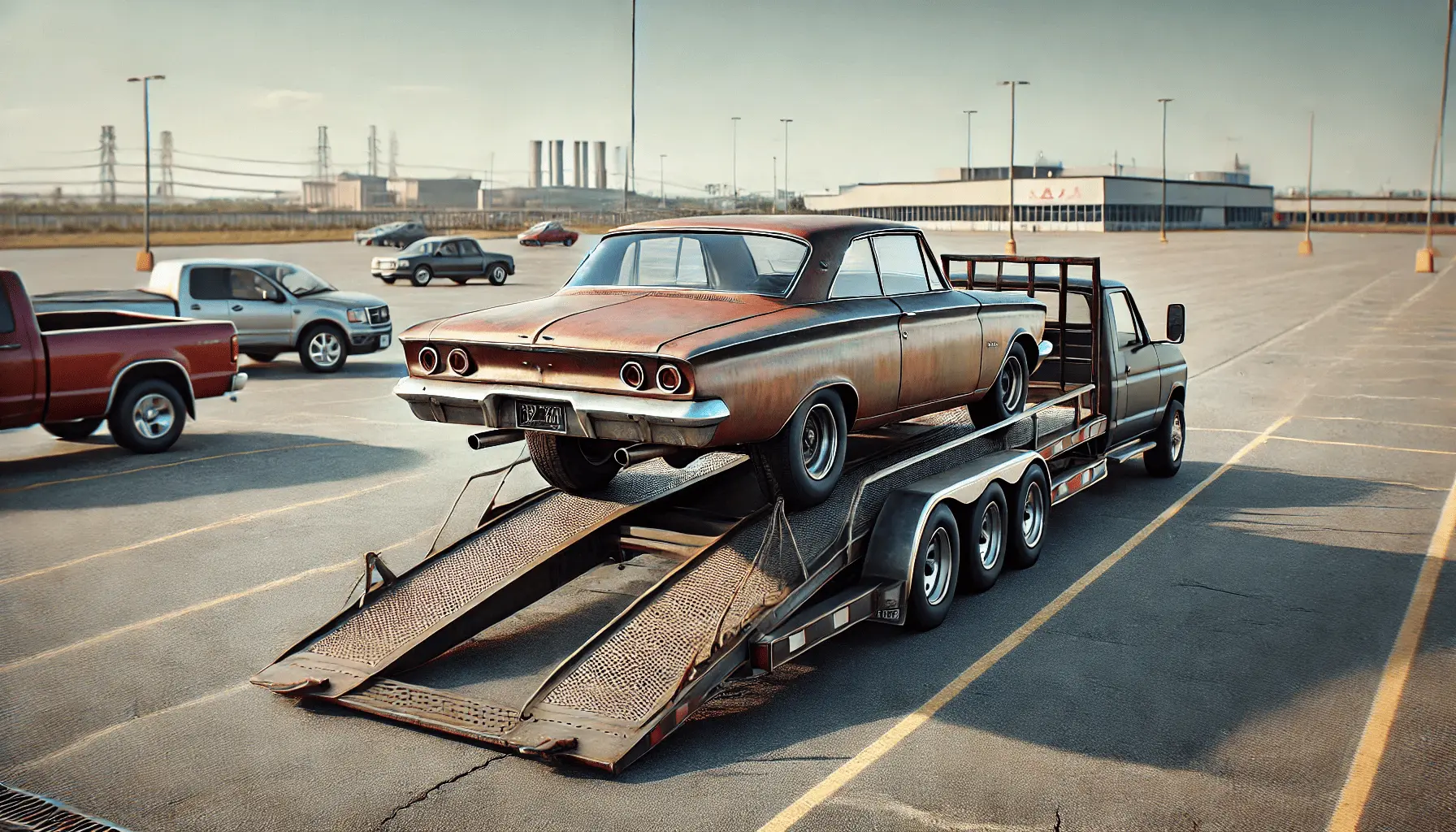

I got a call from a customer at 6 PM-an hour before I was leaving the office-whose voice had that edge people get when they’re trying to stay calm but aren’t quite pulling it off. He just got a job that started Monday in Denver, and his car was in Miami.
“Can you get it there by Sunday?”
I’ve been in this business for years, and I know that question comes from a real situation, because nobody asks about expedited auto transport services because they enjoy paying premium rates (sometimes it can be 100% more, depending on the season and locations). They ask because something in their life went sideways, and now they’re scrambling.
What Does Fast Vehicle Transport Really Mean
Now, let me explain to you what it doesn’t mean. It doesn’t mean that your car teleports across the country from one coast to another. It doesn’t mean we bend the laws of physics or federal driving regulations.
What it really does mean is priority placement. When you pay for expedited service, your vehicle moves to the front of the dispatch queue. Drivers who do rush jobs get called first-they know how to plan the best routes around your timeline instead of fitting your car into an existing schedule.
What is standard and expedited transportation, and trust me it isn’t magic; it’s all about logistic solutions, relationships and a lot of phone calls behind the scenes. The phone call amount may be more that 3 times compared to the regular shipments.
Most standard shipments take seven to ten days delivering coast-to-coast. With expedited service, you are looking at three to five days for the same route. Regional moves that normally take three to four days can sometimes happen in 24 to 48 hours if everything lines up.
The Real Limits of Speed in Auto Transport
I had a customer last month who paid for rush car shipping from Chicago to Milwaukee. We had a carrier lined up, pickup scheduled for the next morning. Then, an ice storm hit, and the driver got stuck for a long time in the area.
No expedited fee amount changes the weather. No premium rate causes federal Hours of Service regulations to disappear. Drivers still must sleep, and the roads still close when conditions get dangerous.
The distance creates its own limitations. Legally, a driver can drive 11 hours in a 14-hour window before the federal law requires a 10-hour break. That’s 550-650 miles a day depending on the conditions.
From Los Angeles to New York is approximately 2,800 miles. Even at ideal weather and with pickup immediately, you’re looking at five days minimum. Anyone quoting less than that is either lying or intending to break federal regulations. Neither option ends well for your vehicle.
What Actually Makes Expedited Transport Cost More
People often assume that the premium for expedited vehicle transport is arbitrary: as if we’re charging more simply because we can.
Most auto transport operates on consolidated loads: a carrier picks up seven or eight vehicles along the route, delivers them to various destinations, and the economics work because they’re maximizing their trailer capacity.
With expedited service, that model breaks as your car may be the only vehicle on that trailer or, maybe there’s one other car going to a nearby destination. Either way, the carrier is making less money per mile traveled.
That’s before you factor in opportunity cost. When a carrier takes your rush shipping, they’re saying no to loads that might be more profitable or convenient for their usual routes. They’re rearranging their schedule, possibly at the expense of other customers, changing their plans.
You don’t just pay for speedier service: you are paying for the disruption to normal operations that makes faster service possible.
A Price change Summary
| Route Type | Standard Price | Expedited Price (30–50% Higher) | Example Final Range |
|---|---|---|---|
| Short/Medium Route | $1,200 |
+30% → $1,560 +50% → $1,800 |
$1,560–$1,800 |
| Cross-Country Route | $2,000 (typical baseline) |
+30% → $2,600 +50% → $3,000 |
$2,500–$3,000 |
| Custom Route | Varies | Add 30–50% to standard rate | Calculated individually |

An Honest Conversation About Guaranteed Dates
Here’s where I’m going to say something that may cost our company business, but it needs to be said to the customers.
Anyone who promises “guaranteed delivery dates” with regards to auto transport is selling you something that doesn’t exist.
Instead, most companies offer to refund your deposit in case they don’t meet the date, which is fine, except you still don’t have your car when you need it. The refund doesn’t solve the underlying problem.
With so many details, absolute guarantees cannot be made. The weather changes, trucks break down, traffic delays pop up unexpectedly, and sometimes pickup locations aren’t where customers arranged to be.
What top rated companies can offer are realistic time windows based on current conditions, priority dispatch, and their best effort to meet your schedule. That’s not as satisfying as a “guarantee”, but it is honest and transparent.
When Does Rush Shipping Worth the Cost?
I have an experience when people wanted to pay extra for expedited service when they didn’t really need it. Fear makes people spend money on speed they don’t actually require.
Me as an experienced agent working in the industry for couple of years I think that this option would make sense when:
- You’ve taken a job, and the start date is firm. Employment doesn’t wait, and some jobs require one to have dependable transportation right away.
- You are buying a car and have strict deadlines for financing. Some auto loans have a clause concerning timely delivery. Failure to meet those deadlines may impact your financing terms.
- You are attending a time-sensitive event. Car shows, racing competitions, or special occasions where the vehicle itself is central to the event purpose.
- Medical situations have urgent relocation needs. I have assisted in families moving vehicles quickly in cases where health crises have called for immediate relocation to be close to better medical facilities.
It does not make any sense when you are just anxious. Normal anxiety about your car being away from you is not a good reason to pay premium rates. Most of the vehicles ship safely via standard service.
The Real Alternative Most People Ignore
Before committing to expedited car transport, ask yourself: Can I wait?
Three months ago, a customer who was sure she needed rush shipping for a cross-country move, she had already driven to her new location, and she needed her second vehicle delivered as soon as possible.
We discussed her real scenario: She had borrowed her sister’s car. Her new apartment allowed for two parking spaces. There wasn’t a pressing need other than it being her preference to take her car back.
Sometimes the best expedited service is the one you don’t buy, because you didn’t actually need it.
What to Actually Ask Transport Companies
When you’re calling around getting quotes for fast vehicle transport, most people ask the wrong questions. They lead with “how fast can you get it there?”
Much better questions come from those who know what they are doing:
“What’s your realistic timeframe based on current conditions?” Companies that give you a range instead of a specific day are being honest with you.
“What happens if weather or mechanical issues cause delays?” You want to hear a clear policy, not vague promises that everything will be fine.
“How do you prioritize expedited shipments in your dispatch process?” Companies that can describe actual procedures show you, instead of their marketing, how their operations really work.
“What’s included in your expedited rate?” Some firms will charge extra for priority dispatch and then add fees for things that should be included. Know the total cost up-front.

The Parts Nobody Mentions Until It’s Too Late
With expedited service, vehicle preparation matters even more. We can’t afford delays at pickup when we are working on specific timelines, because the car wasn’t ready.
The battery should be charged, tires should be properly inflated, the gas tank should not be over a quarter; this reduces the overall weight and, consequently reduces risk.
The same rules apply to standard transport, but with expedited service, missing any of those can blow your timeline. The carrier shows up, your car isn’t ready, they go to the next job. You just paid premium rates to lose your priority spot.
Flexibility on pickup and delivery times helps a great deal. If you can give us a window instead of insisting on exact times, the carriers have more options for making your schedule work. The customer who needs a pickup through 8 AM and 11 AM is easier to accommodate than the one who insists on “exactly 9:30 AM.”
Communication matters more when time is tight. Every hour spent trying to reach you is an hour your vehicle isn’t moving toward its destination.
Here are couple of “we needs” for better communication:
- Your direct phone number to arrange with you.
- Answer the phone when the carriers call.
- To be available during your stated windows.
What We Have Learned After Years of Doing Expedited Shipping
The customers who have the best experience with expedited auto transport are the ones who understand what they’re buying.
They know they’re paying for priority, not miracles. They know the weather and federal regulations apply equally to everyone. They know realistic time frames aren’t the same as guaranteed dates.
They also understand that when life throws you a curve, a family emergency, a once-in-a-lifetime opportunity-having someone who can move quickly and honestly is worth the premium rate.
Your Next Step
If you’re facing a situation where expedited shipping makes sense, here’s what to do:
Call us with your specific timeline and route. We’ll tell you what’s actually possible given current conditions and not what sounds good in a sales pitch. We’ll explain the real costs, the realistic timeframes, and whether standard service might actually work for your situation.