
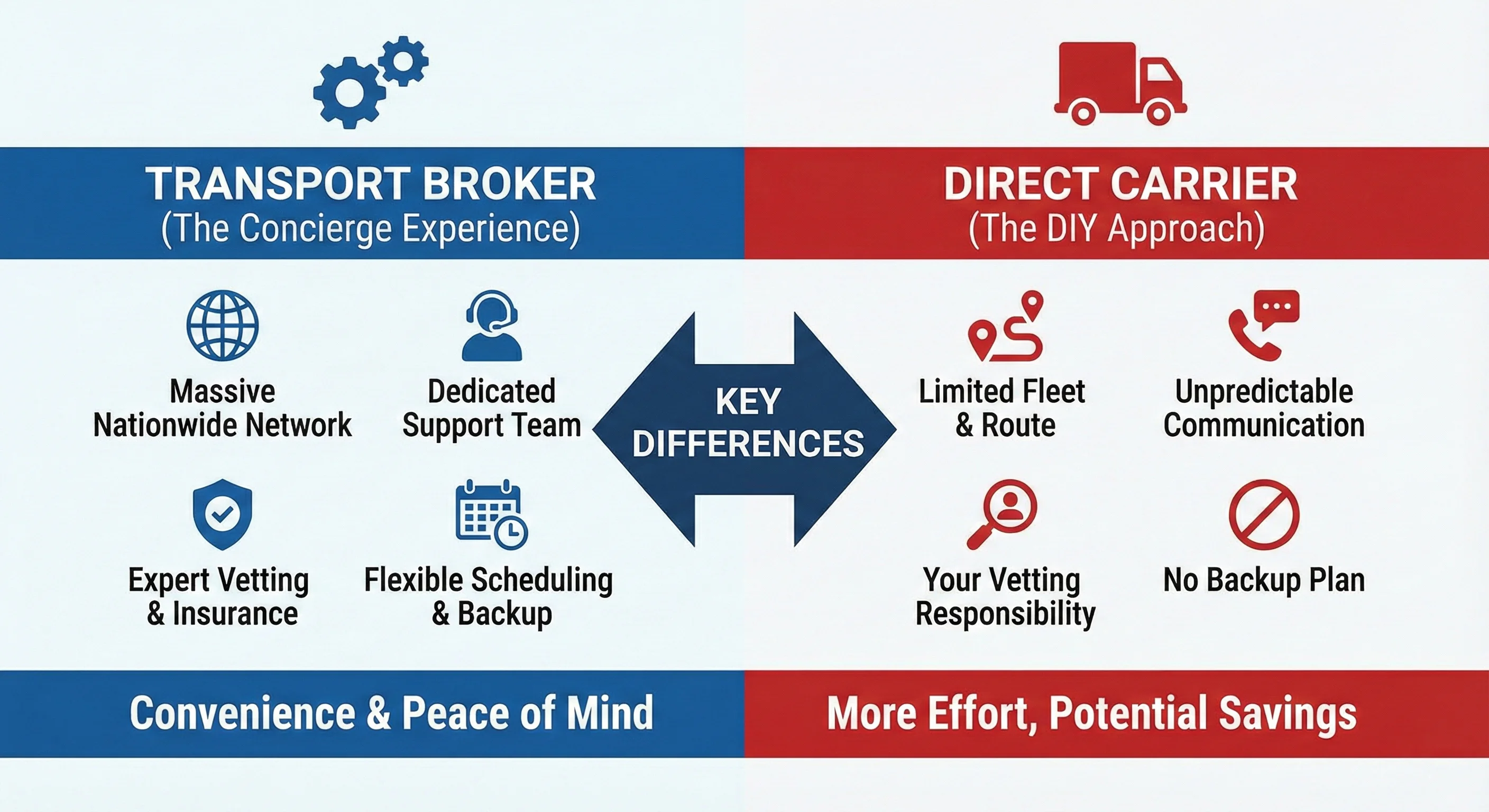
Most car owners shipping their vehicle do not know whether they are hiring a transport carrier or a transport broker. Both make a significant difference in your auto shipping process. The average transport broker charge of $100 gets you satisfaction in knowing your vehicle safely reaches its destination.
What’s the Difference Between Shipping Carriers and Shipping Brokers?
Auto shipping transport carriers are companies responsible for the trucks being utilized in auto shipping. They hire drivers who physically move your vehicle from point A to point B. Transport companies are responsible for completing the entire transport process with their own trucks and transport staff. Most transport companies are relatively small and independently owned.

Transport brokers act as intermediaries that connect you with car carriers. They don’t own trucks or hire drivers. Instead, they work with independent carriers. When you book, the broker lists your shipment on sites like Central Dispatch, where carriers bid on the job. The broker manages communication and coordination for a fee. Licensed brokers from the FMCSA only use insured, vetted carriers.
Carriers move cars with their own trucks, and brokers set up the transport by pairing you with a carrier. Let’s deep dive and review each option.
Why People Choose Transport Brokers: The Real Benefits
1.Nationwide network and flexibility

Brokers have access to auto transport carriers all over the country, providing more shipping choices and scheduling flexibility. A broker can usually find a truck going your direction quickly. This is helpful for long trips or cross-country moves since no single carrier does door-to-door on their own.
2.Faster dispatch and multiple quotes

Transport brokers can move your shipment faster than booking yourself. You get several quotes from one place quickly. Since they know many drivers, you don’t have to wait for one company to have an opening. You can compare prices and prioritize cost savings or speed.
3.Convenient customer service and support

A good broker provides customer support and advice throughout the process. Instead of tracking down a driver on the road, you call the broker’s office with questions. Many brokers offer GPS tracking, online document access, and regular updates about your car’s location. Individual carriers are usually busy driving and can’t offer this level of personal attention.
4.Carrier vetting and insurance coverage
Good brokers check out car transport companies for the right licenses, insurance, and safety history before they let them handle your car. They do the work for you! Brokers make sure these companies have current cargo insurance (usually $100k to $250k coverage or even higher) and legit USDOT/MC numbers. Some brokers might even give you extra insurance or assurances beyond what the transport company already has. If you book a transport company yourself, it’s on you to check their background and coverage. When you use a broker, you get extra peace of mind because a professional has confirmed the company is legit and has the right insurance.
5.Door-to-door service coordination
Brokers can arrange door-to-door shipping more easily. They find drivers to pick up and drop off your shipment close to your location. Brokers handle shipping details, instruct drivers, and provide alternatives if a large truck can’t reach your location.
6.Backup plans for delays
If your original truck is unavailable or late, brokers can contact another carrier. Since they know many carriers, they can find solutions when problems arise. Small companies likely won’t have another driver immediately available. Brokers provide a safety net to keep things moving.
The Cons of Using Brokers
1.Added Cost (Broker Fees)
Brokers add a fee to the truck driver’s price, typically $100 or more. Going straight to transport companies eliminates this fee. Some brokers quote low prices initially to secure bookings, then request more money later to secure a truck.
2.Variable Quality
Booking through transport brokers adds another party. Your experience depends on both the broker and the carrier they select. Since brokers don’t own trucks or hire drivers, they can’t guarantee consistent service. When problems occur, determining responsibility can be difficult. With Tempus Logix, you’ve got a team with you the whole way, helping out from beginning to end as your vehicle moves.
3.Potential for scams or poor service
Some brokers give unrealistic quotes, demand large upfront deposits, or disappear when problems arise. Since brokers are referral services, some avoid responsibility for problems. If the carrier damages your car, a broker might deflect blame. Choose a broker with a solid reputation and verified legitimacy.
Why People Book Car Carriers Themselves
Since people prefer to save whenever they can, it eliminates the broker’s fee, and the quoted price is usually final. Going straight to the carrier could save about $100 or more.
2.Direct communication
You communicate directly with the people moving your car, sometimes the driver. This creates a more personal experience. You can contact the carrier’s dispatcher or driver for updates and may meet the driver during pickup. Small carriers often prioritize customer satisfaction since their business depends on reputation.
3.Route knowledge and expertise
Car shippers running the same routes regularly become very familiar with them. They know optimal travel times, road conditions, and efficient routes. This expertise can reduce delays. Direct booking allows you to choose a carrier specializing in your transport needs, such as enclosed-carrier companies for luxury cars.
4.Accountability and reputation
The carrier is directly responsible for your car’s transport. They cannot deflect blame. This accountability makes trustworthy carriers very responsible. You can check a carrier’s safety history and reviews, knowing each review reflects that specific company’s performance. Broker reviews might not be accurate since complaints could involve carriers the broker hired.
The Cons of Going Direct
1.Limited reach and availability
Smaller car shipping companies have limited geographic coverage with set routes or service areas. You may need to wait for a truck traveling your route. Some companies cannot provide door-to-door delivery for cross-country moves, typically only serving major cities or main roads. Using a single company often means longer wait times and slower delivery.
2.Harder to find and compare
Most carriers, especially smaller ones, have minimal online presence or marketing. They rely on brokers or word-of-mouth for customers. Finding a decent carrier requires searching through reviews or forums. Comparing prices means calling multiple carriers individually. Some lack quick online quotes or updated websites. Brokers’ sites may provide multiple quotes immediately.
3.Lower flexibility and backup options
With one carrier, you’re limited to their trucks and schedule. If their truck breaks or they’re delayed, you must wait. Small carriers may struggle to replace broken trucks or change drivers. If a carrier cancels last minute, you must restart your search. Brokers can call another carrier to salvage delivery. Going direct can mean more delays if problems occur, since carriers have fewer backup options.
4.Service limitations
Each auto transporter has specific service capabilities that may limit your options. Some only offer open transport, not enclosed trailers. Others require terminal drop-off or pickup if they cannot access your area. Some won’t transport non-running cars or oversized trucks without proper equipment. If you have special requirements like door-to-door service, specific dates, or a non-running car, not every transporter can accommodate. Brokers can find transporters meeting all requirements. Going direct may require compromising on convenience or specific needs.
Summary
Choosing between a transport broker and a carrier depends on your priorities. If you want convenience, quick booking, and comprehensive support, a broker is the best option. You can save both money and nerves by working with a broker. The additional $100 cost is worthwhile for most first-time car shippers for the ease and assistance. If you prefer researching independently, want to save money, and can wait longer, go straight to a carrier for a more personal experience and potential cost savings.
Do your research. Check reviews, verify credentials, and don’t choose based solely on the lowest price. The right company, whether broker or carrier, determines whether your move is smooth or problematic.