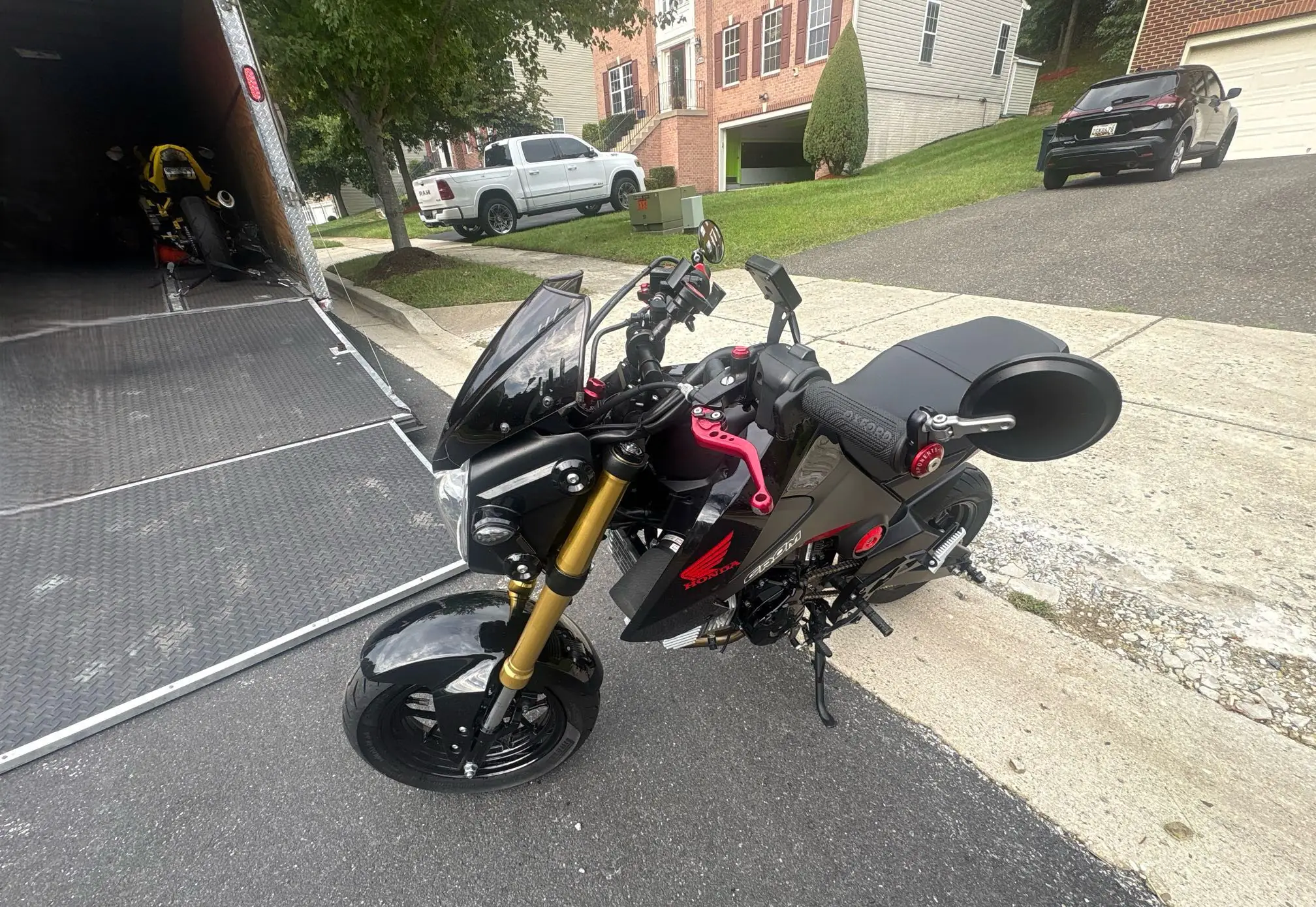
Shipping a 2022 Honda Grom 125 from Upper Marlboro, MD to Irvine, CA
We recently concluded the transportation of a 2022 Honda Grom 125 motorcycle from Upper Marlboro, MD to Irvine, CA. The motorcycle was transported over a distance of 2,687 miles in an enclosed trailer for the sum of $1,200.00 or $0.45 per mile.
This is the most cost-efficient per-mile transportation that we have featured so far in any of our blog posts. This is an example of a job where the per-mile fee really doesn’t mean much at all and the pertinent question would be whether the transportation itself makes sense from a financial perspective?

The route

It takes 2,687 miles to travel from Upper Marlboro to Irvine from one side of the country to another, moving from the Chesapeake part of the DC metro area to Orange County.
Upper Marlboro is located in Prince George’s County to the south of Washington. Travellers get around the Beltway and travel west along I-66 to Front Royal, then south along I-81 in the Shenandoah Valley.
In Knoxville, the way meets I-40 and goes west all along the way through Nashville, Memphis, Little Rock, then Oklahoma City, Amarillo, and Albuquerque all the way to Flagstaff in Arizona.
From Barstow the cargo travels south along I-15 in the Cajon Pass into the Inland Empire, then west along CA-91 to Irvine.

When the shipping cost is large next to the vehicle
Grom is our smallest vehicle and it is not very expensive either. And these two features create a question, which deserves an honest answer.
This per-mile cost is excellent and not very relevant. 45 cents per mile is the lowest single-vehicle cost that we have ever offered, as we said while moving Honda CBX. Small bike occupies a small part of one deck place. It is so but does not alter anything else.
Compare the total cost to the vehicle instead of other shipments. Used Grom sells for just a few thousands of dollars. Moving it across the country costs $1,200.00. And that amount is significant part of the value of the vehicle and one who moves it should have considered this ratio consciously, not accidentally.
Sometimes selling and buying again is the best solution. While moving common, produced, non-customized, inexpensive vehicle without any historical value selling it at the place of origin and buying it again in the destination place can be more beneficial. We will tell you about this.
This isn’t always the case, however. A bike which has been customized or no longer made or available in the desired colour or configuration or purchased at an unbeatable price or simply one’s own is not replaceable by a comparable listing on the other side. Emotion comes into play, as does the inconvenience of a private transaction on both sides.
This is even more critical in relation to the price of the vehicle. At $60,000 for the automobile $1,200 for the shipping becomes two percent of the value and no one thinks twice. For a smaller bike it may be a third or even more. Same service, completely different decision.
Distance is what makes it economical. A Grom transported 500 miles would be significantly less than this amount. Transporting a small vehicle across the country becomes competitive.

What $0.45 per mile reflects

Two key factors are responsible for this number, and both lead to the same conclusion.
The first is deck space allocation. The Grom weighs about 225 pounds and is light enough for several to occupy the space needed for one vehicle. In a recent trip, three motorcycles were shipped on one load, one of which was a Grom, and this particular vehicle requires less space than any other.
The second factor is distance. At 2,687 miles, the fixed cost of pickup, loading, securing, and delivery is distributed over a very long distance. The short haul over the same motorcycle will cost many times as much per mile.
The corridor also works in our favor. Interstate-40 is a major east-west route, and the DC metro area as well as Southern California represent large markets.
Enclosed transport

Each of our motorcycles that is booked will go in covered; even the smaller ones. We don’t have an open section for motorcycles, and the Grom motorcycle is as vulnerable as any motorcycle since the engine and controls and the painted parts will all be exposed to the road.
To secure a small motorcycle requires the use of the appropriate chock instead of more straps. A front wheel chock which is built around a large tire will not always provide enough security for a small wheel motorcycle. That is a lesson one has learned as a person who moves motorcycles.
The motorcycle was loaded in with the front wheel secured using a good chock and soft straps on the bars, with the suspension being compressed due to the load.
Transport summary
- Origin: Upper Marlboro, MD 20772
- Destination: Irvine, CA 92614
- Distance: 2,687 miles
- Service cost: $1,200.00
- Cost per mile: $0.45
- Vehicle: 2022 Honda Grom 125
- Trailer type: Enclosed
- Route: Upper Marlboro, MD → I-66 west to Front Royal → I-81 south through the Shenandoah Valley → Knoxville, TN → I-40 west through Nashville, Memphis, Little Rock, Oklahoma City, Amarillo and Albuquerque → Flagstaff, AZ → Barstow, CA → I-15 south through the Cajon Pass → CA-91 west → Irvine, CA

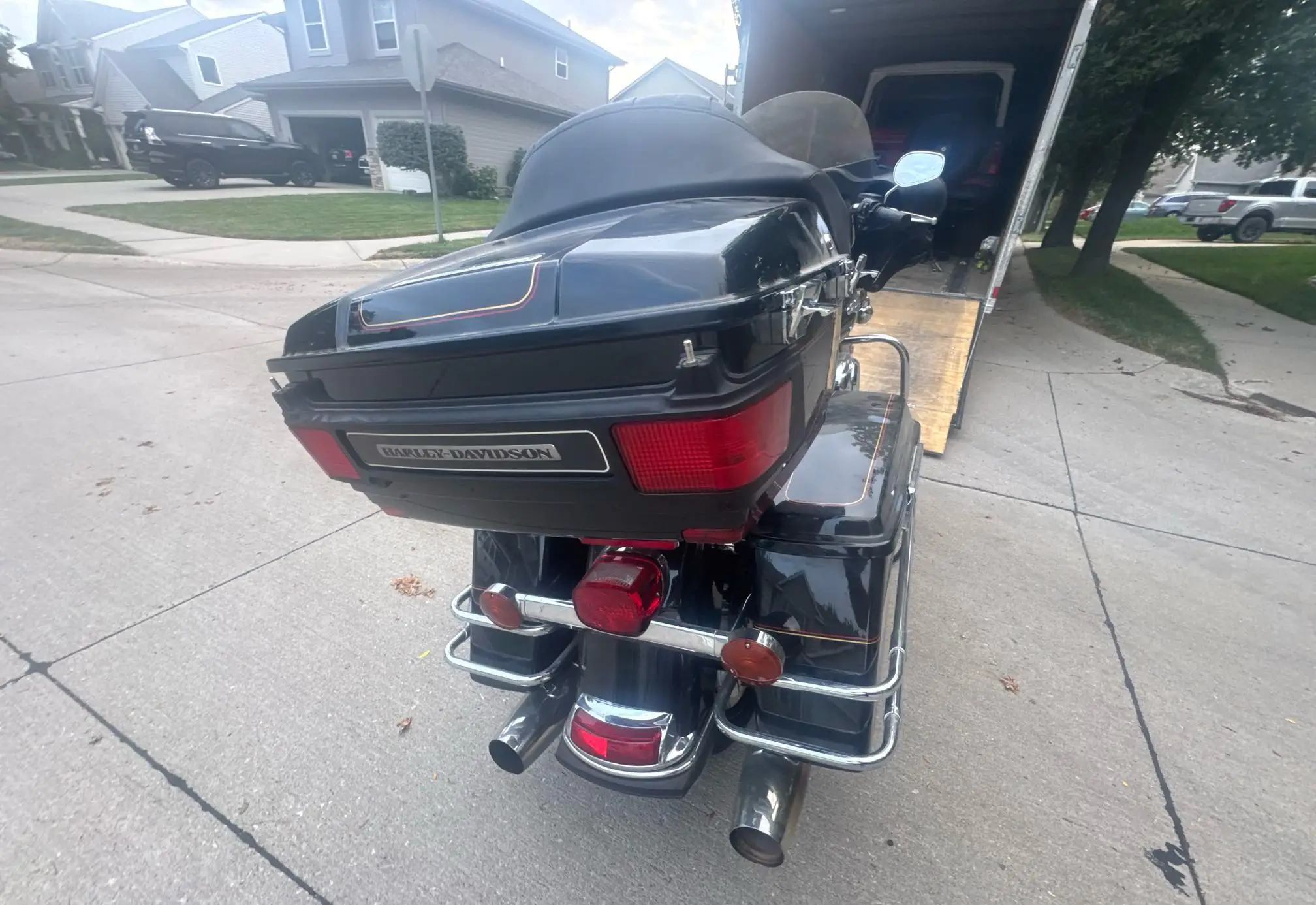
Shipping a 2009 Harley-Davidson Ultra Classic from Glendale, AZ to Omaha, NE
Recently, we completed transportation of a 2009 Harley Davidson Ultra Classic from Glendale, AZ to Omaha, NE. Transportation took 1,320 miles in an enclosed truck costing $1,219.00 per trip – that’s $0.92 per mile.
This price comes at the higher end of the price spectrum for bikes that we have published, and there is a good reason for it – the bike in question is a full dresser, not a regular motorcycle.

The route

The distance of 1,320 miles from Glendale to Omaha starts from the desert area and continues through the Rockies into the flatlands.
Glendale is located northwest of Phoenix. The motorists have to take I-17 towards the north through the high desert region of Camp Verde, passing through the Mogollon Rim to reach Flagstaff, where an elevation of 6,000 feet is reached.
From Flagstaff, I-40 is taken east through the Painted Desert and enters New Mexico through Gallup to reach Albuquerque. From here, I-25 is taken north to cross through Raton Pass and Colorado Springs to reach Denver.
Further, I-76 takes the route northeast from Denver through Fort Morgan to join I-80 at Big Springs, Nebraska. From here, I-80 takes the traffic east through North Platte and Lincoln to reach Omaha.

A full dresser is its own category

We’ve shipped a 125cc Grom, a dual-sport and a BMW tourer at the same time, and we’ve shipped a supersport and a cruiser too. The Ultra Classic stands out from all of those motorcycles.
That’s the weightiest production motorcycle category. Loaded, with fairing, saddlebags, Tour-Pak, and full fuel tank, an Ultra Classic weighs almost 900 pounds. This is twice heavier than a cruiser and four times a Grom.
It is also the most spacious motorcycle type. Handlebars, mirrors, and hard saddlebags make a dresser occupy much more space than any other type of a motorcycle.
That means the advantage of the deck share gets diminished. The thing is that motorcycles have relatively low rates because a number of motorcycles use the same deck area as one car does. The share of the deck space taken by a full dresser gets significant enough to decrease the discount and thus increase the per-mile rate.
Removable bodywork needs a decision. Tour-Pak, windshield and saddlebags come off on many dressers. Whether they travel fitted or removed should be agreed before the driver arrives, and anything removed rides inside the trailer rather than loose.
Highway bars are not tie-down points. Crash bars and engine guards look like convenient places to attach a strap. They aren’t designed to take that load, and a driver who has moved dressers knows to use the triple clamp and lower fork area instead.
And the chrome is the reason for enclosed. A dresser carries more chrome and polished trim than any other bike, across the fairing and bars and bags and exhaust. Pitting from road debris does not polish out.

What $0.92 per mile reflects
There are two things that go into this number.
The first is simply size. As noted above, a full dresser takes up enough deck space and is heavy enough to put its price at the level of a small vehicle and not an average motorcycle.
The second is distance. At 1,320 miles, this is a medium haul. The fixed cost of picking up and securing the load and delivering it has a fair amount of miles to cover but not the really long miles that bring a coast-to-coast haul price down even farther.
It’s worth mentioning terrain. The climb from Phoenix to Flagstaff and the passage over Raton Pass are legitimate elevation gains, although they’re not issues for a route that operates regularly like this one.
Enclosed transport

All bikes we reserve come enclosed, and a dresser is one that comes as well-protected as any machine we deal with.
The thing is there’s no bodywork to protect anything, because in a motorcycle, the fairing works as bodywork. With the chrome, the painted bags, the windshield, the naked exhaust system, the surface area that requires protection in a dresser is bigger than in just about anything else you can ride.
Securement used a front wheel chock to lock the front wheel into the upright position. Soft tie-downs were installed onto the handlebars and lower triple clamp, while ratchet tie-downs squeezed the suspension and made the bike stay grounded through 1,320 miles. There was nothing around any crash bars or pipes or painted surfaces.

Transport summary
- Origin: Glendale, AZ 85310
- Destination: Omaha, NE 68130
- Distance: 1,320 miles
- Service cost: $1,219.00
- Cost per mile: $0.92
- Vehicle: 2009 Harley-Davidson Ultra Classic
- Trailer type: Enclosed
- Route: Glendale, AZ → I-17 north through Camp Verde to Flagstaff → I-40 east through Gallup to Albuquerque, NM → I-25 north over Raton Pass → Colorado Springs and Denver, CO → I-76 northeast through Fort Morgan → I-80 east through North Platte and Lincoln, NE → Omaha, NE
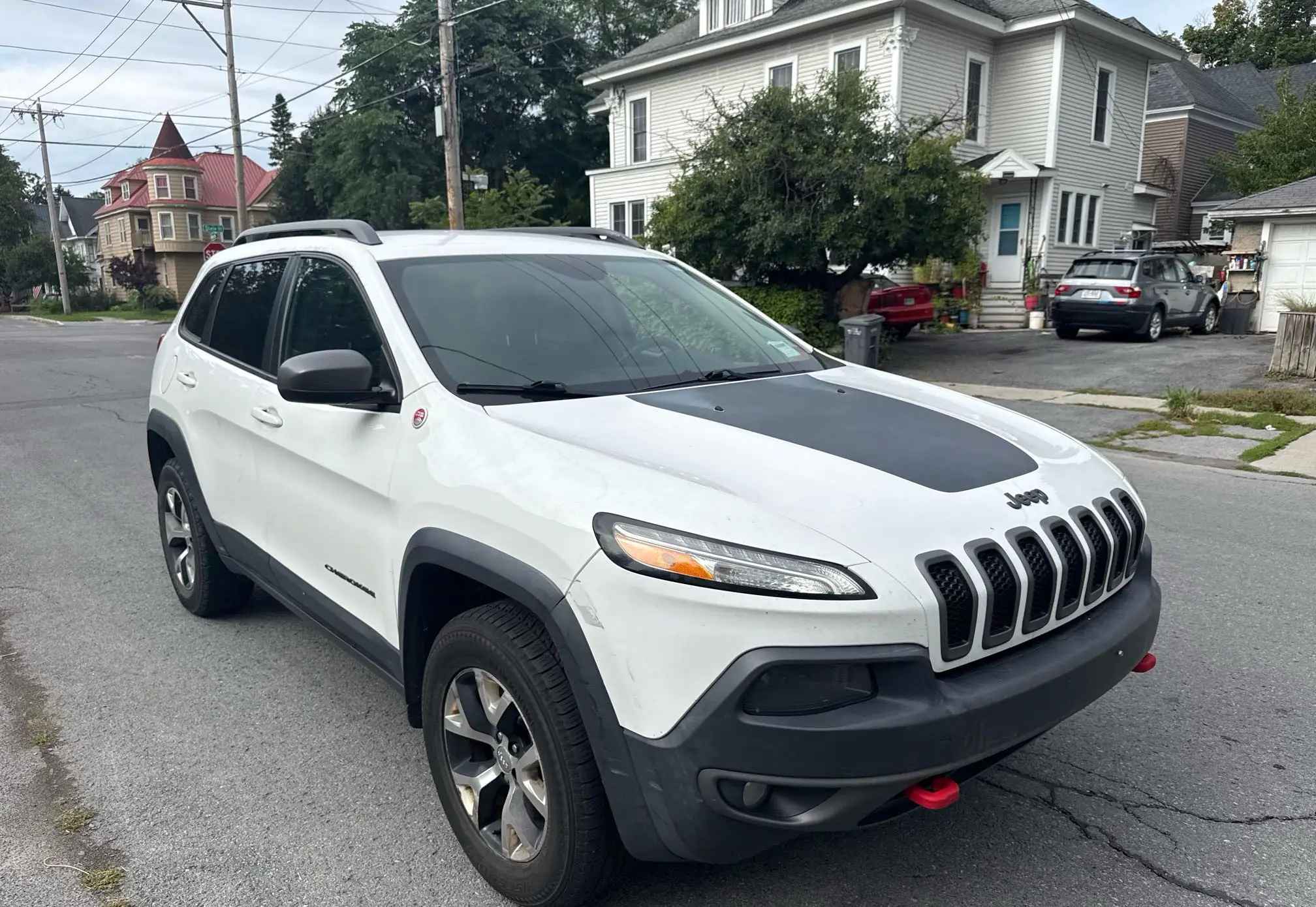
Shipping a 2017 Jeep Cherokee from Ankeny, IA to Watertown, NY
Just recently, we completed the shipment of a 2017 Jeep Cherokee from Ankeny, Iowa, all the way to Watertown, New York. This was a 1,060-mile trip using an open trailer and cost $1,392.00, amounting to $1.31 per mile.
The Cherokee was driveable during pick-up time. As far as an open truck load goes for this mileage for a compact SUV, that’s pricey. But this is not because of the point of pick-up. It’s because of what the truck could do after dropping the vehicle off.

The route

This 1,060-mile drive stretches from Ankeny to Watertown through the Midwest to the Great Lakes region and beyond into northern New York State.
Ankeny is located just to the north of Des Moines. Travelers start out by traveling eastward on I-80 all the way to Des Moines and then through Iowa City to the Quad Cities before proceeding to Chicago.
Once there, the next stage of this road trip follows the toll roads through northern Indiana and Ohio to Toledo and Cleveland before continuing east on I-90 through Erie, Pennsylvania, to Buffalo.
Continuing on, I-90 takes travelers up through upstate New York all the way to Syracuse, from where the route turns northward along I-81 all the way to Watertown.

Why the destination’s outbound freight matters

We have talked about rural pick-ups and deliveries in remote places where the cost is in sending the truck to such places. Watertown illustrates another factor influencing trucking rates. It is not difficult for the trucker to arrive at Watertown but it can be difficult to load up the truck after delivery.
It must be understood that the carrier charges for the entire run and not just your individual part of the trip. After making the delivery in Watertown, the truck will require another load. Depending on whether the next load is nearby or far away will influence whether the empty return to the loading point becomes a part of your haul.
There are some end-of-the-line markets where there is not much through traffic and where the trucks come in to deliver and leave empty.
However, hub destinations have quite an opposite approach. As you have seen from our example of moving from Denver to Newark, major city means a lot of departures from there in all directions. Carrier servicing such a destination reloads right away and sets the price for it correspondingly.
The logic of directional pricing can be compared with that of the outbound freight, but it concerns not the entire lane, but just one particular destination. Both of them appear in the estimate despite the fact that neither of them can be seen on the map.
Neither does your car change anything at all. A compact SUV holds only one single position while the premium is charged only for the destination, so any car going there is to have it.

What $1.31 per mile reflects
Two underlying factors exist with respect to this number.
Destination is the more important, as explained above. A terminal destination assumes the cost of the empty miles ahead of it.
Distance is the other factor. With a distance of 1,060 miles, this is a medium-length haul, where the cost per mile associated with pickup, loading, securing, and delivering the load remains significant. If the trip were from coast to coast, these costs would be incurred over almost triple the distance.
Origin is not a problem here. Ankeny is located at the outskirts of Des Moines metropolitan area, with easy access via interstate highways I-35 and I-80.
Open transport

The Cherokee traveled via open trailer, which is the transport method by which most all vehicles in this nation travel.
It is a manufactured compact SUV with a clearcoat from the factory; there is enclosed transport only for cars where getting a rock chip would be a costly issue. In this case, open transport is the right choice, as we stated previously.
Ground clearance was not an issue, since the vehicle is raised high enough that ramp angle was not a concern on either end. The transport straps were soft, going over the tires instead of around the suspension with chains.

Transport summary
- Origin: Ankeny, IA 50021
- Destination: Watertown, NY 13601
- Distance: 1,060 miles
- Service cost: $1,392.00
- Cost per mile: $1.31
- Vehicle: 2017 Jeep Cherokee
- Condition: Operable
- Trailer type: Open
- Route: Ankeny, IA → I-80 east through Iowa City and the Quad Cities → Chicago, IL → Indiana and Ohio toll roads past Toledo and Cleveland → I-90 east through Erie, PA and Buffalo, NY → Rochester → Syracuse → I-81 north → Watertown, NY
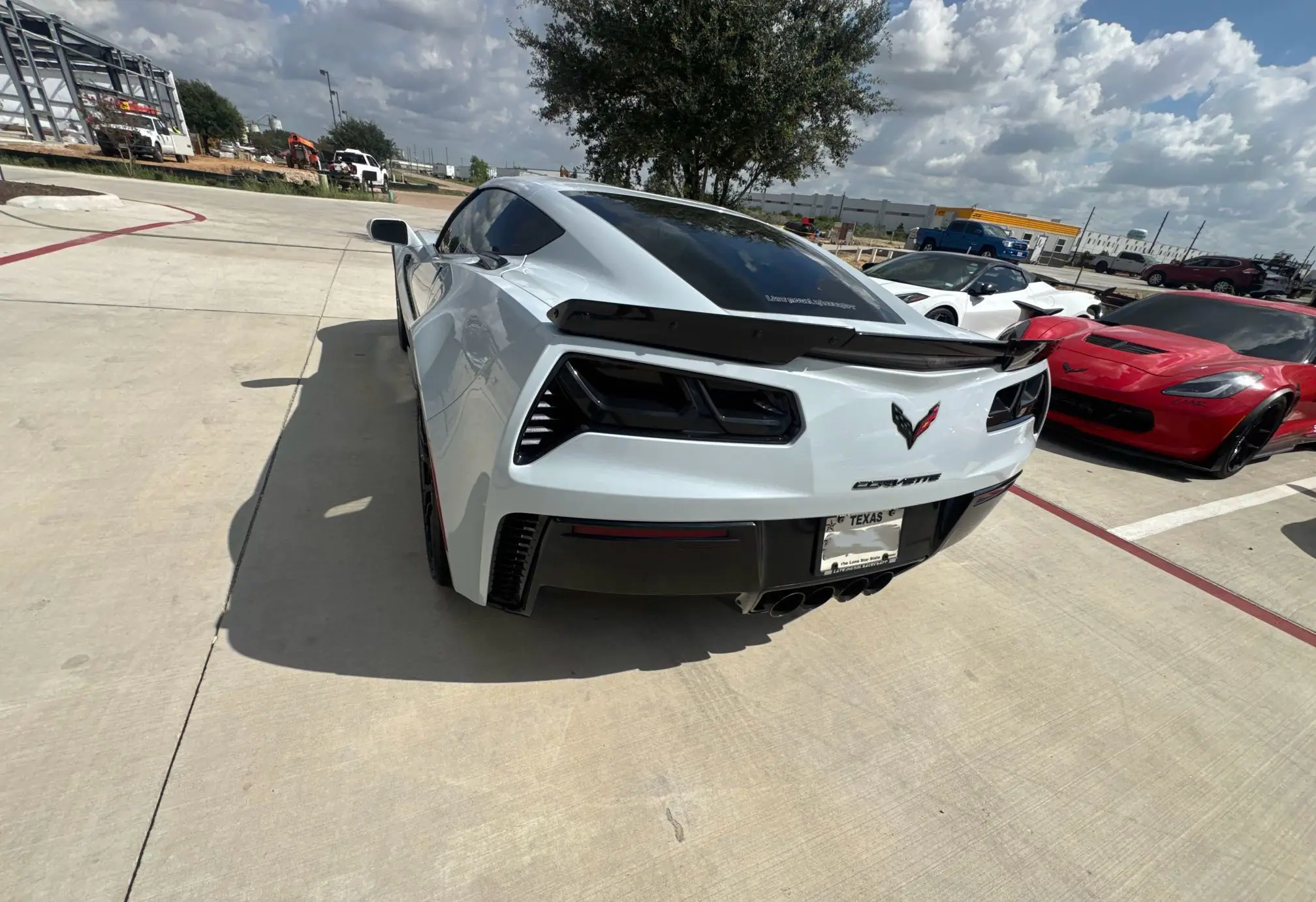
Shipping a 2019 Chevrolet Corvette from Katy, TX to Seminole, TX
Our recent shipment included transporting a 2019 Chevrolet Corvette from Katy, Texas to Seminole, Texas, which spanned a distance of 518 miles and incurred a total charge of $1,924.00, translating to $3.71 per mile.
The Corvette in question was able to move on its own power when picked up. This is the highest mileage rate that we have featured and it needs to be spelled out clearly. As we have written elsewhere, our recent shipment of a 1950 Oldsmobile spanned a coast to coast route at 58 cents per mile.

The route

The 518-mile drive from Katy to Seminole lies all within Texas and is mostly not on any interstate highway.
Katy lies on I-10 to the west of Houston, which is one of the destinations that we have previously shipped to. The driver drives west-northwest on US-290 via Brenham to Austin.
The path then takes US-87 via Brady and San Angelo through the Edwards Plateau to the Permian Basin, where oilfields exist. The path goes further north of Big Spring toward Lamesa.
Lastly, the path takes US-180 westward to Seminole, the county seat of Gaines County, which is located about 70 miles southwest of Lubbock.

Why this is the most expensive per mile we have published
Three conditions come into play. By themselves, each of these conditions is normal. But taken together, they make the cost.
The distance is small. With 518 miles of travel, there is not much distance on which the fixed cost of the loading, transporting, and delivery can be spread out. The cost is similar regardless of whether it is 518 miles or 2,600, so that is why short runs will always cost a lot per mile. The total cost of $1,924.00 is the actual cost the customer pays.
Enclosed limits the market. Enclosed trucks represent a small fraction of the trucking market. This premium is charged on all enclosed loads, regardless of the small distance.
The C7 requires a liftgate. The Corvette stands at just over four inches from the ground up front. As we explained earlier, when shipping the other C7, the ramp would be too steep for the vehicle, so the carrier will need to have liftgate equipment. This further cuts down an already limited list.
And the pickup point is remote. Seminole is a small town of a couple of thousand residents within the Permian Basin. There are many enclosed exotic car carriers in the Dallas-Houston-Austin area. Not many would have reasons to be in Gaines County, and the one that shipped this particular vehicle had either driven the extra distance or waited for one.
Short, specialized, and remote are the worst-case scenario for mileage rate. However, this is totally normal and explains why we advise our customers to price a short haul on a total cost.

The range, end to end

We have now established rates between $0.58 and $3.71 per mile for the very same service. That is an incredible range of more than six times over, and no part of that range can be considered in any way arbitrary.
The lowest range includes maximum distance and open transport, one regular vehicle position, two heavily used termini. All going the same direction.
The highest range includes minimum distance and enclosed transport, specialized equipment and a destination not on a single important route. Once again, all going the same direction.
Almost every shipment falls somewhere in the middle. The rate per mile is meaningful only when compared to similar work.
Enclosed transport

There was no viable open choice to be considered. A contemporary Corvette on an open deck would be a chip waiting to happen. What’s more, nose clearance makes it impossible to use a conventional ramp regardless of the trailer’s design.
The loading process entailed the use of a hydraulic liftgate that lifts the vehicle to the deck level, making any angle of approach irrelevant. The vehicle was then driven on the platform to its final position by the driver.
As for securing, soft straps were used instead of chains on the suspension, something that becomes particularly important when dealing with a vehicle like that with its expensive suspension system.
Transport summary
- Origin: Katy, TX 77494
- Destination: Seminole, TX 79360
- Distance: 518 miles
- Service cost: $1,924.00
- Cost per mile: $3.71
- Vehicle: 2019 Chevrolet Corvette
- Condition: Operable
- Trailer type: Enclosed, liftgate loaded
- Route: Katy, TX → US-290 northwest through Brenham toward Austin → US-87 through Brady and San Angelo → across the Edwards Plateau → Big Spring → Lamesa → US-180 west → Seminole, TX
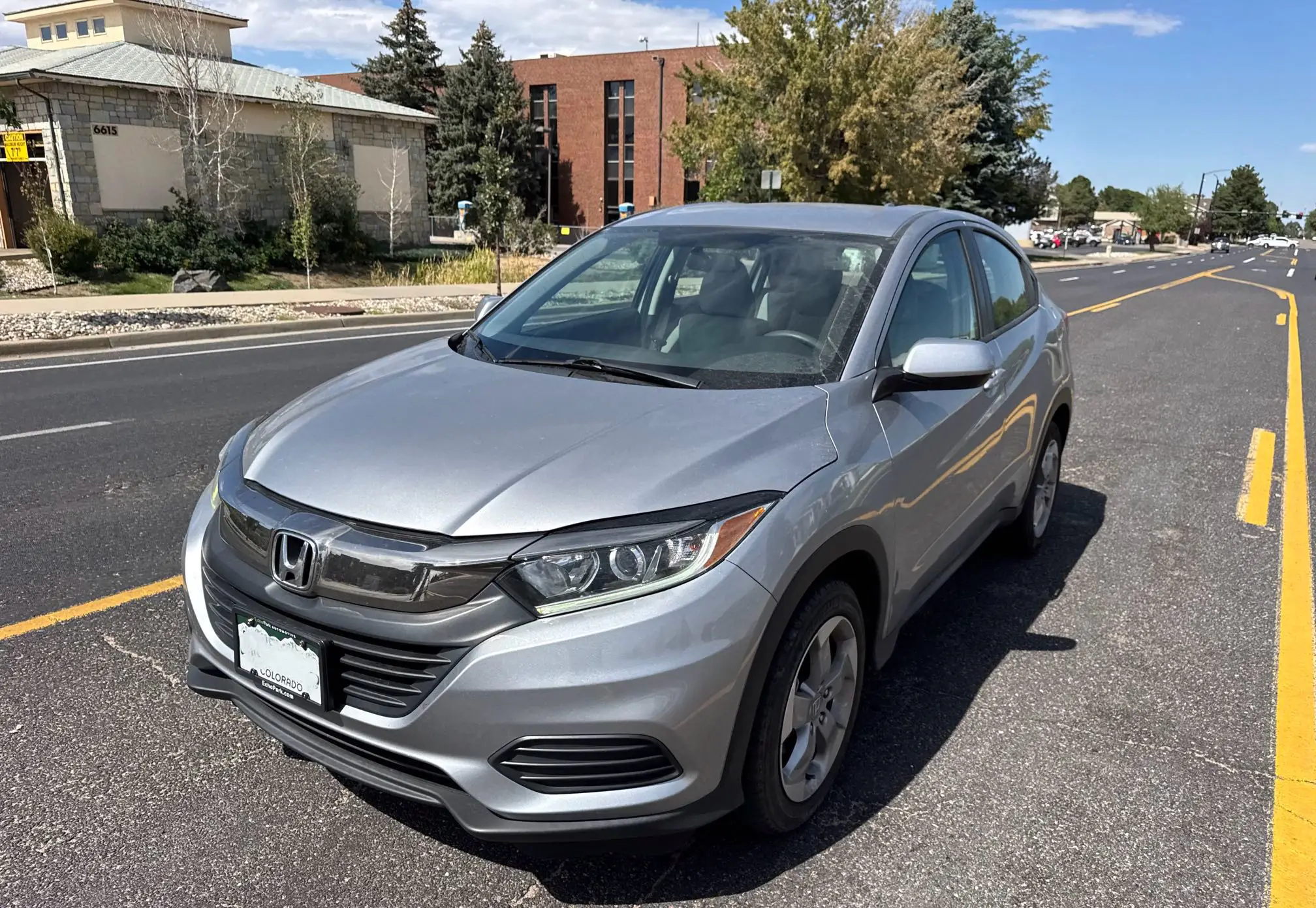
Shipping a 2019 Honda HR-V from Glendale, CA to Greenwood Village, CO
Recently, we completed the relocation of 2019 Honda HR-V from Glendale, CA to Greenwood Village, CO. This move involved covering 1,024 miles using an open trailer and cost $1,200.00, averaging out to $1.17 per mile.
This HR-V was a driveable vehicle at time of pickup. Being a small crossover on a moderately long haul through a big city, there’s no particular reason for the per-mile rate to be relatively high except that the latter 250 miles are traversed over the Rockies.

The route

This journey from Glendale to Greenwood Village spans 1,024 miles and covers areas in the Mojave Desert, the Utah canyon country, and the Colorado Rockies.
Glendale is located just north of the Los Angeles city center. Starting out, one would head northbound on I-15 via Cajon Pass to Barstow, crossing through the desert until reaching Las Vegas and then the Virgin River Gorge in St. George, Utah.
Eastbound via I-70 just past Cove Fort, the road goes through Richfield to the San Rafael Swell, then past Green River into Colorado in Grand Junction.
From here, the interstate takes you over Vail Pass in Glenwood Canyon through the Eisenhower Tunnel at an elevation of more than 11,000 feet, before going down to Denver. Greenwood Village is in the Denver Tech Center area, south of Denver, so that means ending on I-25 south.

Crossing the Rockies on a car carrier

It is more than a slower part of the drive with a fully loaded car carrier. It alters the trip itself.
Gradients take time. Fully loaded carriers go up Vail Pass and the approach to the Eisenhower Tunnel below the speed limit and down in low gear to prevent brake problems. The mileage remains the same. The number of hours spent driving does not.
Chain requirements are another factor in Colorado. Commercial vehicles on the mountain portion of I-70 must use chains in the period between September and May, as required by circumstances. It is time spent stopped at the side of the road, and it affects all carriers that travel in the winter season.
Closures are common. I-70 closures due to weather or falling rocks in Glenwood Canyon, or to traffic accidents on the passes, occur frequently. No other route through the Rocky Mountains offers an easy bypass.
Winter gains days not hours. As we talked about when moving from Minnesota to California, which went through Wyoming, a day could be added to our delivery estimates if the mountain pass is having bad weather conditions. This is considered in the schedule, but no date is promised as this would never be honored by the mountains.
But this consideration of difficulty is included in the pricing process. The slower speed and additional fuel needed for the climb mean money loss to the carrier, plus brake usage while coming down the pass and possibly a closure. Pass routes will generally be priced a bit higher than flat routes of equal distance.

What $1.17 per mile reflects

There are two factors that contribute to this price.
Distance is the first one, since at 1,024 miles, this is a middle-distance transport where fixed costs of picking up, loading, securing, and delivering have to be covered. The cost of coast-to-coast movement covers those fixed costs over almost three times more distance.
Terrain is another factor, for the same reasons mentioned above. The same distance on a flat route turned out to be cheaper, because the Vancouver-Laguna Beach delivery on I-5 was quoted at $1.04.
It’s not about end locations either. Both Los Angeles and Denver metropolitan areas are large markets and I-15/I-70 corridors are known freight routes.
Open transport

The HR-V was delivered via an open trailer, which is how the vast majority of vehicles get transported here.
It is a subcompact crossover model with clearcoat from the manufacturer, and an enclosure is designed for cars for whom a chip in their paint is a significant monetary issue. Having said that, an alpine delivery in the wintertime is one of those situations in which road grit and anti-icing compounds affect an open deck more than usual. It’s good to be aware of this if your shipment is of value in the cold season.

Ground clearance wasn’t an issue. The securement was soft straps over the wheels and not chains over the suspension, and prior to rather than post-climbs.

Transport summary
- Origin: Glendale, CA 91205
- Destination: Greenwood Village, CO 80111
- Distance: 1,024 miles
- Service cost: $1,200.00
- Cost per mile: $1.17
- Vehicle: 2019 Honda HR-V
- Condition: Operable
- Trailer type: Open
- Route: Glendale, CA → I-15 north over the Cajon Pass → Barstow → Las Vegas, NV → St. George, UT → I-70 east near Cove Fort → Richfield and Green River → Grand Junction, CO → Glenwood Canyon → Vail Pass → Eisenhower Tunnel → Denver → I-25 south → Greenwood Village, CO
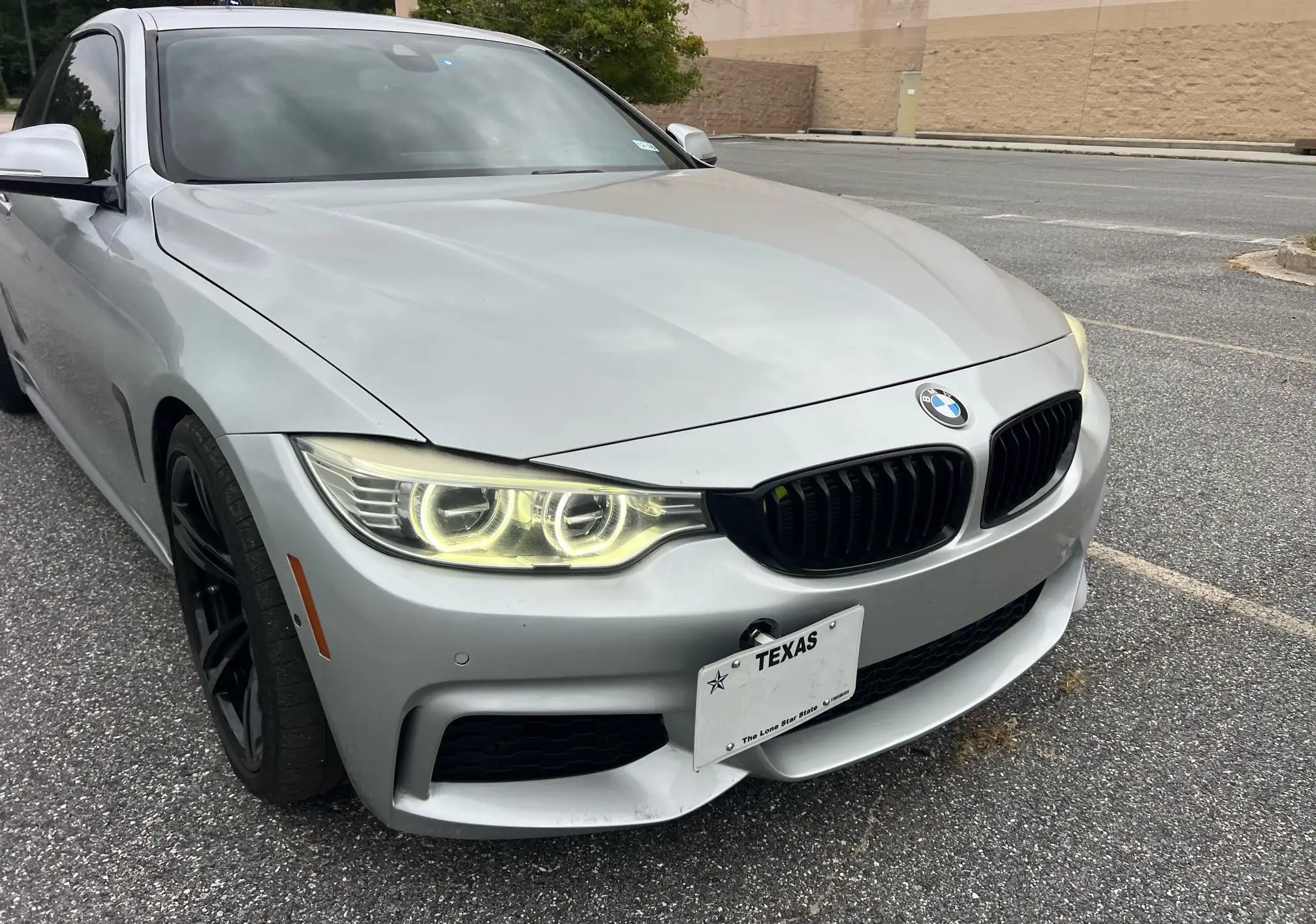
Shipping a 2014 BMW 435i from Plano, TX to Owings Mills, MD
It is not too long ago that we completed the delivery of a 2014 BMW 435i from Plano, Texas to Owings Mills, Maryland, covering a distance of 1,374 miles on an open trailer at a cost of $1,298.00 or $0.94 per mile.
This particular 435i was operational upon pick-up. Owings Mills is one of our destinations that we are familiar with, as we just delivered an Acura RDX from Owings Mills to Sugar Land, Texas. The comparison of these two shipments will be interesting for this corridor.

The route

This 1,374-mile journey will take the truck through the mid-South region and up over the Appalachians to Maryland.
Plano is situated north of Dallas. The drivers head over to I-30 towards the east, which takes them past Texarkana and then into Little Rock, Arkansas.
Thereafter, the drivers move over onto I-40, taking the load to the east via Memphis and Nashville to Knoxville, Tennessee. There the load heads further north via I-81 to Bristol, Roanoke and Winchester.
Finally at Hagerstown, the drivers move into I-70 towards Baltimore where they join the Beltway (I-695 & I-795). Owings Mills is located northwest of Baltimore, Maryland.

The same corridor, both directions
Here is what both shipments look like together:
Owings Mills to Sugar Land, moving south: 1,465 miles, $1,200.00, $0.82 per mile
Plano to Owings Mills, moving north: 1,374 miles, $1,298.00, $0.94 per mile
Notice how the northbound shipment is shorter but costs more overall, as well as per mile, just as we noted when describing the phenomenon of directional pricing.
The direction influences the cost here since more cars relocate from the Northeast and mid-Atlantic towards Texas/Sun Belt than in the opposite direction. It is easy to fill southbound decks. With the northbound shipment, carriers will try to fill the return leg of the run depending on which side of the route is in lower demand compared to truck availability.
However, there are some limitations to this comparison. It is not the exact opposite direction case since Sugar Land is out of Houston, and Plano is out of Dallas; therefore, the routes in Texas differ a bit. Plus, the two shipments were booked in different time frames. As we have discussed on the recent Camry move, weekly lane situation is capable of changing the rates itself. Use it as an example of directional pricing but not an experiment.
What is clear from it is quite helpful. In this large corridor, the per mile charge was different in both directions by around 15 percent. This is roughly the magnitude of the influence that direction has on pricing, and it explains why the quotation to come back is not the quotation to go out.

See also: Shipping a 2015 Toyota Camry from Gardena, CA to Bastrop, TX
What $0.94 per mile reflects

These two considerations lie underneath this number.
The first is distance. Being a total of 1,374 miles means that there will be a decent amount of road in which the costs associated with pickup, loading, securing, and delivering can be spread, thus putting this far below the per mile cost of a short haul.
The second is direction. In terms of filling out the northbound portion of the route, this is the tougher half.
The type of truck is neutral. A BMW 435i is a midsize coupe that has one standard position.
Open transport

The 435i was transported on an open trailer, which is perfect for an upscale performance coupe that has its original finish.
As we stated in moving a BMW M235i, even the presence of a sporty badge doesn’t automatically require an enclosed trailer, since ground clearance and replacement cost can dictate an open trailer choice. Finish and destination did too.
There is one thing to consider with this kind of car. This generation of BMW cars usually runs on low-profile tires mounted on big wheels, and curb rash of a wheel is one of the most common types of damage to be caused and missed.

Transport summary
- Origin: Plano, TX 75024
- Destination: Owings Mills, MD 21117
- Distance: 1,374 miles
- Service cost: $1,298.00
- Cost per mile: $0.94
- Vehicle: 2014 BMW 435i
- Condition: Operable
- Trailer type: Open
- Route: Plano, TX → I-30 east through Texarkana → Little Rock, AR → I-40 east through Memphis and Nashville → Knoxville, TN → I-81 north through Bristol, Roanoke and Winchester → Hagerstown, MD → I-70 east → I-695 / I-795 → Owings Mills, MD
Shipping a 2018 Hyundai Tucson from Adamsburg, PA to Newark, NJ
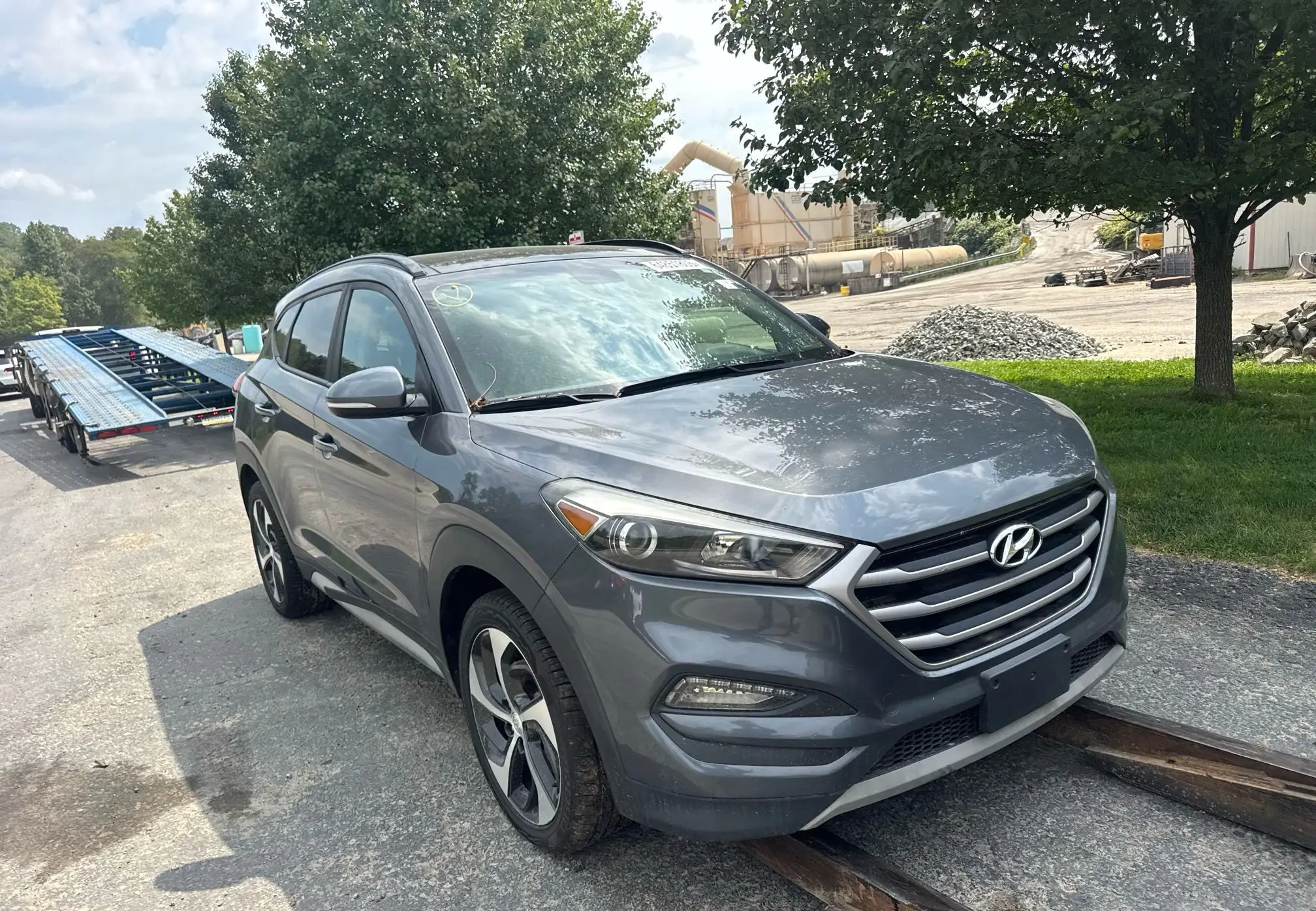
The transport of a 2018 Hyundai Tucson from Adamsburg, PA to Newark, NJ was recently completed. This delivery was done in an open trailer, and the distance covered was 340 miles, at a total cost of $550.00 or $1.62 per mile.
At the time of pick-up, the vehicle was fully operational. The picture seen above this text is the pickup condition picture that was captured at pick-up. It is important to understand what the picture represents.

The route

The 340 mile journey from Adamsburg to Newark involves traveling west to east across Pennsylvania.
Adamsburg is located in Westmoreland County, east of Pittsburgh and near Greensburg. Travelers will take the Pennsylvania Turnpike traveling east, passing over the Allegheny ridges from Somerset to Bedford.
The Pennsylvania Turnpike carries travelers further to Harrisburg, where they merge onto the I-78 going east towards Allentown, through the Lehigh Valley into New Jersey.
Newark is located at the eastern end of that corridor. Since we have discussed the New York metro area previously, the last few miles can be the toughest part of the entire trip.

What the pickup condition photo is

All our deliveries create images at the point of pick-up. These are stamped with the time and place and attached to the order form. Most people see them and forget about them. They deserve more than that.
The images are the graphical half of the condition report. While the Bill of Lading documents the damages in writing, the pictures document them visually, in a way that cannot be disputed at any later stage. Taken together, the two documents prove what the car looked like when it was delivered.
The stamp is as important as the picture itself. When the date, time, and location appear right in the picture, it is clear that the photo could not have been taken yesterday or anywhere else. In the case of this particular delivery, the line says 9/1/2026, Adamsburg, PA 15611.
Pay attention to the surroundings rather than just to the car itself. The picture of this Tucson clearly shows the industrial area where the car was picked up: gravel ground, wheel loader, other cars and equipment. It means that this was not a residential street but a business premises with space for maneuvering.
Everything that happens to your vehicle needs to be documented. The use of machinery for moving your car in the yard, this will be noted. Presence of machinery in a picture does not mean the presence of machinery that moved your car, and this should be made clear in the documentation.
Review them right away, and not after delivery. If there is anything in the pictures that you do not expect, this is the time to raise it, while the car is still close to its place of origin.
Also make some of your own. Our pictures are taken by the driver during pickup. Your pictures are taken before the arrival of the truck and document the period from the last time you saw your car and till the arrival of the carrier.

What $1.62 per mile reflects

One factor stands out.
It is Distance. With a distance of 340 miles, this is one of our shortest distances and hence very costly on a per mile basis. The cost incurred by the haulage company in terms of pickup, loading, coordination, and delivery does not change whether it’s a 340 or 2600 mile trip, and thus, with such a small distance, those costs become the dominant factors and add up to $550.00.
Corridor is straight-forward. The Pennsylvania Turnpike and I-78 are well established freight highways and Newark is a big market, so carrier availability is not an issue.
Vehicle is neutral. A compact SUV occupies one single unit position.
Open transport

The Tucson was shipped in an open trailer, as the majority of vehicles shipped in this country are.
It is a factory-finished compact SUV with a clear coat, and on a 340-mile drive, the enclosed rate would be money wasted on a coating this vehicle doesn’t need.
Ground clearance was never a consideration. The Tucson was high enough off the ground that ramp angle was never an issue. The securing of the vehicle utilized soft restraints over the tires instead of chains over the suspension.
Transport summary
- Origin: Adamsburg, PA 15611
- Destination: Newark, NJ 07104
- Distance: 340 miles
- Service cost: $550.00
- Cost per mile: $1.62
- Vehicle: 2018 Hyundai Tucson
- Condition: Operable
- Trailer type: Open
- Route: Adamsburg, PA → Pennsylvania Turnpike east through Somerset and Bedford → Harrisburg → I-78 east through Allentown → Lehigh Valley → Newark, NJ
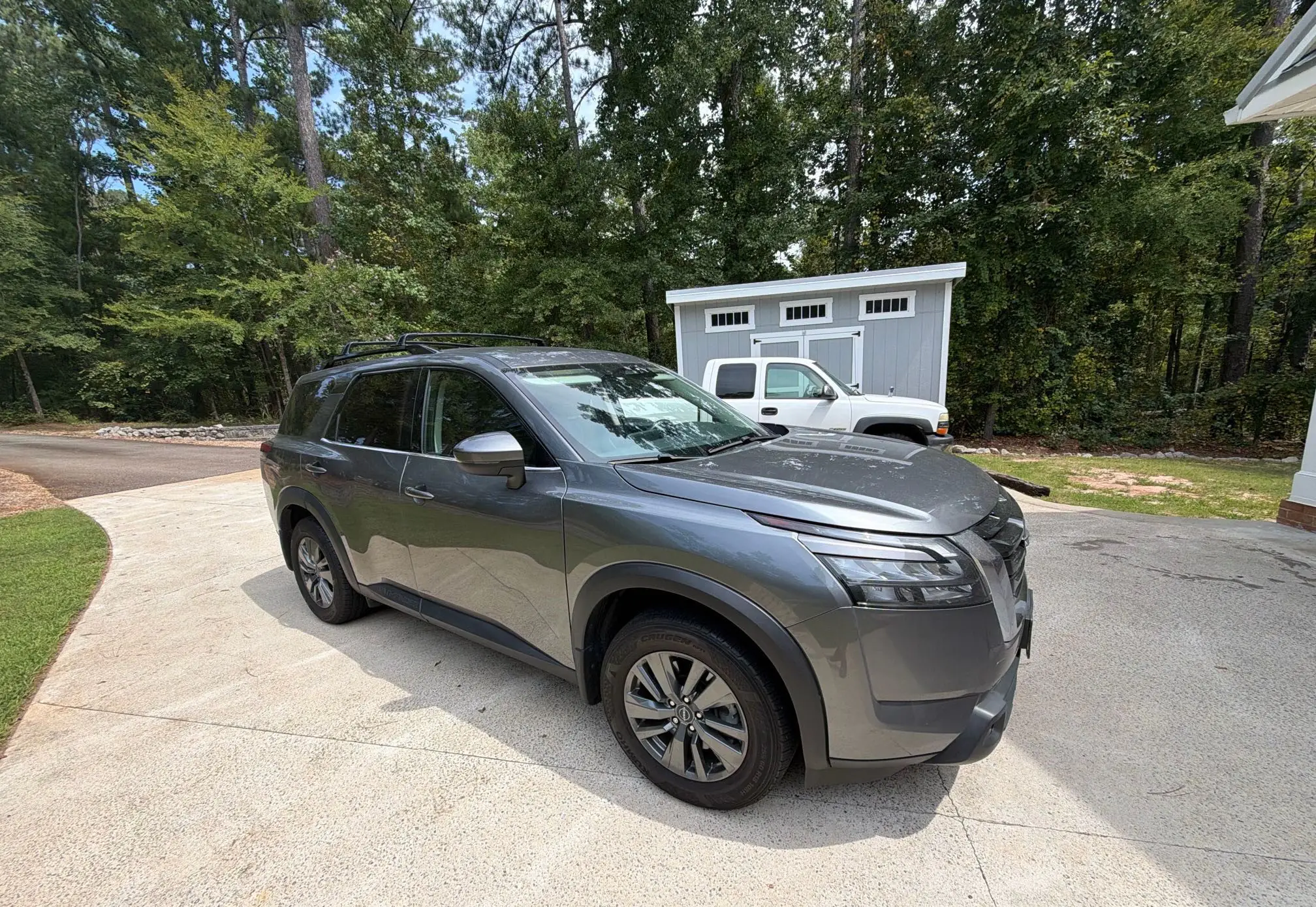
Shipping a 2026 Nissan Pathfinder from Orange, CA to Appling, GA
Recently, we finished transportation of 2026 Nissan Pathfinder from Orange, CA to Appling, GA. This transportation route was 2,298 miles on open trailer and was performed for $1,975.00, that means, that per mile price was $0.86.
Pathfinder was roadworthy during pickup. What made this shipment worth being described is the fact, that we recently transported three motorcycles via the same route, from Santa Ana to the same location, across 2,297 miles. Just one mile of difference and the same period of time. What we have here is something that this industry doesn’t provide often – comparable data.

The route

The distance of 2,298 miles starts from Orange to Appling and cuts across the southern part of the country between Orange County and the Georgia piedmont.
The drive from Orange starts off CA-55 then takes the I-10 east towards the Los Angeles basin and then climbs up past Palm Springs before crossing the Colorado River at Blythe.
The I-10 will be the main highway in this case. It goes through Phoenix and Tucson then proceeds to Las Cruces and to El Paso in Texas. The Texas leg of the journey covers Fort Stockton and San Antonio as well as Houston and into Louisiana along the Gulf Coast to Mobile, Alabama.
From there, the journey heads north through I-65 to Montgomery, then I-85 north-east to Atlanta and then I-20 east to Augusta, while Appling is northwest of Augusta in Columbia County.

The same lane, two very different loads

Here’s the comparison between the two deliveries. Same hallway; a difference of a mile only in the distance.
Three-row SUV, open trailer: $1,975.00 or $0.86 per mile.
Three motorcycles, enclosed trailer: $3,200.00 or $1.39 per mile for the payload.
From the outset the motorcycles cost significantly more. Consider it on a per vehicle basis and the scenario is reversed. Cost to move each of the three bikes is about $1,067 or 46 cents per motorcycle per mile compared to 86 cents for the SUV.
Deck space is determining the prices here. Space needed for a motorcycle is a part of that required for one car space. Three motorcycles use even lesser deck space than one SUV.
Type of trailer makes a difference too. The bikes are delivered in an enclosed trailer. Every motorcycle that we deliver is delivered in an enclosed trailer. If the SUV had been delivered in the enclosed trailer and the bikes in an open trailer, the figures would change.
“Per mile” comparison is relative only within a single type of product. This is the important takeaway. “Per mile” calculation is a good metric for comparing two sedans, or two bikes, or two enclosed loads. For comparing products that don’t belong to the same category, “per mile” is practically worthless – two shipping orders from this page will serve better as an example of that.
What customers actually pay is the total amount. Moving one SUV cross-country cost $1,975.00. Moving three motorcycles for the same distance was $3,200.00. Both are fairly priced, and neither can be compared “per mile”.

See also: Shipping Three Motorcycles from Santa Ana, CA to Appling, GA
What $0.86 per mile reflects

Behind this number lie two factors.
The first factor is distance. Costs related to pickup and loading are roughly equal regardless of the distance for carriers, as well as the costs of securing, coordinating, and delivering, which do not scale with the distance involved. The costs per mile are relatively low when distributed over the 2,298-mile distance.
Vehicle size makes the cost somewhat higher. The Pathfinder is a three-row SUV, which reaches nearly 200 inches in length, making its requirements for the deck larger than that of the sedan, but not that of the full-size SUV or truck.
Open transport and the route make the cost lower. I-10 along the bottom border is one of the busiest routes for freight transportation in the country, and Southern California to Georgia is a stable lane.
Open transport

The Pathfinder was loaded onto an open trailer, which is common practice even when transporting a brand-new vehicle.
This vehicle is a contemporary production family sport utility vehicle with factory paint protection. Enclosed transport is reserved for those vehicles where a rock chip will be a significant financial expense, and for 2,298 miles the premium paid for enclosing a vehicle like this that doesn’t need it would be substantial.

Ground clearance was irrelevant. The Pathfinder is a tall vehicle, so ramp angles were not a consideration at either end. Soft tie-downs were employed to secure the tires without resorting to chains on the suspension.

Transport summary
- Origin: Orange, CA 92868
- Destination: Appling, GA 30802
- Distance: 2,298 miles
- Service cost: $1,975.00
- Cost per mile: $0.86
- Vehicle: 2026 Nissan Pathfinder
- Condition: Operable
- Trailer type: Open
- Route: Orange, CA → CA-55 → I-10 east through Palm Springs, Blythe, Phoenix and Tucson → Las Cruces, NM → El Paso and San Antonio, TX → Houston → Baton Rouge, LA → Mobile, AL → I-65 north to Montgomery → I-85 northeast to Atlanta, GA → I-20 east to Augusta → Appling, GA
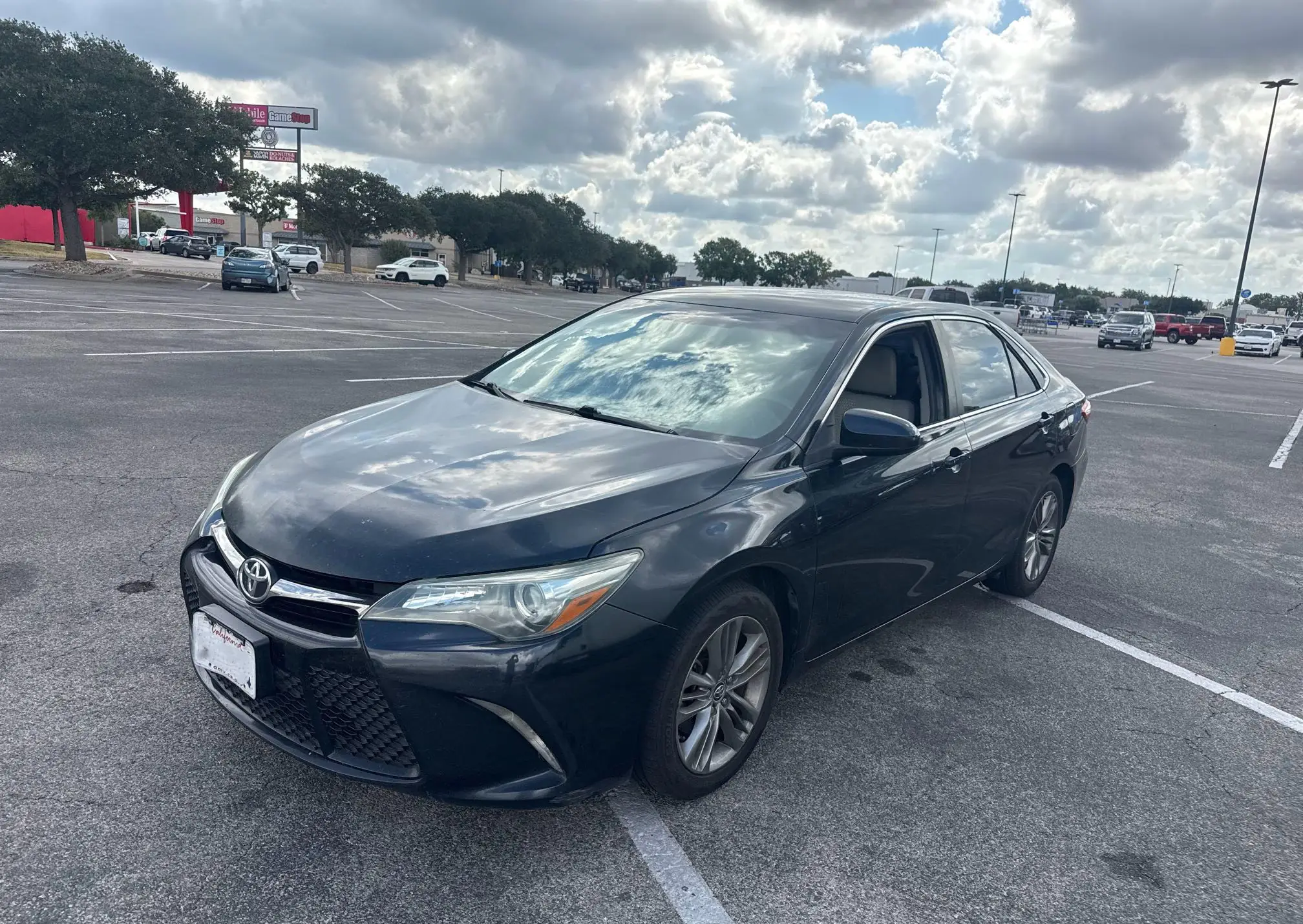
Shipping a 2015 Toyota Camry from Gardena, CA to Bastrop, TX
Just recently, the move of a 2015 Toyota Camry from Gardena, CA to Bastrop, TX was completed. The trip spanned 1,410 miles using an open trailer for $1,481.00 or $1.05/mile.
The car was operational at pickup time. This is basically as ordinary a vehicle as one can get. An everyday sedan with original paint job, open trailer and mid-range haul down a main highway. But the price per mile is higher than what we have reported on similar moves. And that needs to be explained.

The route

The 2,268 kilometers run from Gardena to Bastrop is a journey through the desert southwest to central Texas.
Gardena is located in the South Bay area of Los Angeles. Travelers take the ramp onto I-10 east and make their way out of the valley area through Palm Springs, across the Colorado River to Blythe.
For the entire journey, travelers will be using I-10, which goes through Phoenix, Tucson, and Arizona to reach Texas, and passes through Las Cruces and El Paso, and then to Van Horn, Fort Stockton and Junction to San Antonio.
From San Antonio, travelers continue along I-10 towards Luling, taking a turn towards Bastrop via TX-71 northeast.

Why the same car costs a different amount in a different week

We have put out a 1,315-mile open run at $0.84/mile and a 1,465-mile open run at $0.82. This run is similar in length and similar in vehicle type and it came in higher. This is why.
A quote is a picture of a live market. It is not a rate card. The carriers determine what they will take based upon their options in the market that week, which are ever changing. Same two bookings made a month apart may be different in price substantially.
Carrier availability varies from week to week. The number of trucks operating in the lanes surrounding your pickup date is the most significant factor, which cannot be forecasted well ahead of time by anybody, ourselves included.
The season lies behind all of it. As was mentioned in relation to a move from Minnesota to California, the demand in the market varies during the course of the year, making a lane softer or harder depending on the month.
There’s also another location which is somewhat off-corridor that helps. This is Bastrop, thirty miles from Austin and off the I-35 corridor. Not isolated and not an issue, but there are carriers which service Austin metro have to make a deviation for it, and it matters.
This is the reason quotes expire. The price that we provided to you six weeks ago was the valid one when we provided it. It was not a commitment that the market had any obligation to honor now. If someone guarantees you that his quote is everlasting, it means he either doesn’t book carriers or plans to re-quote you.
So, what could you do about it? Try booking with a larger pick-up window, providing enough time, and quoting in favor of your lane instead of waiting for an improvement. These are the levers that you can pull. Haggling the current market price is not one of them.

What $1.05 per mile reflects

There were two factors that helped the customer, and there were two that didn’t.
Helping him were distance and open transport. A distance of 1,410 miles means that the costs for pickup, loading, securing, and delivery can be reasonably distributed on a sufficient distance, while open trailers can fit more cars than closed ones in one transport run.
Disadvantages are off-the-courridor delivery in Bastrop and more restricted lane situation at the time of booking than similar runs we have booked.
As far as the car itself is concerned, it neither helps nor doesn’t help. Camry is the most ordinary car on American roads. It occupies one place in the parking lot without causing any loading problems.
Open transport

The Camry traveled on an open trailer since this is the mode that is employed by most cars in this nation.
This is a ten-year-old factory-clear coated sedan, and there is always the use of enclosed transport only for cases where getting a rock chip can make any economic impact to a car. In a case like this, the enclosed transport would be unnecessary expense in protecting a car from a damage that it is unlikely to get. We stated this clearly.
Loading was easy because the car was running and had its normal ride height as per sedans. There was therefore no need for consideration of ramp angles.

Transport summary
- Origin: Gardena, CA 90247
- Destination: Bastrop, TX 78602
- Distance: 1,410 miles
- Service cost: $1,481.00
- Cost per mile: $1.05
- Vehicle: 2015 Toyota Camry
- Condition: Operable
- Trailer type: Open
- Route: Gardena, CA → I-10 east through Palm Springs, Blythe, Phoenix and Tucson → Las Cruces, NM → El Paso, Van Horn, Fort Stockton and Junction, TX → San Antonio → Luling → TX-71 northeast → Bastrop, TX
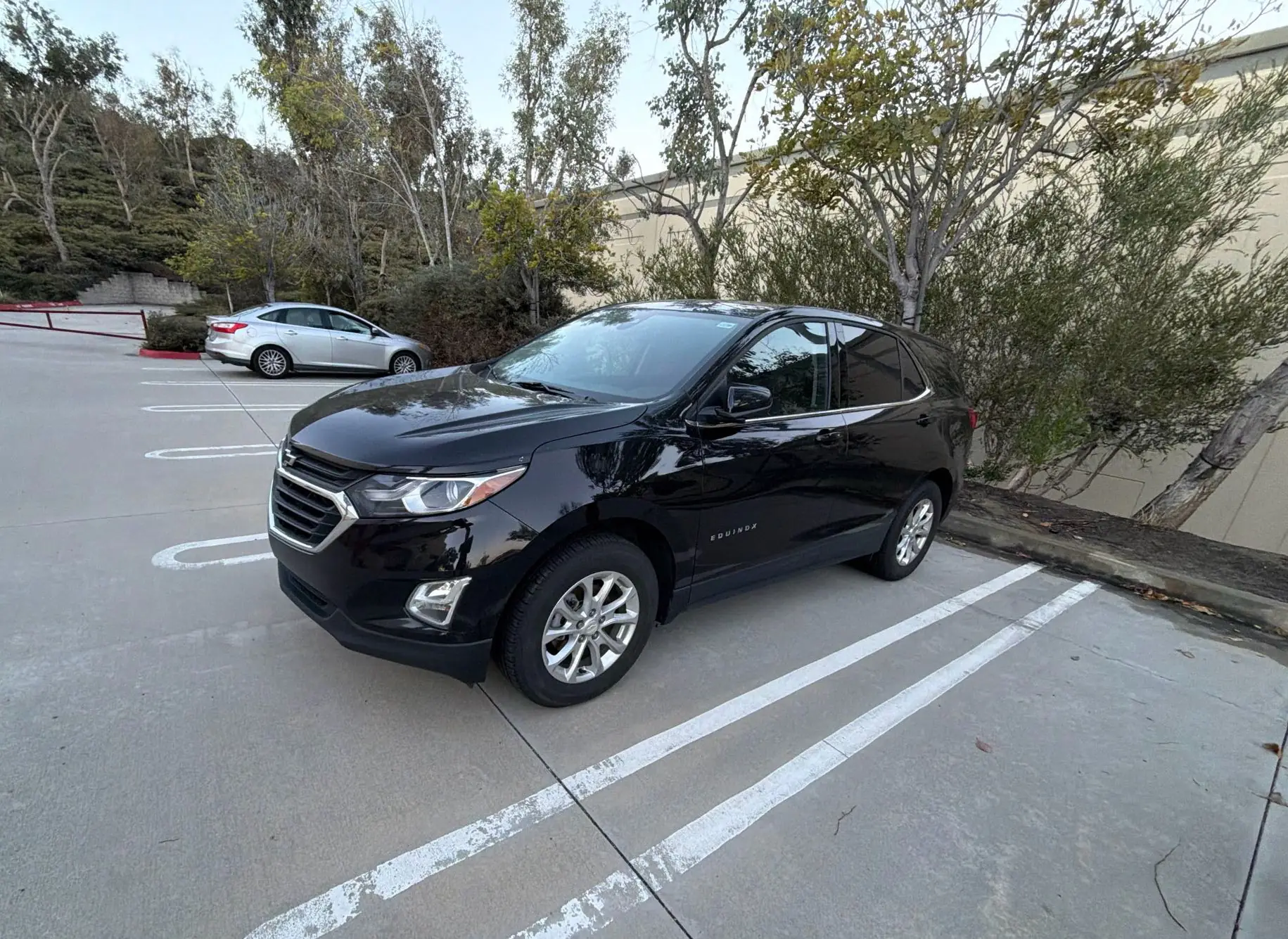
Shipping a 2020 Chevrolet Equinox from Troy, MI to Vista, CA
This is just one of the recent deliveries for our company, where we shipped a Chevrolet Equinox from Troy, MI to Vista, CA. The delivery spanned across 2,321 miles with open trailer, costing $1,550.00 per 2,321 miles for a total of $0.67 per mile.
The Equinox vehicle was operational at pickup. It was a business to business shipment from commercial pickup location to a commercial drop-off location, and this alters the nature of the shipment significantly, and is important to mention since the majority of our posts are consumer shipments.

The route

The 2,321-mile journey that begins at Troy ends at Vista through the Midwest, plains, and the Great Basin.
Troy is located in Oakland County, above Detroit. The drivers make their way to I-75 and continue on towards Toledo before continuing to go west along the toll road of Ohio and Indiana to Chicago.
From here I-80 takes care of the middle part of this journey. It passes through Iowa via Des Moines, goes through Nebraska via Omaha and North Platte, into Wyoming via Cheyenne, over the Wasatch and finally into Salt Lake City.
Here the direction changes and the road moves southward towards I-15, passing St. George and Las Vegas, Nevada. From here the truck descends into California and comes to Vista in northern San Diego County through Escondido on CA-78.

What changes on a commercial booking

All dealer transactions, fleet movements, auctions, leasing returns, and corporate relocation programs flow through the same logistics system that serves individual consumers, but what’s different about commercial shipping is everything else.
Access is not an issue anymore. The two most frequent issues when moving a consumer are a street that is inaccessible to a full-size carrier and nobody to accept the delivery. Commercial addresses typically have parking lots, docks, and employees to accept the vehicle during business hours. Both obstacles vanish into thin air.
Someone knows how to handle this kind of move. The receiving and releasing of vehicles is a standard procedure for a dealer or fleet operator. The condition report will be filled out properly, the keys will be there, and the dimensions of the truck are not a surprise to anyone.
The timing will be much easier to accommodate. Commercial locations work five days a week, not one particular day. That means a bigger pick-up window and, as we have previously explained, that equals a lower price.
Paperwork and payment are different processes. Commercial moves are normally invoiced, as opposed to cash payments made to the driver at time of delivery. In a company that moves vehicles on a regular basis, it’s a process versus a bunch of errands.
The volume makes the discussion different. A company that moves vehicles on a monthly basis is not the same customer as one that moves the vehicle just once. The lanes become predictable, and predictable lanes are more easily priced.
However, it’s the same network in both cases. Commercial moves are handled by the same vetted carriers with the same insurance check as anything else we move. It’s the same vehicle; the logistics are just better.

What $0.67 per mile reflects

There are three aspects which played in favour of this booking.
First and foremost is distance. The cost of pickup, loading and securing for a carrier does not vary with distance but remains constant; moreover, coordination and delivery also have similar fixed costs. Splitting this cost over 2,321 miles means that per mile cost becomes small.
Second is open transportation. The open trailer transports more vehicles in a single load and operates much more frequently than an enclosed trailer.
Third aspect is commercial access, which is the only aspect which is unique to this booking. Business operation during business hours and more flexible pickup time provide additional choices to a carrier which he will not have in case of residential shipment.
The corridor itself is another factor. Interstate 80 covering the north half of the country and Interstate 15 south to southern California are primary shipping corridors.

Open transport

The Equinox was loaded on an open trailer, which is normal practice for business and fleet transport.
It’s a manufactured crossover with a factory clear coat, and it goes enclosed if there is any chance that a rock chip would be an issue. On a business vehicle traveling from one business location to another, it’s the logical choice.
Ground clearance was not an issue. The Equinox is raised enough that ramp angle did not become a consideration at either end of the trailer. The Equinox was secured using soft ties over the tires, and no chain suspension was used.
Transport summary
- Origin: Troy, MI 48083
- Destination: Vista, CA 92081
- Distance: 2,321 miles
- Service cost: $1,550.00
- Cost per mile: $0.67
- Vehicle: 2020 Chevrolet Equinox
- Condition: Operable
- Trailer type: Open
- Booking type: Business to business
- Route: Troy, MI → I-75 south to Toledo, OH → Ohio and Indiana toll roads → Chicago, IL → I-80 west through Des Moines, Omaha and North Platte → Cheyenne, WY → Salt Lake City, UT → I-15 south through St. George and Las Vegas → Barstow, CA → Escondido → Vista, CA
